Brussels puts the Mediterranean fleet in check with a 67% ‘hack’ on fishing days by 2026

“We fear a bad proposal from the European Commission” he warned a few days ago in ‘Economic Information the president of the Andalusian Federation of Fishing Associations (FAAPE), José María Gallart, who added that “the Minister of Agriculture Luis Planas is going to have to put all his effort into achieving what he has not been able to do in recent years: that we have more days of fishing.” ‘Spoiler’: Gallart was right. The last European Fisheries Council of the year, which will take place on December 11 and 12will be a setback for the Mediterranean fleet.
The European Commission has already put a proposal on the table in which it is committed to limiting the working hours of workers. 557 shipyes to 9.6 annual fishing days on average per vessel during 2026. It should be remembered that, for this year, Brussels has already reduced the so-called ‘fishing effort’ to 27 days per boat per year. Which was later qualified, on condition of adopting certain measures, up to around 130 days per vessel.
“”It shows that they have no idea what the world of the sea is”, Basilio Otero (National Federation of Fishermen’s Guilds, FNCP)
Brussels sharpens the scissors
The proposal for 2026, prepared by the Directorate General for Maritime Affairs and Fisheries (DG MARE) of the European Commission estimates its cut on fishing days this year (the so-called ‘fishing effort’), based on the cuts initiated since the entry into force of the Western Mediterranean Management Plan in 2020. Something that had not happened before. According to the sector, between 2020 and 2024 the working hours of this fleet have been reduced by 40.5%. All this, despite the fact that the Commission’s draft opens the possibility of equalizing this year’s fishing days, in exchange for technical measures.
Some of these initiatives would be identical to those required for this exercise, such as the change of meshes and the ‘flying doors’ (the doors are the devices that are placed at the ends of the net to keep it open and these, since they do not touch the seabed, do not damage the ecosystem), and other new ones. The president of the National Federation of Fishermen’s Guilds (FNCP), Basilio Otero, believes that it will not be possible to reach the same number of days despite the conditions that are proposed such as space-time closures “since to recover an area a scientific report is needed.”
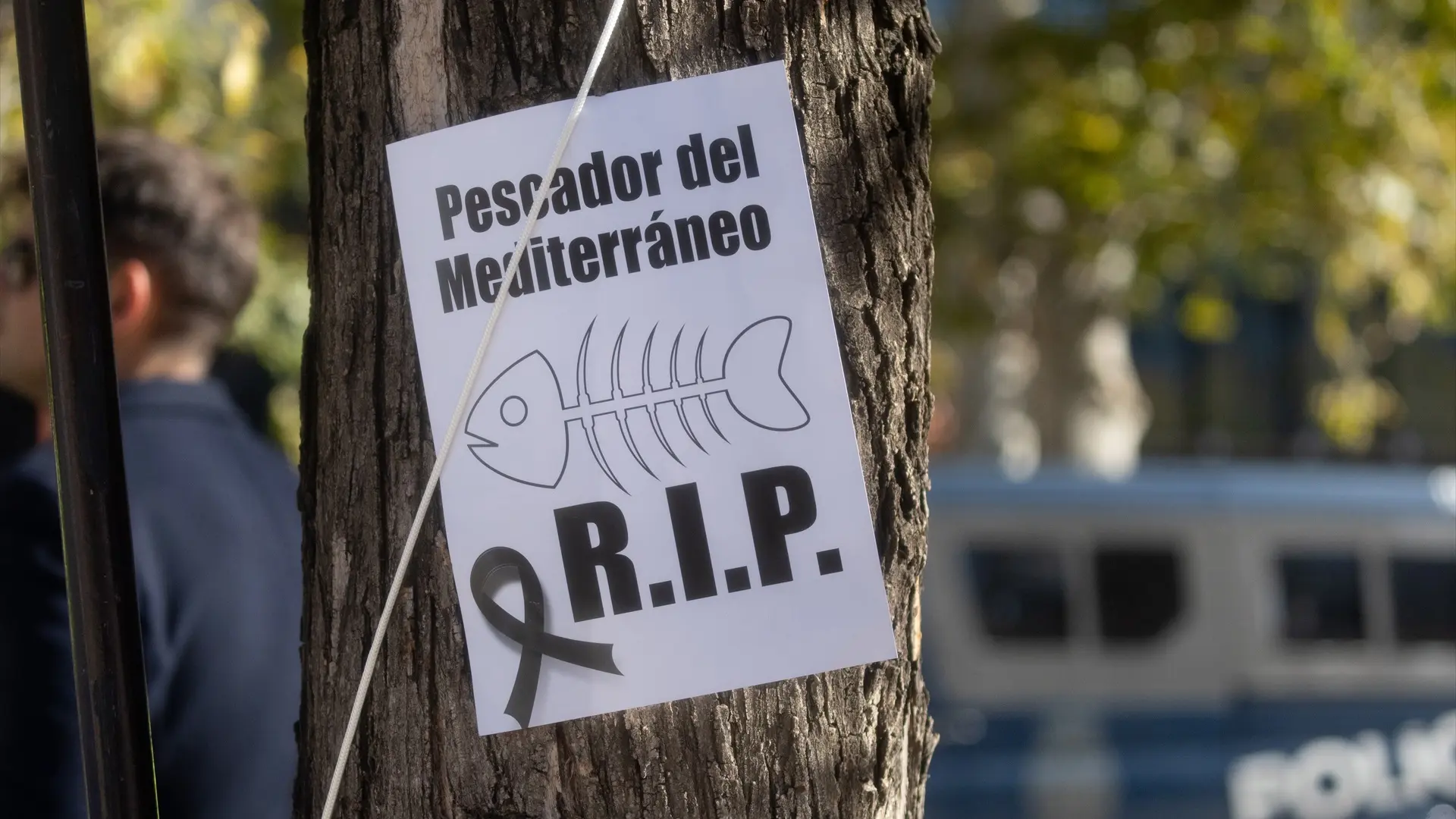
For his part, the general secretary of the Spanish Fisheries Confederation (Cepesca), Javier Garat, believes that the measures are “confusing and not all are applicable”. Furthermore, he adds, that the commissioner has asked for “creative measures to increase the room for maneuver in the negotiation of extra days.” Otero (FNCP) is very critical of the community executive’s proposal: “It shows that they have no idea what the world of the sea is.”points out the highest representative of the Fishermen’s Guilds, who also regrets that “Europe legislates in the Mediterranean as if it were only European, when Moroccans, Algerians or Tunisians are quadrupling their fleets.” The representative of Cofradías believes that if the Brussels draft is not modified “not only will the entire fleet disappear, but also the marketswhich will not last without the drag”.
“The French and Italian sectors are the same as us. We are aligned. What we ask of the governments is that they go hand in hand and add some more countries, with which they will form a blocking minority, and will have more strength to negotiate”, Javier Garat (CEPESCA)
From hake to crayfish: “Worse than last year”
Likewise, those responsible for CEPESCA and Cofradías denounce that the Brussels adjustments were based on the decline in hake in recent years. However, with its improvement confirmed by several scientific reports, the crayfish. This last species barely accounts for 0.4% of the catches in the Valencian Community and, in Catalonia, 2.6%. Otero (Cofradías) believes that in view of the last meeting of European Fisheries Ministers in 2025, they will “worse than last year.” Garat also foresees “difficult advice”, but opens a glimmer of hope after having met twice this week with the European head of Fisheries Costas Kadis. “The commissioner has assured that his objective is that the same days are reached this year. He has told the MEPs the same thing,” says the also president of the European fishing association Europêche.
Towards a blocking minority?
Both Otero (Cofradías) and Garat (Cepesca) ask that Spain form a blocking minority together with France and Italy, to stop Brussels’ proposal and negotiate improvements. “The French and Italian sectors are the same as us. We are aligned. What we ask of governments is that they go hand in hand and add some more countries, which will form a blocking minorityand they will have more strength to negotiate,” says Garat. Both representatives of the sector defend that the Spanish fleet is not starting from scratch in the Mediterranean and that, in recent years, they have adopted different measures to improve sustainability.
Spain may also suffer significant cuts in several Atlantic fishing quotas of up to 70% in species such as mackerel, blue whiting and crayfish from the Gulf of Cádiz.
More cuts in the Atlantic
The fleets that fish in the Atlantic will not have it easy either, since the fishing quotas determined at next week’s meeting will also depend on the negotiations with third countries such as United Kingdom, Norway or Iceland. In this sense, in the sector they point to several fisheries whose quotas for Spain may suffer severe cuts: haddock, mackerel with a proposal to cut 70% of its quota, blue whiting that could be reduced by 41% of their catchesalthough the most emblematic case is the Norway lobster from the Gulf of Cádiz, whose catches may be reduced by 50% from 32 tons to 15 tons (it would not compensate for the 2 extra tons that Portugal ‘lends’ us). Nor would the sole quota in the Mediterranean remain unscathed.