controversy with Agriculture over the positioning of Extremadura and Andalusia
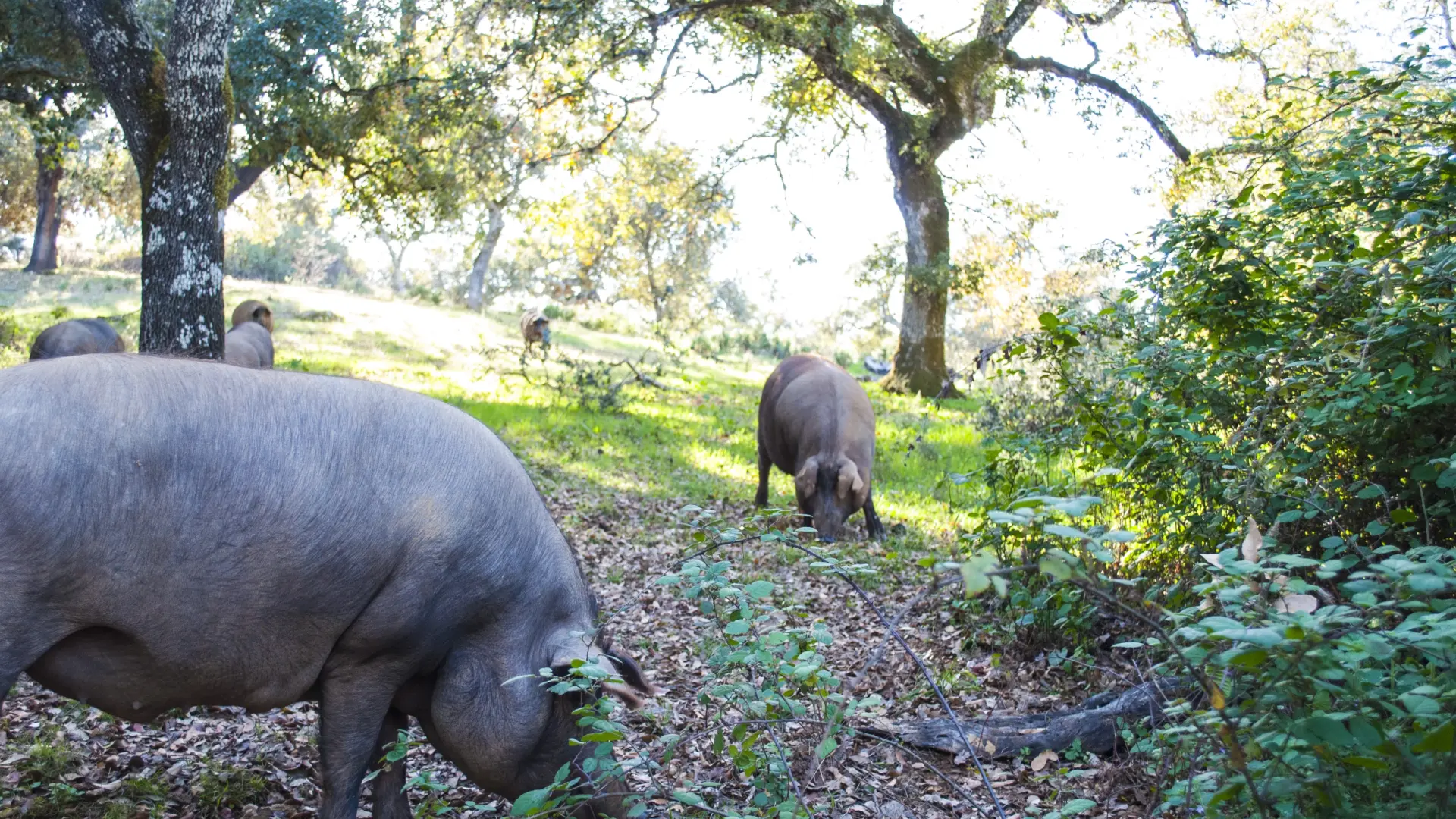
It was a matter of time before the controversy over the changes in the Protected Designation of Origin (DOP) Guijuelowhich have introduced a new variant of ‘50% Iberian breed pig’ allowing their hams and shoulders to be made through the crossing of a female of the Iberian breed and a male of the Duroc breed, will confront PSOE and PP. The first as those responsible for the Ministry of Agriculture, and the second in the governments of Extremadura and Andalusia. Both autonomies have demanded from Planas “a rectification” of the minutes of the meeting of the Differentiated Quality Coordination Table held on August 20, which endorsed the proposals of the Salamancan DOP. According to sources from both executives, they did not vote in favor and abstained. They also question part of the processing carried out and ask that the Guijuelo changes be submitted to the national opposition procedure, so that the other Iberian DOs can give their opinion.
A very controversial resolution
However, the list of facts offered in the resolution of the General Directorate of Food, approved on August 22 and published in the Official State Gazette (BOE) on September 1, is somewhat different: It states that the Guijuelo PDO proposal, which they classify as “a request for normal modification of the specifications” so it does not need to go through Brussels, was sent “to the autonomous communities territorially affected by the PDO, that is, Andalusia, Extremadura, Castilla y León and Castilla La Mancha dated June 16″ so that they could issue their reports. In this sense, in the aforementioned BOE, the Ministry of Agriculture specifies that “Andalusia sent a report on July 15, Extremadura sent a report dated July 11 and Castilla y León sent a report on July 16.”
Next, on August 20, the aforementioned meeting – telematic – of the Differentiated Quality Coordination Table. The body in charge of coordination between the Ministry of Agriculture and the competent authorities of the autonomous communities in matters of designations of origin and other similar differentiated quality seals, as established by the national regulation dating back to 2011. An appointment in which, according to the BOE, “the competent authorities of the Ministry of Agriculture, Andalusia, Extremadura, Castilla y León and Castilla-La Mancha the continuation of the processing procedure is agreed of the request for modification of the specifications” based on article 18 of Royal Decree 1335/2011). Days later, Guijuelo’s changes were given the green light and the controversy ignited.
The BOE states that “Andalusia sent a report on July 15, Extremadura sent a report dated July 11 and Castilla y León sent a report on July 16.”
Back to the technical reports
Precisely the center of the entire controversy lies in the meaning of the vote of Extremadura and Andalusia at the Coordination Table, held on August 20. The Ministry of Agriculture, Livestock and Sustainable Development of Extremadura assures ’20 minutes’ that “Extremadura abstained and did not vote in favor of the modification of the specifications of the PDO Guijuelo” and that they have requested a change by letter to Planas in the minutes of that meeting with Andalusia. Specifically, according to the Extremaduran Ministry, in their July report they pointed out that “This was a significant change. but at the same time adjusted to law”.
Despite which, they add, “since these are important changes, Extremadura requested that The procedure for processing registration applications will be applied. of the protected designations of origin and of the geographical indications protected in the community register and the opposition to them”. In other words, the modification of the Salamanca PDO is subject to the so-called national opposition process so that interested parties can present allegations or observations. Something that the other three denominations of Iberian have also requested, in the appeals presented at the end of last month: Los Pedroches, Dehesa de Extremadura and Jabugo.
Official sources from the Ministry of Agriculture, Livestock and Sustainable Development of Extremadura assure that “Extremadura abstained and did not vote in favor of the modification of the specifications of the PDO Guijuelo”
Sources from the Ministry of Agriculture cite a literal fragment of the report that Extremadura sent to this department on July 11 in which he stated that “despite the apparent significance of the proposed modification, we believe – although it is debatable – that its classification as “normal” could be defended “. In this document, always according to these sources, he added that “the chapter relating to Link to the specifications (section F) has not been altered in the slightest. This is because, although the link is established, among other factors, through the racial factor, in this chapter this relationship is made in a generic way and without requiring a specific percentage of purity.”
One email and two key absences
In a very similar vein, sources from the Junta de Andalucía also ask modify the minutes of the Coordination Board meeting on August 20. Like Extremadura, they claim, they also abstained on Guijuelo’s modifications and join the request for a change in the minutes of the meeting. Furthermore, the sources consulted question the deadlines applied in the processing and comment that an email was received from the Ministry of Agriculture as soon as “day and a half before” (on August 18 at 1:05 p.m., they specify) and, to whose content this medium has had access, which established that “the deadline for making observations and decisions regarding the specific email XXX is until August 20, 2025 as a deadline.” Along these lines, it was added that “if no response is received during the aforementioned period, it will be understood as abstention by the corresponding autonomous community.”
In this regard, sources from the Ministry of Agriculture point out that in this second consultation “the autonomous communities did not respond due to what is understood as abstention” and they add that “this is what is reflected in the minutes of the meeting.” In any case, citing what is established in national regulations – Royal Decree 1335/2011 – they abound in that “once reports from the competent bodies have been received of the affected autonomous communities, or after the deadline for issuing them, and after consulting the Differentiated Quality Coordination Table” it will be Agriculture that must resolve “motivatedly” about the changes in Guijuelo. In this sense, they clarify that the administrative route has not yet been exhausted because it is possible to present “an appeal.” What the denominations of Los Pedroches, Jabugo and Dehesa de Extremadura have already done, as ’20 minutes’ has been reporting.
In an email sent to the Junta de Andalucía from the Ministry of Agriculture on August 18, it was stated that “if no response is received during the aforementioned period, it will be understood as abstention by the corresponding autonomous community.”
In the aforementioned email, to which ’20 minutes’ has had access, they were also sent “the new versions of the specifications and document, where the observations made by the autonomous communities have been taken into account.” This is in the reports sent in July. Next, it was detailed that other documentation was also attached such as the responses of the Regulatory Council (of Guijuelo) “to the issues raised” and the Ministry reaffirmed that “is not considered a modification of the Union.”
On the “national opposition” to Guijuelo’s changes
On the other hand, the Ministry sources consulted point out the opinion of Extremadura and Andalusia so that the Guijuelo changes undergo a national opposition process, they argue that the European regulations establish in the so-called “normal” modifications, those that only need the endorsement of the member country compared to the “Union” ones that must go through the European Commission, “it is not obligatory to subject them to a period of national opposition, but only to give the applicant group that registered the PDO the opportunity to make observations when said group is not the same as the one that submitted the modification.”
European regulations establish that in the so-called “normal” modifications, those that only need the endorsement of the member country, “it is not mandatory to subject them to a period of national opposition, according to Ministry sources.
Specifically, sources from the department headed by Luis Planas, cite the European delegated regulation 2025/27 which in its article 4 establishes that “member states may provide that requests for normal modifications be published for the purposes of opposition at the national level” and only requires this measure to be adopted in the event that the proposal for changes has a different origin from the “applicant producer group who has submitted the application for protection of the name or names referred to in the specifications”.