the silent battles of brands to preserve their identity

You only need to browse a few minutes through the portal of the European Union Intellectual Property Office (EUIPO) to witness the silent battles being fought on the margins of European trade. They are not visible wars, the vast majority do not transcend beyond the platform, but they land every day in technical resolutions that, without fanfare, decide the fate of brands, commercial strategies and millions in investment. Because, sometimes, a letter or a syllable can become the epicenter of a conflict.
Behind each of these disputes there is a legal mechanism that is as commonplace for companies as it is unknown to most consumers: opposition to trademark registration. When a company applies for registration in the European Union, any previous owner can challenge it if they consider that there is risk of confusion with your name or emblem. And that is where these fights begin in which the authority subjects to an exhaustive analysis whether the two brands can coexist without the public confusing them. When the EUIPO agrees with the opponent, its ‘rival’ assumes a symbolic compensation, which is around 600 euros per procedure, but the true impact is not in that payment, but in the veto to register its brand in the community bloc, which forces it to rethink names, strategies and, in some cases, entire projects.
This is the dilemma that Ningbo Skyey Industry & Trade has been facing since last Monday, the Chinese group that has left its intentions to register its trademark on empty paper. NuCamper after encountering opposition from the Spanish Camper. The footwear company of Balearic origin alleged risk of confusion and the office admitted its appeal after considering it highly plausible that a European consumer would perceive the Asian brand as an extension or sub-brand of the Spanish one. The failed landing of Scalesa Swiss aquatic sportswear company that stopped its application after a complaint from Scalpers. In this case, resolved last month, the EUIPO ruled in favor of the Sevillian company after verifying that the lexical similarity and the similarity of its products could cause confusion in the market.
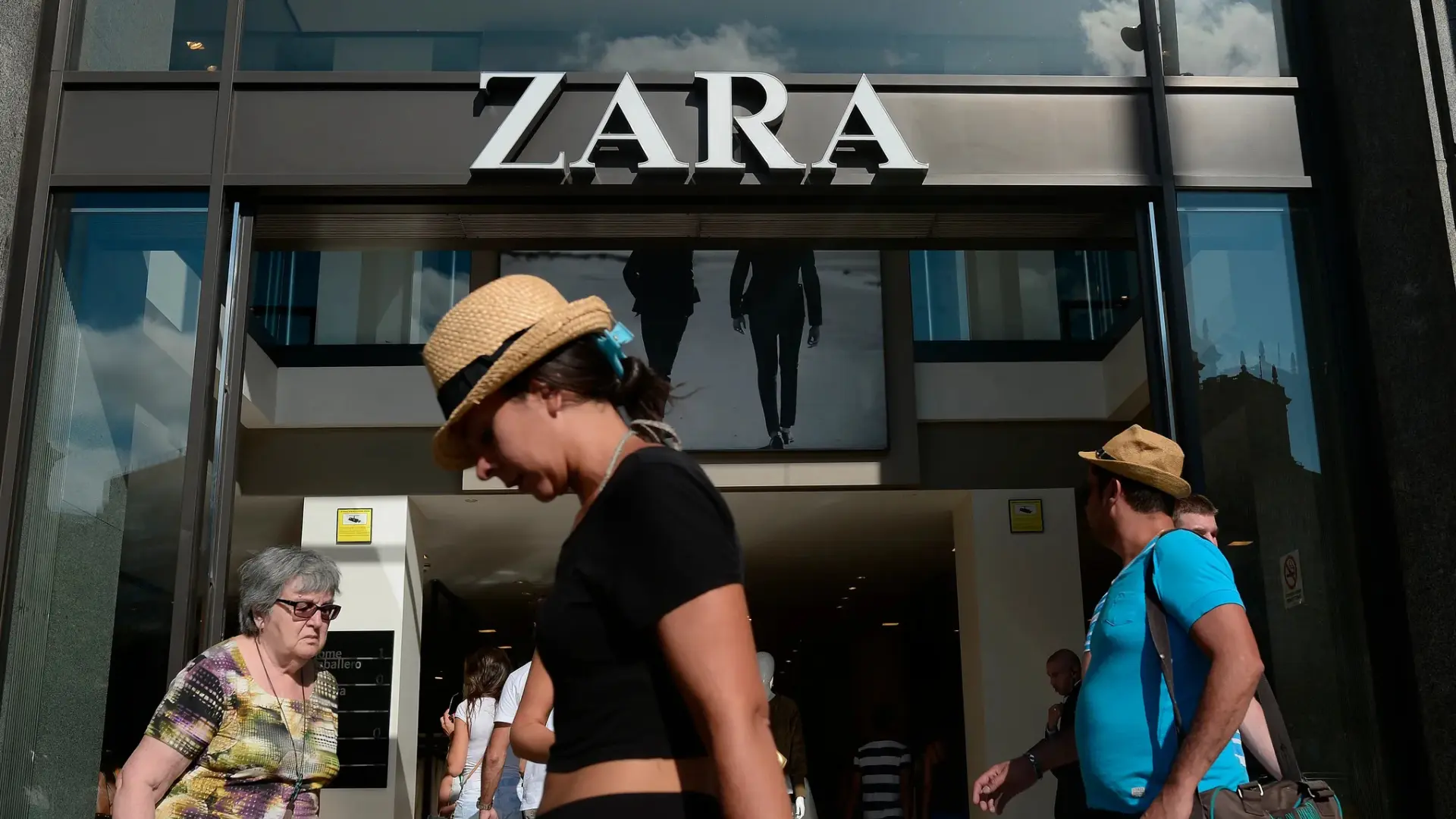
The struggles do not stop here; They also reach the Ibex. In the offices of the main Spanish companies, alerts go off every time a new trademark application puts the identity of their most valuable assets in check, such as Zara for Inditex. The Galician giant, in fact, is one of the most active of the selective in this scenario, where, only in the last year, it has blocked the registration of Yazaraa New York ‘tech’, Lazzaraan American yacht builder, Zaiaa subbrand of the Swiss hotel company Aethos, or Z’Homea home products store located in Cáceres and controlled by a Chinese group, due to its indisputable similarity to Zara Home.
However, companies that see their registrations frustrated have room for revenge with an appeal and, ultimately, can take the case to the General Court of the European Union (TGEU) in a process that can last for several years. This happened, for example, last September, when this body annulled a resolution of the EUIPO that denied, at the request of Inditex, the registration of the brand. pastaZara Sublime from the company Ffauf Italia SpA, specialized in the marketing of pasta. Another lawsuit from Inditex may end up in the same court, which, on the other side of the trench, seeks to register its new coffee shop brand. Zacaffe in the face of opposition, supported in the first instance, by the Italian company Zicaffe.
In these cases, the resolutions usually favor Zara “due to the distinctive strength and reputation of the brand (art. 8.5 EMR)” as explained Miriam Martínez, professor of Commercial Law at UNIE University after pointing out that “large multinationals such as Inditex generally have internal brand protection and industrial property rights departments that reduce judicial costs.” “On the other hand, for an SME, although the procedure is accessible, it can be proportionally more burdensome if the conflict is judicialized,” he adds.
Martínez warns that these cases could be interpreted as unfair competition “when two distinctive signs coexist in the market and generate confusion.” An issue that relates to the phenomenon of trade mark trolls (or brand trolls), which are directly related to the aforementioned cases. “These cases are cases in which a natural or legal person registers trademarks without the intention of using them legitimately in the market, but rather to block competitors or demand subsequent economic compensation, for example, requesting economic compensation in exchange for not opposing the registration or to license the trademark,” he explains before focusing on the rise of oppositions and litigation by European companies in response to requests from Asian companies in the face of greater commercial internationalization.
Most disputes are resolved by agreement
Like these, thousands of opposition requests are registered every year. In more detail, the latest data – corresponding to 2024 – puts 18,070 notifications1.9% less than the previous one. Of the previous amount, 12,263 were settled through an agreement between the parties while 7,374 were settled with resolutions adopted by the EUIPO. In the case of cancellation requests there were 2,219 last year, 2.9% more than the previous year. The community agency adopted 1,368 resolutions in this area, which represented an increase of 7.9%.
In total, the European Union Intellectual Property Office (EUIPO) received 180,443 applications for registration as a European Union trademark (EUTM) last year, 2.7% more than in 2023. Of which, some 152,085 were direct submissions and 28,358 applications for international registration through the Madrid System of the World Intellectual Property Organization (WIPO). The European body based in Alicante also examined a total of 176,147 brands. This is 0.6% more than in 2023, according to the ‘Annual Consolidated Activities Report’ that it publishes annually.