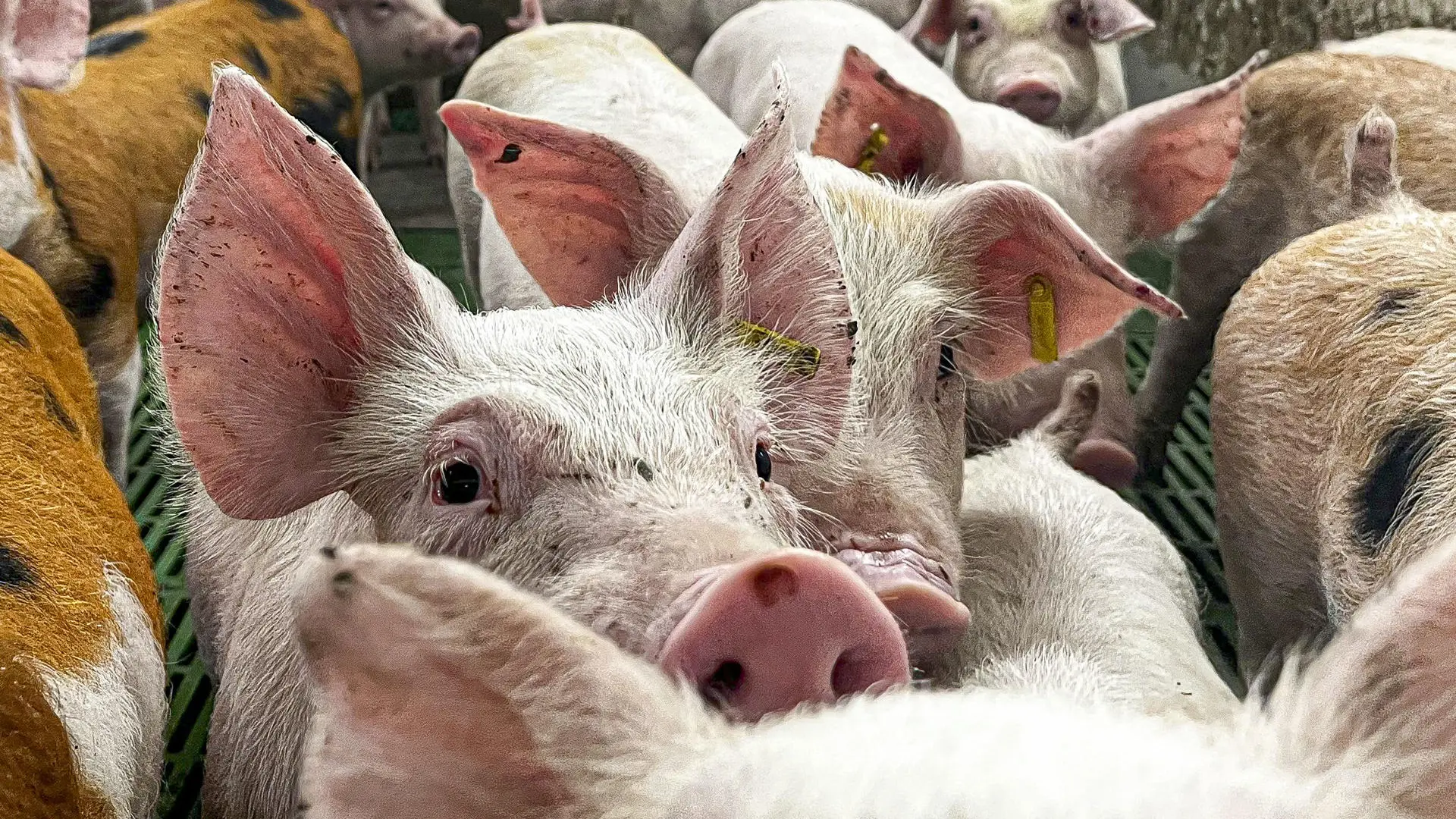
The reappearance of African swine fever raises the alert in the sector to an ‘infection’ in prices
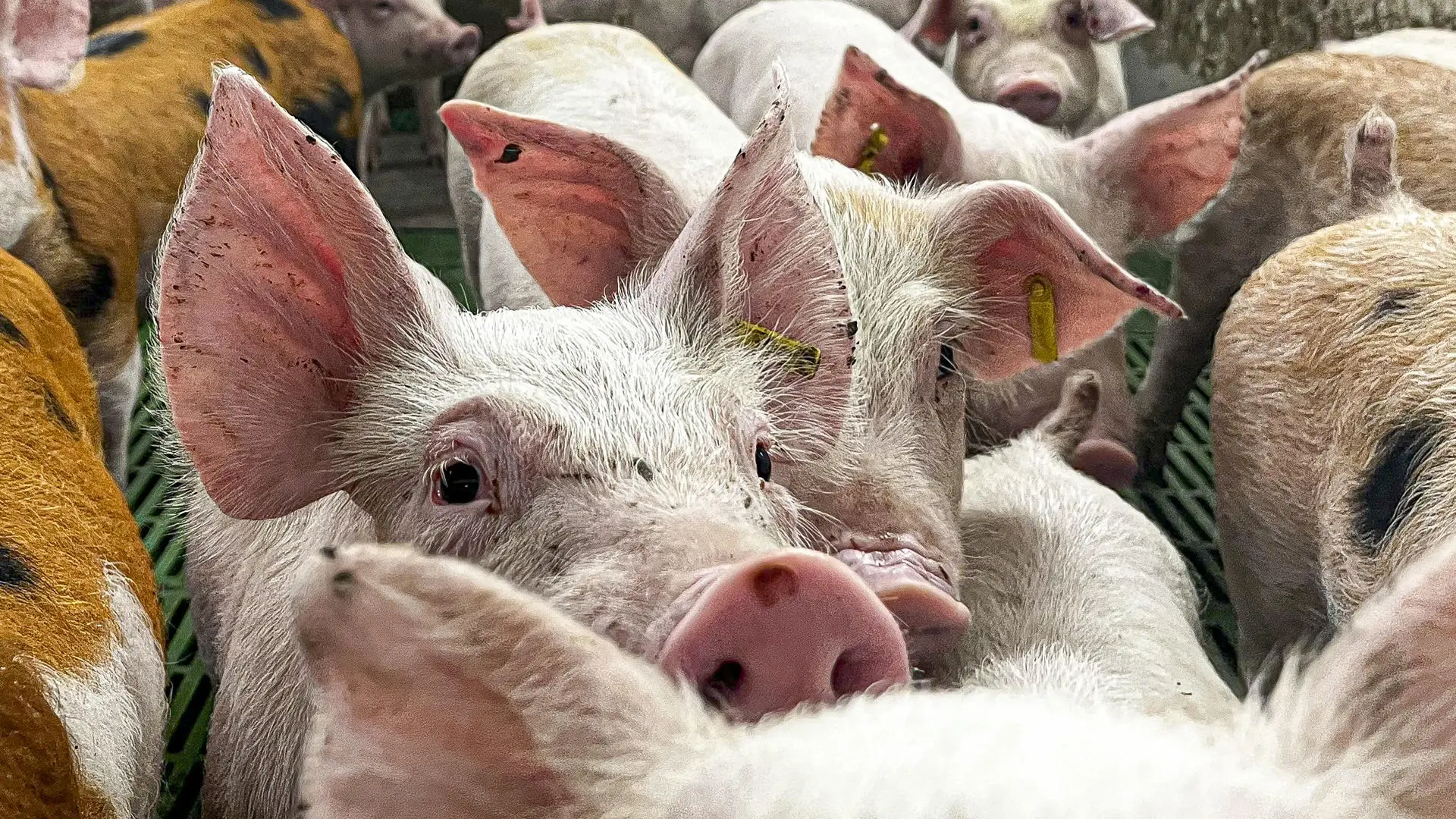
The reappearance of the African swine fever (ASF) After more than 30 years since its extinction in Spain, it has fallen like a jug of ice water in an activity that last year exported to 104 countries around the world for value of 8.8 billion euros. Of which almost 60%, some 5.1 billion, are destined for the European Union (EU). Pork alone was exported to China for an amount of 570.7 million, although the total bill (offal,…) greatly exceeds 1,000 million euros. Upon closure of exports, whether total or only for certain Spanish regions, of a group of up to 44 countries (China, Philippines, South Korea, United Kingdom, Japan, Malaysia, Taiwan, Mexico…) adds a more than probable impact on the prices that They can fall due to excess supply. What the sector and the experts consulted agree on is that the next few days will be decisive.
After the meeting held late yesterday with the Minister of Agriculture Luis Planas, the president of the Interprofessional Organization of the White Coated Pig (INTERPOC), Manuel García, pointed out that “the market had already been heavy for weeks and that bad news like this aggravates the situation: it can logically affect, but not only because of this.” A reference to the situation of low prices that this activity already suffers at origin. García added that some markets, in which Spain can continue exporting because they recognize our regionalization, “is also heavy in recent years.” A situation that, he concluded, is not new for the sector. In the last few hours, as reported in 20 minutespork prices plummeted in Mercolleida between 7.5 and 17% depending on the product. This market, a reference for the sector, recorded the biggest collapse in the last 30 years.
Closure of strategic markets
For his part, the agri-food economist David Ucles also agrees that it is “coming soon” yet to know what will happen to prices, but suggests that they will “certainly” fall. In this sense, he highlights that among the markets that have been closed to Spanish pork “is Japan, which was the country that bought the most from us between January and September of this year with some 539 million euros, according to Customs.”
This economist highlights that he is followed Italy (594 million), France (425.7 million), China (394.8 million), South Korea (307.6 million) and Portugal (268.3 million). Furthermore, adds Ucles, this “coincides with an increase in production in Spain since according to the recent slaughter statistics, corresponding to October; the weight of slaughtered pigs In the first 10 months of the year it increased by 6.6%. By 5.2% if October 2025 is compared with the same month of the previous year.
The Spanish pork sector exported last year to 104 countries worth 8.8 billion euros, of which almost 60% went to our ‘partners’ in the European Union (EU), about 5.1 billion. In China alone, sales (including offal) exceeded 1,000 million euros
For his part, the vice dean and professor of EAE Business School Juan Carlos Higueras, assumes that “exports are going to suffer and, Internally, there will be an excess of supply that will put downward pressure on prices.” Higueras confirms that “outside the protection zone” there are production movements and firmly discards the other great specter: a hypothetical shortage. “Large distributors have tools to navigate due to market oscillations”, the expert from EAE Business School is forceful. He believes that small producers would be the most affected by the extra costs for health surveillance that they would have to incur.
Higueras warns that, in the medium term, there may be a rise in prices if the crisis drags on and begins to reduce the animal census: “Supply would fall more, because there would be less demand,” points out the teacher who does not hesitate to speak that “at the country level it would be catastrophic if animals had to be sacrificed: the Government cannot allow this” and mentions what happened in the United States with the value of eggs due to avian flu. In any case, he is confident that the measures adopted will result in limiting the outbreak and eradicating it.
“Exports are going to suffer and, internally, there will be an excess of supply that will put downward pressure on prices,” says Juan Carlos Higueras (EAE Business School).
The irresistible rise of the Spanish pig
In the opinion of David Uclés, this shows that production is being increased “in a context in which The prices of the last two campaigns have also fallen and those of the last 5 are below the historical average.” Ucles argues that “Spain has increased exports greatly in recent years” and cites that, from 2010 to 2023, with the exception of 2018, there have been successive increases in foreign sales of Spanish pork. Especially in the years 2019 and 2020, with double-digit increases (34.2% and 23.6%, respectively). “Production, however, fell by 3.1% last year and, until now, in this year we were declining by the same amount,” comments this expert.
Towards excess supply?
A capacity that has placed us as the first pork producer in the EU and the third in the world, behind the United States and China. For this expert, “This far exceeds the capacity of the Spanish market” and wonders who will pay for the slaughter of thousands of pigs if the disease reaches a farm. “Everything will now depend on how we negotiate and get more countries to admit regionalization so that, for example, Aragon can continue selling,” he says. In any case, for Ucles “The only solution is to eradicate the disease as soon as possible” and wait “4 or 5 months” to once again be declared a country free of African swine fever. To do this, he proposes “increasing hunting pressure” on the wild boar population. That is, increasing hunting.
“The only solution is to eradicate the disease as soon as possible,” says agri-food economist David Uclés.
Fear that “there will end up being leftover pigs”
In statements to this medium, the general secretary of the Spanish Confederation of Freight Transport (CETM) Live Animals Pedro Martínez, agrees that we will have to “wait 2 weeks to see how the disease evolves, whether it spreads or not.” However, he points out his fear so that “there will end up being leftover pigs” due to a drop in foreign demand and, as a consequence, the animal census falls, reducing the trips made by this group of specialized transporters. “All this after a year and a half very well,” he laments.