ERC and the Government agree on unique financing for Catalonia but leave the transfer of personal income tax pending
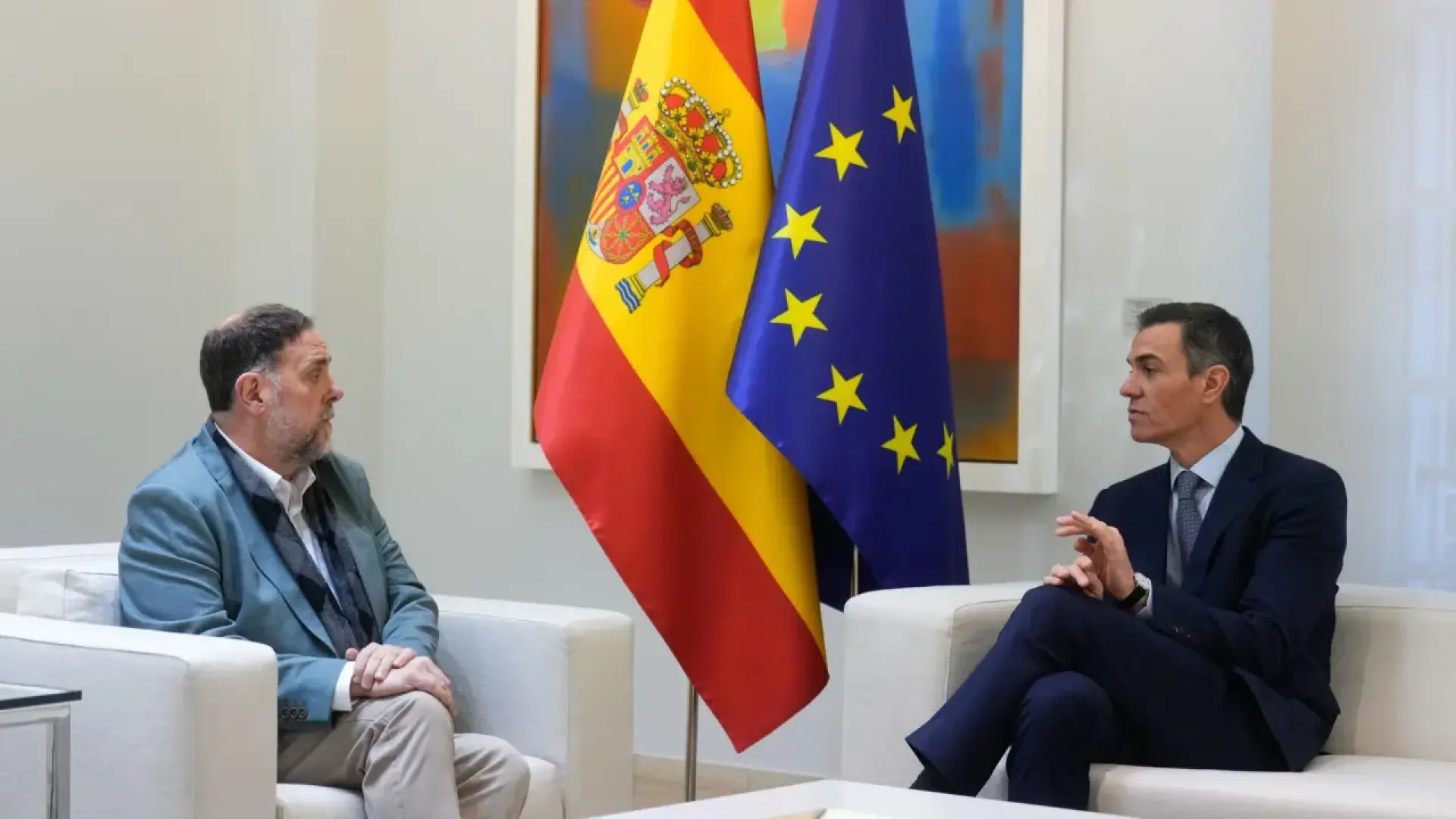
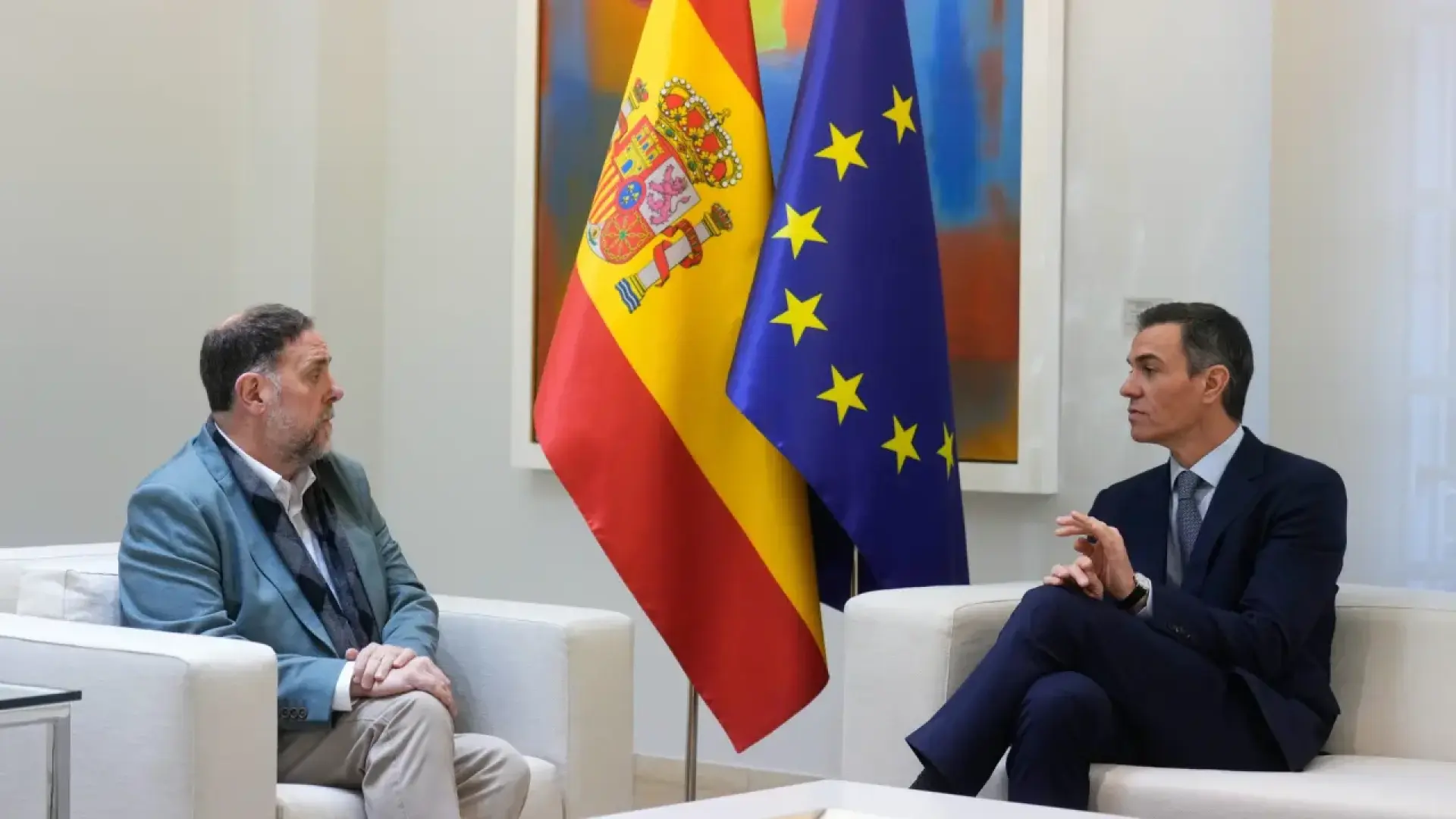
The leader of ERC, Oriol Junqueras, announced this Thursday that he has closed an agreement with the President of the Government, Pedro Sánchez, to implement unique financing in Catalonia. The measure, which the Republicans and the PSOE agreed to more than a year ago but whose details had not been agreed upon until now, will mean “4.7 billion euros more” for the community and up to “12% more budgetary capacity,” said Junqueras. However, this Thursday’s agreement is only political: the initiative will have to receive the green light from Congress in the coming months for it to be applied and Junts – whose votes are essential – has threatened to knock it down because it considers it insufficient.
In a brief intervention before the media after meeting Sánchez at the Moncloa Palace this Thursday, Junqueras explained that the new financing model for Catalonia will be based on respecting the “principle of ordinality”. The application of this principle would mean that the common regime communities – all except the Basque Country and Navarra – that contribute the most to the common fund would, in turn, receive more resources. “If Catalonia is the third to contribute, it should also be the third to receive,” argued Junqueras, who assured that the communities of the Mediterranean basin have been harmed by the financing system in recent years.
This respect for the principle of ordinality is one of the historical demands of ERC and other Catalan formations, and is included in the Statute of Catalonia itself. However, until now this rule has not been applied to avoid harming less wealthy communities and torpedoing interterritorial solidarity, although Junqueras, this Thursday, assured that with the pact signed with the Government “Everyone wins and no one loses.” ERC’s thesis is that the Executive must compensate the rest of the communities to prevent any of them from ending up harmed.
However, the pact signed this Thursday does not include what was ERC’s most emblematic demand: the transfer to Catalonia of the collection and management of personal income tax. Junqueras admitted that the Republicans have not yet been able to reach an agreement with the Government on this matter, but recalled that “it is a pending and agreed issue” and maintained that the Executive and the Republicans must “find a way to make it happen.” “It is possible to do it, there are provinces that are capable of collecting all taxes” and the Generalitat must, at least, be able to manage the most important of them, the one that taxes citizens’ income.
Once the political agreement between the Executive and ERC has been signed, the next step is to take it to Congress for debate and approval. And Junts, immersed in its battle with the Republicans within the independence movement, already showed this Thursday its reservations about the pact. “Where is the economic agreement that was agreed to invest Salvador Illa?” the pro-independence party asked themselves in a message on their
The Government insists that “all communities win”
On the part of the Executive, the first to react was the Minister of Digital Transformation and Public Function, Óscar López, who in statements to the media wanted to anticipate the distrust of the rest of the autonomous communities by ensuring that “Everyone” will benefit from this new financing model. “All communities are going to be better financed,” he reiterated after remembering that in the last seven years the autonomies have received 300,000 million euros more than with the previous PP government, that of Mariano Rajoy.
One of the first regional presidents to react was, in fact, a socialist. Emiliano García-Page, a baron critical of Sánchez, made the meeting with Junqueras ugly for the president because, in his opinion, does not lead to a climate of understanding on financing. The Executive will present this model tomorrow, although it is already advancing that this “will improve financing” while arguing that the current one has been “out of date for 13 years.”
In addition to insisting that with the new model “all communities” will win, López also emphasized that all the resources that are going to be put on the table are of “no use” if in the end they go “to the Quirón group.” With this example, he takes a dig at Isabel Díaz Ayuso, president of the Community of Madrid, by pointing out that it is “very important how and where these resources are allocated.” “It is worthless to receive money if with the other hand they give it to private interests,” the minister warned.
Moncloa assures that this proposal ccomplies with the commitment made by the president at the Conference of Presidentswhich is to guarantee more resources for all communities. According to the Government, the model that the Vice President of the Treasury will present this Friday is due to the fact that the Executive believes in the State of Welfare and Autonomies, and the need to strengthen public health and education and provide more aid to citizens.
In this regard, the Executive launches a fight against the PP. Moncloa sources maintain that, if Alberto Núñez Feijóo’s party “supports” these principles, it should endorse the reform proposal, since – they warn – it is “incompatible” to defend the Welfare State and the State of Autonomies and, at the same time, refuse to promote an update that they consider necessary to the model.