Eva Mancera (i-DE) warns that the “lack of investment” in electrical networks puts the “growth” and “competitiveness” of Spain at risk

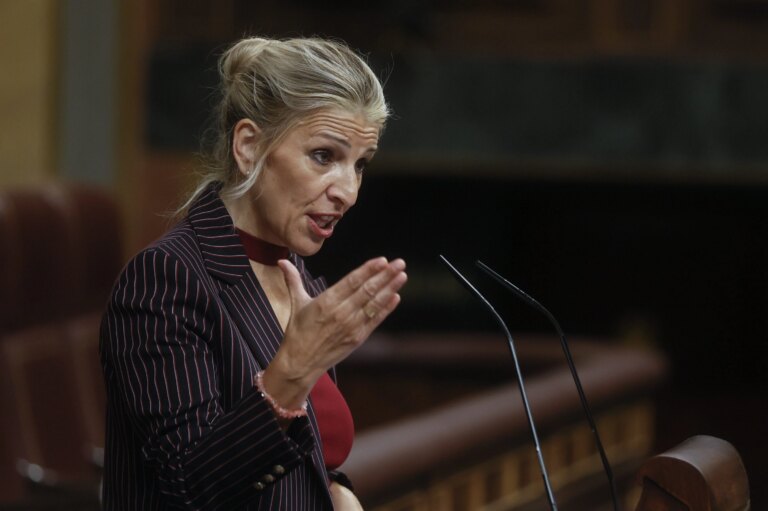
The CEO of i-DE, distributor of the Iberdrola group in Spain, Eva Mancerahighlighted this Wednesday, at the Higher Technical School of Industrial Engineers of the Polytechnic University of Madridthe role of electrical networks in the energy transition and how digitalization and technology are changing the way they operate.
The growth of a country cannot be understood without an electrical network in line with the current times. New industries, but also electric mobility, heat pumps, self-consumption… in short, a decarbonized and electrified country needs to be based on a robust, safe and flexible electrical network.
There are more and more cases that indicate that the Spanish electricity grid is saturated, something reflected in a recent Deloitte report, with data from Aelecwhich indicates that in Spain during 2024, requests for access and demand connection to the electricity distribution network were registered for more than 60 GW. Of all this magnitude, only less than 10% was granted, which means that its corresponding investment volume was restricted or delayed. This is also demonstrated by the capacity maps, first published last September and recently updated in early December, which show that the 88% of the nodes in Spain are saturated.
“To contextualize these figures, the power currently contracted in Spain amounts to 178,000 MW, so in 2024 applications equivalent to almost 40% of the total currently available were registered, evidencing a great appetite for quality electricity demand,” he showed. Mancera. In this sense, the head of i-DE wanted to highlight that “every client who receives a no when faced with a connection request is a new stoppage in the energy transition.”
In order to stop this situation and advance the energy transition, it affects “an investment in line with the countries around us that equates the associated risk premiums”stated Mancera. For its part, the CNMC proposal for the remuneration of electrical networks for the period 2026-2031 has set off alarms in the industrial and housing development sectors. The proposed rate of 6.58% is well below European levels, which compromises investment in electrical networks and therefore the country’s electrification and economic development (Germany has it set at 7.1%, while France’s is at 7%).
Spain It has one of the most extensive networks in Europe and more than 30 million clients, and is at the bottom in terms of remuneration per client (€176/client compared to €429 in Germany and €409 in France). Mancera highlights that, however, they want to reduce remuneration even further, “reducing investor attractiveness when the rate of investment needs to be tripled to meet climate objectives and most European countries launch ambitious electrification projects.” The proposed pay rate has been called “disappointing” by some financial analysts and investors.
Extreme weather events
The extreme weather events They represent an increase in high economic costs, with additional expenses in OPEX and even asset losses for tens of millions of euros. The operating costs must be sufficient to, in these circumstances, be able to return the supply to the population in the shortest possible time and the current reality means that a single replacement of supply can take many years.
Mancera has highlighted that the effects of DANA —ravaged Valencia a year ago— or the blackout of April 28, 2025 —left millions of people in Spain and Portugal without electricity for hours—evidenced the relevance and increasingly criticality of the electrical system for the productive system and the well-being of citizens. He insists that The “energy transition” offers enormous advantages to citizens in terms of decarbonization and energy security, while demanding a robust, digitalized and flexible network.
“Digital” and “robust” networks facilitate the integration of renewables, support electrification and guarantee operational security in high variable generation scenarios. “The digitalization of the network, the modernization of infrastructure, having advanced telecommunications and back-up systems, as well as the growing application of Artificial Intelligence allow the network to operate with greater reliability, as well as having greater capacity and immediacy in the replacement of supply in the event of extreme or unexpected events. In addition, they facilitate the customer’s access to tools and utilities that keep them informed at all times,” Mancera explained.
Therefore, it indicates that digitalization cannot be seen “as an expense”, but as a benefit and as something absolutely “necessary”, which cannot be analyzed in the short term but as a means to generate long-term benefits.
The day of DANA, SDI managed to replace 95% of the service in less than 72 hours, minimizing the impact on users: this was mainly thanks to the existing digitalization of the network and real-time monitoring systems. However, the economic cost was high, with additional OPEX expenses and asset losses amounting to tens of millions of euros, which under the new methodology would have a much more pronounced impact and could hamper future responses.
In the same line, Mancera considers that the replacement of supply after the blackout was carried out by the entire system in a much shorter time than other European precedents, thanks to digitalization and the operational capabilities of the distributors was key to this.
The current regulatory proposal of the CNMC proposes rreducing the recognized costs of operation and maintenance for distributors, something that stands out can contribute to “precariousness of the sector” and not facilitate having the necessary muscle so that distributors can respond with guarantees to society in extreme situations.
After DANA, Iberdrola presented in Valencia the il-lumina project which, with an investment of 100 million euros, is redesigning the affected distribution electrical network, incorporating resilience measures through infrastructure design changes, as well as the use of the latest digitalization standards, which will allow for a more robust network prepared for possible future adverse phenomena. The company has recently reported that the project has reached 70% completion and that it will reach 90% at the end of the year to be completed throughout 2026, which will leave an electrical network of the future installed in the area affected by DANA.