Hours not worked due to temporary disability have doubled since the pandemic
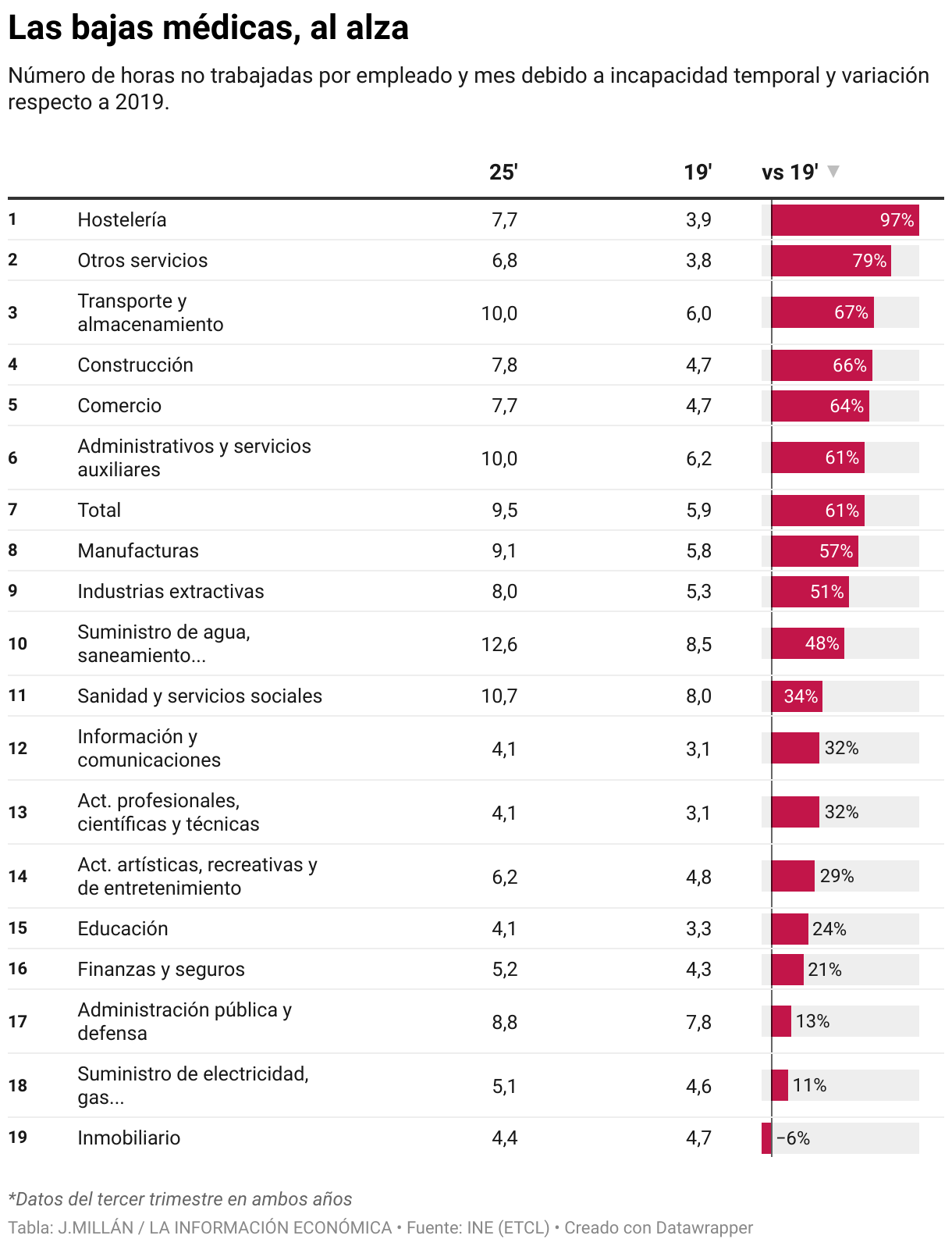
Hospitality workers They are experiencing a kind of epidemic of medical sick leave, which has skyrocketed since the outbreak of the coronavirus. The number of hours not worked per employee per month due to these processes has doubled since the end of 2019. In this way, while in the third quarter of 2019 an average of 3.9 hours of work per employee per month were lost for this reason, in the same period of 2025 this figure was already 7.7 hours. This is reflected in the data from the Quarterly Labor Cost Survey (ETCL), which the INE published last week.
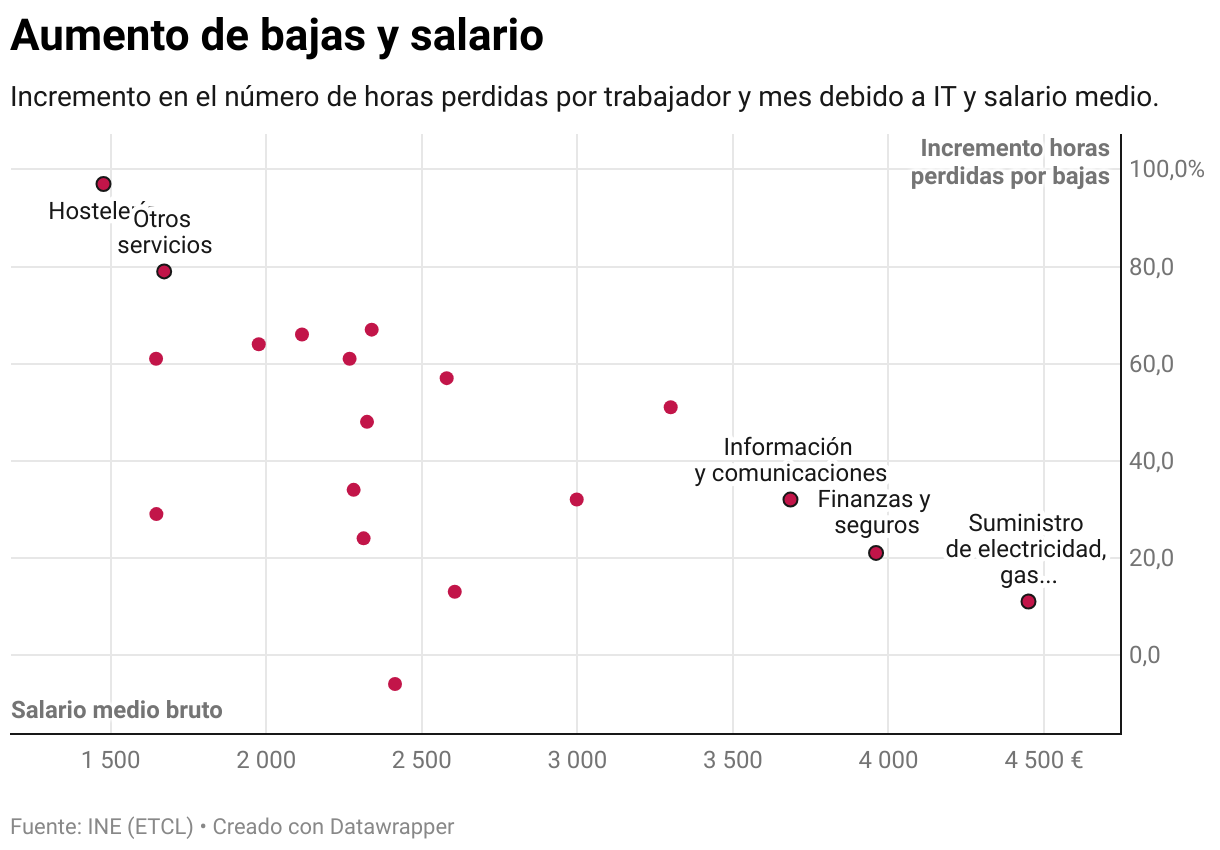
The hospitality industry has become the sector in which hours not worked due to temporary disability (IT) have grown the fastestthe term used to designate medical leave in work jargon. Since the third quarter of 2019, the increase in IT in the hospitality sector has surpassed that of other activities such as transportation and storage (67% more hours lost than six years ago), construction (66%) or commerce (64%).
Before the pandemic, the hospitality sector was the fifth sector of the 18 that make up the Spanish economy with the lowest incidence of medical leave. However, The strong rebound experienced in recent years has catapulted it to tenth position, along with trade. In any case, it still does not reach the levels of the health sector (10.7 hours lost per worker per month) or of the activities of water supply, sanitation, waste management and decontamination (12.6), which are the trades with the highest incidence of temporary disability that have traditionally been recorded.
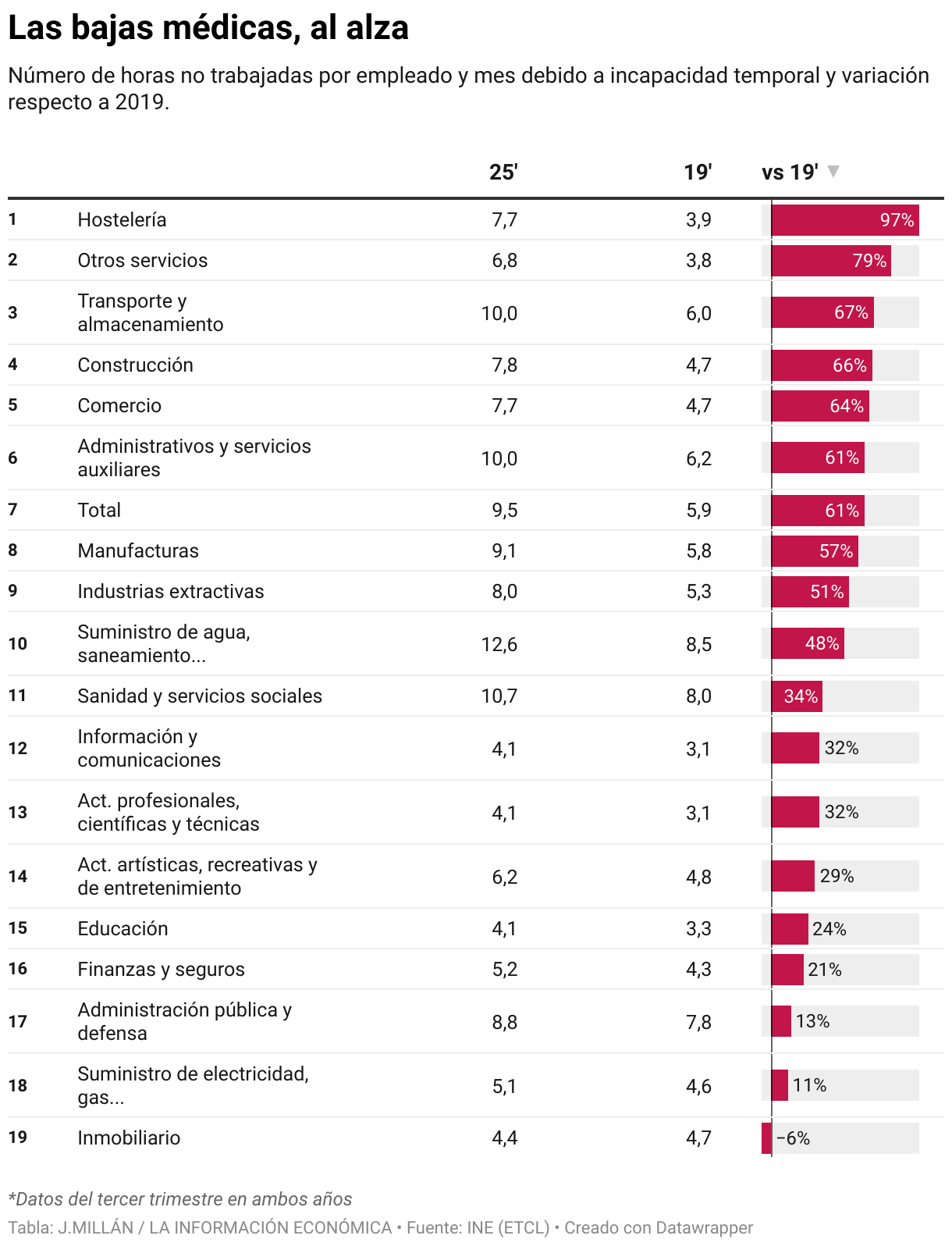
The rise in medical sick leave has spread throughout all sectors of the Spanish economy, although unevenly. The time not worked for this reason has grown by 61% nationwide since the end of 2019. Close to that reference, occupations such as administrative and auxiliary service workers (61%) or the manufacturing industry (57%) also appear.
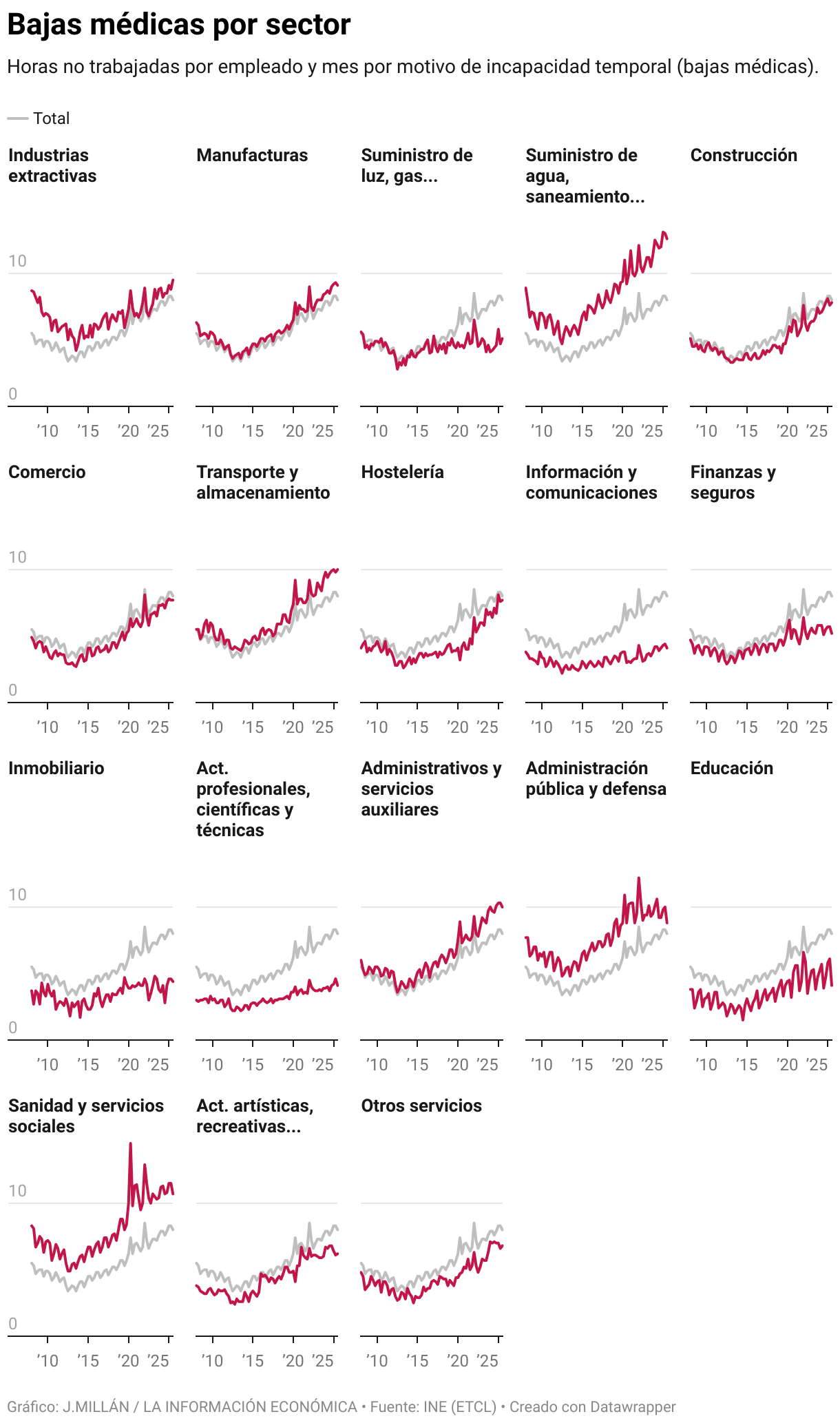
Insteadthere are activities where the rebound in hours lost due to IT has been much more moderate. We are talking, for example, about the public administration, where the hours not worked by IT grow by 13%. Finances (21%); education (24%); artistic, recreational and entertainment activities (29%); scientific and technical professional activities (32%); information and communications (32%) or health and social services (34%). In fact, there are sectors, such as the financial sector, where lost hours have even been reduced compared to 2019.
Possible causes
There is no single cause that explains the general uptick in medical sick leave, but there are several factors that may be influencing it. Among them are the saturation of the health systemwhich lengthens the deadlines for diagnostic tests or medical appointments, thus delaying discharges. Studies on the subject also detect a rise in sick leave due to mental health, long-term processes and people who register more than one medical leave per year.
The drastic increase in medical sick leave has become cause of great concern for companies. A concern also shared, although from another angle, in Social Security, which is seeing how the costs it bears in temporary disability benefits have skyrocketed.
More increases where there are low salaries
One of the most striking factors of the IT rebound is that some of the sectors where it is growing the most (such as hospitality, other services, construction or commerce) are among the worst paid in the Spanish economy. A factor that they share with the common denominator that they are eminently in-person jobs. On the other hand, activities such as the energy sector, public administration or finance, which are among the best paid, show smaller increases in sick leave.