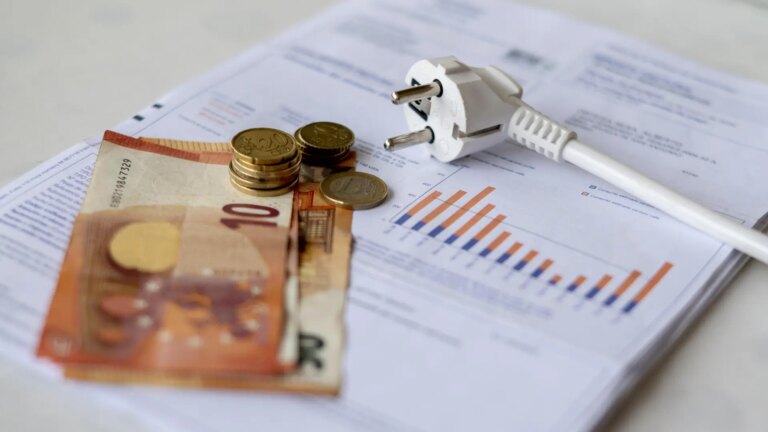
These are the savings products that compete today for 3% of risk-free profitability

3% profitability sounds good, but it costs. For months it has been the fetish number for risk-free savings. Banks, comparators and platforms have put them in shop windows, promotions and campaigns. Deposits, Treasury Bills, remunerated accounts. The figure is there, brilliant, but increasingly less accessible.
And that 3% does not fall from the sky. Sometimes it forces money to be blocked for years. Or requires domiciliation of income. Or it is only applied during the first months. And now, with the year almost closed, it is beginning to become clear that this profitability is no longer as easy to achieve as it was a few months ago.
Until recently, a little attention was enough to find deposits at 3% APR. Today we have to search. The offers still exist, but many already come with fine print. Renault Bank, for example, maintains a 2.63% APR on its 36-month deposit, but does not allow early cancellation. SME Bank, through Raisin, offers 2.75% for 24 months, although it requires a minimum of 10,000 euros and does not allow you to withdraw the money early. And the most flexible products, such as MyInvestor’s one-month deposit, barely reach 2.5%.
Deposits that do allow the contract to be broken, such as Pibank’s 12-month deposit, lower the profitability to 2.02%. The early cancellation penalty usually involves lose accrued interest. That is, liquidity or profitability, but not both.
Remunerated accounts are also not what they were. Some, like the Health B100 account, continue to offer up to 3.2% APR. But it only pays the first 50,000 euros. Others, like Trade Republic, offer 2.02% without conditions, but without exceeding that psychological barrier of 3% that a few months ago seemed so common.
On the radar of conservative savers, Treasury Bills continue to appear as a solid alternative. But even here the 3% has vanished. In the last auction of the year, held this December, the Treasury placed three- and nine-month bills with yields of 1.999% and 2.016% respectively. Not bad, but insufficient to beat inflation that stood at 3% in November.
The difference is not only profitability. Bills, unlike a deposit, do not apply withholding at the time of collection. Your taxation is settled later, in the income tax return. But for practical purposes, the net return they leave today is around 16 euros per 1,000 invested for one year, compared to the more than 20 euros that a good deposit without commissions can offer.
Of course, there is another difference that is not so clear. To invest in Letters you need at least 1,000 euros. And although they can be purchased without commissions through the Treasury, most choose to do it through their bankwhere custody or transfer fees come into play. A small erosion that, added to tight profitability, can tip the balance.
Monetary funds continue to capture savings
This friction explains why another third way, monetary funds, continue to be among the favorite preferences of savers. According to the latest data from Inverco, at the end of October they accumulated more than 23,500 million euros in assets, and in November they led the sector’s net deposits, with inflows of more than 1,200 million.
The appeal of these funds is not so much in the type they offer but in the way they do it. They invest in very short-term debt, bills, promissory notes and monetary assets of high credit quality. Its profitability moves within a range close to 2% annualizedin line with the official types, but with two characteristics that make the difference. Daily liquidity and deferred taxation. As long as the fund is not reimbursed, it is not taxed. And that, in an environment of stable rates, begins to count.
The calendar is key again. A two or three-year deposit today fixes a known profitability, but forces us to assume that the environment in 2026 will be similar to the current one. The Letters allow you to renew the contract every few months, but require being aware of auctions and prices. Monetary funds, on the other hand, function as a kind of intermediate zone. The money is not blocked and automatically adapts to rate changes, no matter how small.
Meanwhile, financial institutions adjust their offer with surgical precision. Large banks have reduced the number of long-term deposits with high rates, concentrating their campaigns on short terms or combined products.
Remunerated accounts play a different role here. They do not compete to be the definitive solution, but rather to capture short-term flows. Some entities continue to offer rates around 3% during the first months, but almost always with balance limits or linking conditions. At best, they function as a temporary parking lot while the next move is decided. At worst, as a claim that loses appeal once the promotional period has expired.
In this context, the data begin to anticipate how 2026 may start. The market does not expect major changes in official rates in the short term. The returns on risk-free savings move in narrow bands. And money, far from seeking a hit, seems to opt for fragmented strategies, spread across several products, with different maturities and different degrees of liquidity.