Hyaluronidase: what it is and what it is for
Hyaluronidase in aesthetic medicine allows correcting excess hyaluronic acid, treating complications and safely reversing fillers.

Graduated in medicine from UPF-UAB.
Master in aesthetic and anti-aging medicine COMB-UB.
Graduate in URL Communication.
In aesthetic medicine there is something that we all want: beautiful, safe results that make us feel comfortable with our image. However, treatments do not always turn out exactly as we expect. Maybe a filler with hyaluronic acid gives too much volumethe product may move or, in more serious cases, complications such as vascular obstruction may arise.
And here appears a resource that many patients do not know about, but very valuable for those who work with cross-linked hyaluronic acid: hyaluronidase.
What exactly is hyaluronidase?
Hyaluronidase is an enzyme, a substance that acts as “biological scissors”. Its function is simple but very powerful: breaks hyaluronic acid chainsa component naturally present in our body and that, in aesthetic medicine, we use as a filler material to hydrate, provide support and improve facial volumes.
When hyaluronidase is injected, that hyaluronic acid that we had placed It breaks down faster and is easily reabsorbed by the body.. In other words, hyaluronidase gives us the possibility to correct, adjust or even reverse a filler treatment.
What is it used for in aesthetics?
The most common thing is to resort to hyaluronidase in these situations:
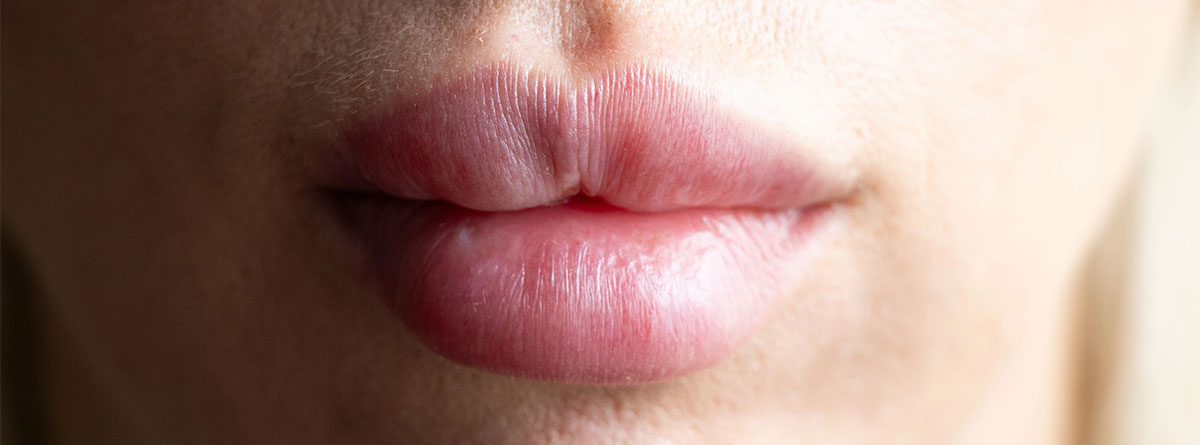
- Correct excess volume: for example, lips that are too large or unnatural.
- Eliminate irregularities: like small lumps or asymmetries after a filler.
- Treat more serious complications: when the product presses or blocks a blood vessel and can compromise circulation in the area.
- Reverse treatment early: There are people who simply decide that they are not happy with the result and prefer to return to their previous appearance.
Let’s take a simple example: imagine that you get filler done on your cheekbones and you notice that the volume is greater than you expected. Instead of waiting months for the hyaluronic acid to break down on its own, your doctor can apply hyaluronidase and have the excess disappear in a matter of hours or days.
When is it indicated?
Doctors usually recommend it in several scenarios:
- Obvious asymmetries after a filling.
- Migration of the product to another area (very typical around the lips).
- Appearance of nodules or granulomas.
- Aesthetic and medical emergenciessuch as vascular obstruction.
That is, it is not a product to be used routinely, but rather a precision tool for specific cases.
If you find yourself in any of these cases and are considering the use of hyaluronidase, at MAPFRE Health Insurance you will find specialists who will advise you on the best treatment.
CALCULATE YOUR PRICE
Precautions and safety
And this is where it is worth stopping. Hyaluronidase is very effective, but its use requires an expert hand and a controlled environment.
- Allergy test: The first thing is to make sure that the patient does not have hypersensitivity. The allergic reaction, although rare, can be intense.
- Dose calculated to the millimeter: Dissolving a small bump on the lip is not the same as correcting excess filler on the cheekbones.
- Equipped clinic: In the event of any unexpected reaction, it is essential to have the necessary material and knowledge to act immediately.
- Qualified professionals: Hyaluronidase is not a “cosmetic trick”, but a medical procedure. Therefore, it should only be applied by someone who knows facial anatomy well and knows how to manage complications.
Possible side effects and contraindications
Like any intervention, hyaluronidase may have side effects. The most common are mild: redness, swelling, small bruises, or stinging sensation. In rare cases it can cause serious allergic reactions, hence the importance of prior testing.
Another detail that is not always commented on: the enzyme does not distinguish between the hyaluronic acid in the filler and that which already exists naturally on the skin. This means that if applied in excess, it can result in a greater than desired volume loss in the treated area.
Regarding contraindications, It is not recommended in people with a known allergy to this compound or animal proteins.nor in pregnant or breastfeeding women, except in very specific emergencies.
What you should know…
- Hyaluronidase is not a miracle product, but it is a great ally of safety in aesthetic medicine. It allows us to correct results, avoid complications and, above all, offer patients the peace of mind that there is always a plan B.
- If you are ever considering a treatment with hyaluronic acid and are worried about what would happen if you are not satisfied, remember that hyaluronidase exists. Of course: it must be applied carefully, in the hands of expert doctors and in an appropriate environment.
- Because in the end, aesthetics is not only about improving appearance, but also about taking care of the health and confidence of those who decide to take the step.
References
- “The Use of Hyaluronidase in Aesthetic Practice: A Comparative Study of Practitioner Usage in Elective and Emergency Situations” (2024), Aesthetic Surgery Journal.