The conflict over beet that threatens to bring tractors to the doors of Primark
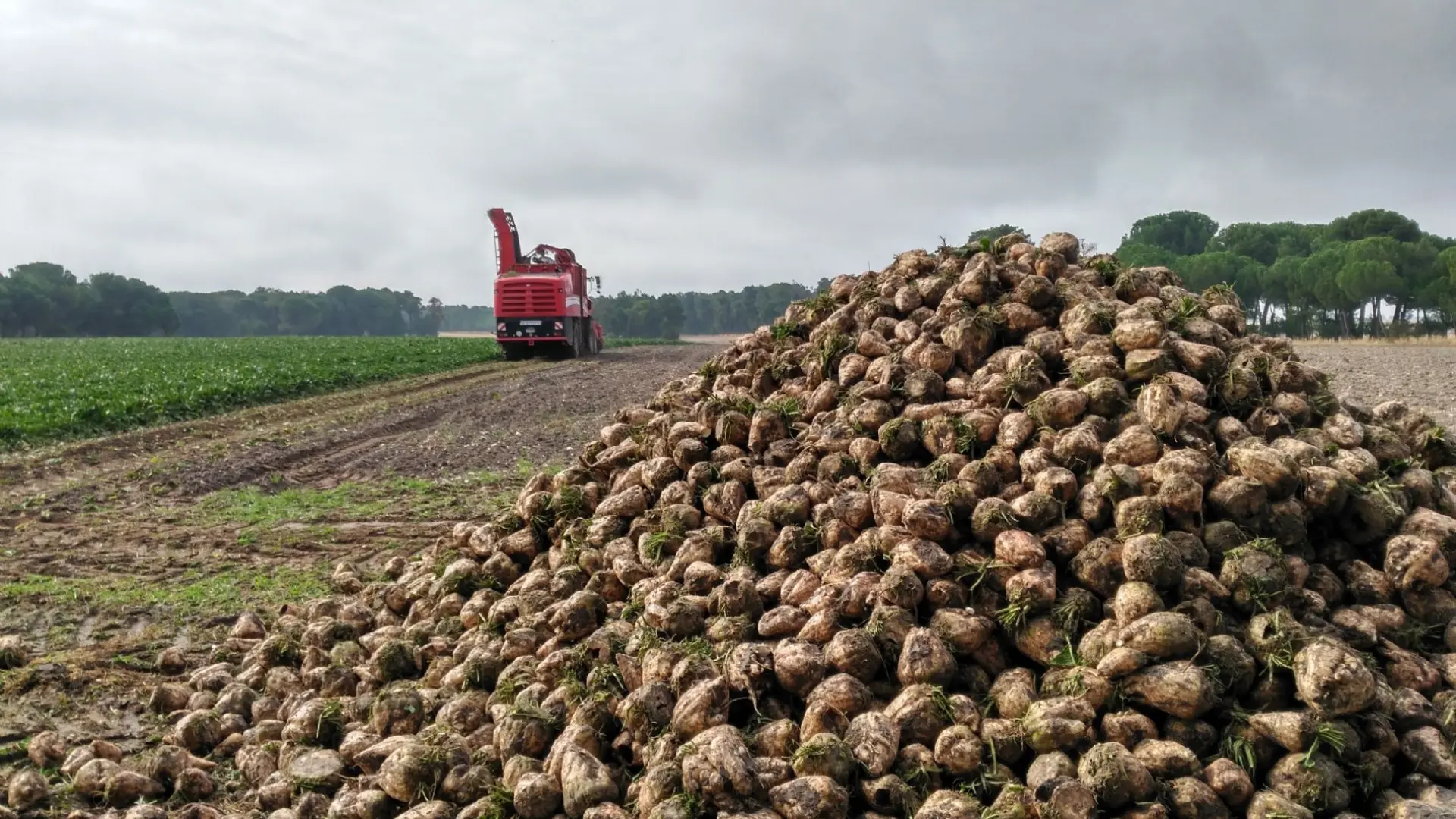
The decision of sugar bowl, which belongs to the British group Associated British Food, AB Foods, that it was not going to acquire beet from Andalusian producers for the new campaign to be refined in its factory in Jerez de la Frontera (Cádiz) has outraged local producers and even more so after what happened with the plant La Bañeza. Specifically, the main agricultural organizations of the producing provinces (Seville and Cádiz) regret that such a resolution has been communicated to them through a simple whatsapp just a few days ago.
It is worth remembering that The sugar campaign began at the beginning of the month and concludes on September 30 of the following year with sowing during the fall in the dry lands and, in spring, for irrigation. “No one expected it”admits COAG Andalucía’s beet manager Diego Bellido, who recognizes that at this point “there is no alternative.” In itself, Asaja Sevilla and COAG recognize that “they are considering the possibility of demonstrating” and point to the other great asset of AB Foods in Spain: the textile chain Primark. This media has tried to contact Azucarera on several occasions, without success, until the closing of this article.
According to various sources, the Andalusian Government has offered help to the company to maintain the profitability of beet cultivation this season, after last year it enjoyed “an attractive price” which Bellido (COAG Andalucía) estimates at around 60 euros per ton. In this year the value offered for what was planted in spring would have fallen by a significant percentage to around 35 euros per ton, hence the Andalusian government has shown its willingness to financially compensate farmers. This crop already has financial support through associated support from European Agricultural Guarantee Fund (EAGF) and another of European Agricultural Fund for Rural Development (EAFRD) linked to a series of environmental objectives. Both are linked to the Common Agricultural Policy (CAP).
Spain produced almost 384 tons in 2023/2024 while, as a whole, the European Union (EU) generated 15,558 tons. A tiny part compared to a world production that rose to 181,384 tons, according to Agriculture
Spain, a sugar-deficient country
The fate of some 500 Andalusian families and some 1,500 farms spread across the provinces of Seville and Cádiz is in suspense. According to the most recent data managed by the Ministry of Agriculture, corresponding to the 2023-2024 campaign, there has been a significant boost to the surface area and production, reaching the 36,412 hectares planted with beets throughout Spain (only 9,240 hectares were planted in autumn, the rest in spring) and with Andalusia (Seville and Cádiz) concentrating 25% of everything cultivated compared to 67% in Castilla y León.
At the production level in Spain They far exceeded 3,000 tons last season, levels that have not been reached since 2017 and 2018, when the harvest reached 3,337 tons. Regarding sugar, Spain produced in 2023/2024 almost 384 tons while, as a whole, the European Union (EU) generated 15,558 tons. A tiny part compared to a world production that rose to 181,384 tons. Spanish sugar exports were 96.4 million euros compared to imports of almost 958 million euros.
The future of the Jerez factory
What union sources from UGT Fica do deny, echoing what Azucarera herself stated, is that the Jerez de la Frontera plant is going to close the shutter. “We are not aware of the closure“In this case our concern is focused on the next campaign,” they admit from this union organization where they point towards “internal relocations” and urge seek a solution with local farmers to maintain employment “in an area where industry is scarce and agriculture has weight.” In any case, the union sources consulted indicate that the activity of this factory will be directed “to the refining of beets from other places and countries.”
In this line, another circumstance is added:falling prices in recent weeks “due to the incorporation of other countries such as Brazil, and even Ukraine.” The value of sugar is decided in international markets. For example, in London It was quoted yesterday at 451.10 dollars per ton with a downward trend in recent days, since on October 1 it was 453.2 dollars and on September 16 its value was around 465.6 dollars. In the case of the sugar futures to March 2026its price has dropped slightly so far from $16.13 to $15.57.
“I have 3 or 4 hectares planted with cotton with irrigation, but in dry land there is no alternative to beets”, Diego Bellido (COAG Andalusia)
With raw materials from third countries
Bellido (COAG Andalucía) criticizes that “Say that it is more profitable for them to bring a ship from Brazil, China, Pakistan and refine it in Jerez” and they regret that Azucarera’s decision caught them with the lands already prepared and planting has begun. “I have 3 or 4 hectares planted with cotton with irrigation, but in dry land there is no alternative to beets,” he laments. In this sense, from Asaja Sevilla they criticize that Azucarera has not accepted the financial support offered by the Junta de Andalucía and criticizes that “cane sugar from third countries that is bought at slave prices is going to be refined and given to the autonomous communities without a traditional productive sector.” From this agrarian organization they believe thataround 4,000 hectares that the company required to supply themselves they were going to be more than enough and they show their fear that producers will be forced to return European aid conditional on compliance with certain environmental conditions that expire in 2027.