“It is easier to sell a policy for pets than one for babies or children”

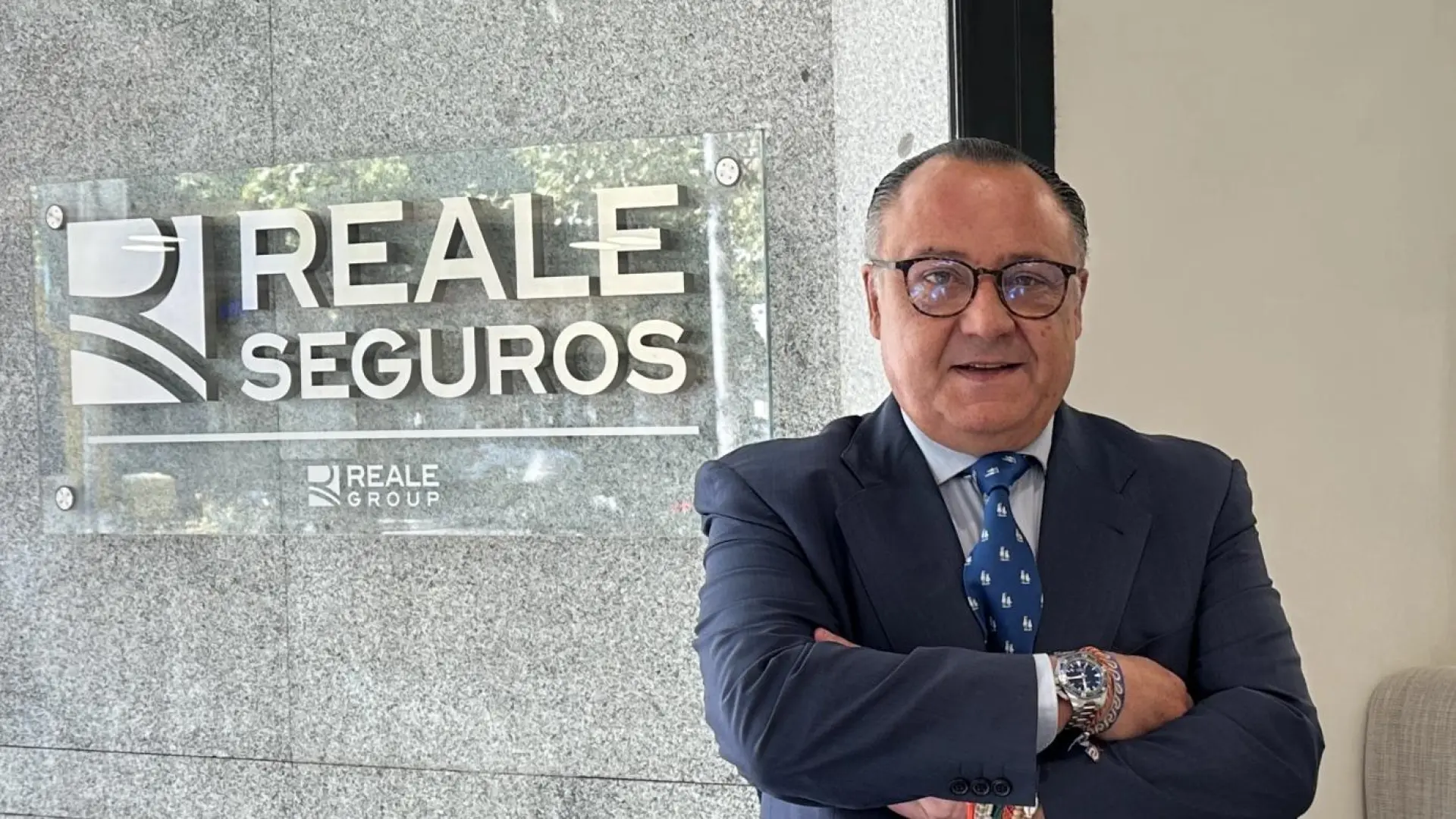
Fernando Coín has been linked to Reale Life Insurance and Pensions since its founding in 2010. Three decades in which insurers have undergone a transformation as a result of the regulatory measures put in place as a consequence of the financial crisis of 2008. A few years in which it admits that the sector has had to carry out an exercise in “transparency”, but also adapt to new social changes. Among them, highlights the greater presence of pets inside the home. In Spain there are around 30 million animals, mostly dogs, a figure that exceeds children under 14 years of age, who according to the National Institute of Statistics (INE) slightly exceeds 6.2 million.
In these circumstances, Cosín admits a greater demand by consumers for animal products, which goes beyond the mandatory civil liability insurance. “It’s easier to sell a policy for pets than for babies,” he says. In an interview with La Información Económica he explains that among the company’s plans is to promote ‘Family Instinct’ insurance, which covers, among other benefits, disability or death on the part of the parentsas well as pathologies in newborns. “We are going to revitalize this coverage for 2026 because we think it is differentiating with respect to the competition,” he says.
2025 is being more positive for the life branch of Reale Seguros than they initially anticipated. With the fall in interest rates They expected the life business to fall by around 1%, weighed down by the lower take-up of savings products, something that has not happened. Only in the first nine months of the year, premiums issued have registered a growth of 22.7% with the contribution of 9.30% in life risk and 31.43% in savings and investment. “We thought we were going to experience a few quarters of flat growth, but we are going to end up with an advance of over 20% easily,” he says. The data collected by the consulting firm ICEA to which this media has had access shows an advance of 16.4% in the first three quarters as a whole.
In this sense, they expect to close the year with “some growth” over what was recorded last year, when turnover rose almost 10%until reaching 69 million. In benefits, life and pensions it recorded profits of 3.67 million, 15.7% more. Among the launches in recent months are two optional coverages within Reale Vida Global: ‘Life Cycle’, that unites the guarantees of absolute permanent disability with those of dependency; and ‘Flexible IPA’ through which you can contract a disability capital greater than that of death up to the age of 67.
Another of the relevant legs of the life business are individual pension plans, which They come from experiencing a relevant transformation. 2020 was the last year that savers were able to deduct a maximum of 8,000 euros per year in personal income tax, rising to 2,000 euros in 2021, to drop to 1,500 euros from the following year. A measure that, in Cosín’s opinion, has condemned this type of product. “Individual plans are sustained thanks to profitability, taxation has destroyed them,” he comments.
The Government took this measure with the aim of promoting employment pension plans, which have not yet taken off under a “very complicated” regulatory framework. In this regard, explains that the concept of pension savings “has been lost”with the focus on Systematic Savings Plans (PIAS), which allow money to be withdrawn five years after the first contribution. “This time horizon is not long-term (…). Originally there was a culture of anticipatory savings as a complement for tomorrow, but that no longer exists,” he points out, while attributing this trend to the fact that households “no longer save,” as well as the lack of tax advantages. In this context, they detect opportunities to grow in niches such as the self-employed, for which they are preparing a pension plan next year.
Reale Vida y Pensiones has a reduced share in Spain of just 0.1%, a proportion that They place him in 33rd place in the classificationahead of Grupo Metlife, DKV Seguros, Grupo AMA or Pelayo Seguros. “We do not rule out a banking alliance, although the concentration undertaken in recent years makes this possibility difficult,” he says.