It represents 40% of pensions for those over 65 years of age
The widow’s pension is one of the great unknowns of the public system, but it plays a key role in guaranteeing decent living conditions for millions of women in their last years of life. When the time comes to retire from active life, the vast majority of men live off their retirement pension. However, in the case of women the reality is different: only 58% of pensioners receive retirement benefits. If it were not for widowhood, around 1.2 million women would not have any type of public pension to face the final stretch of his life.
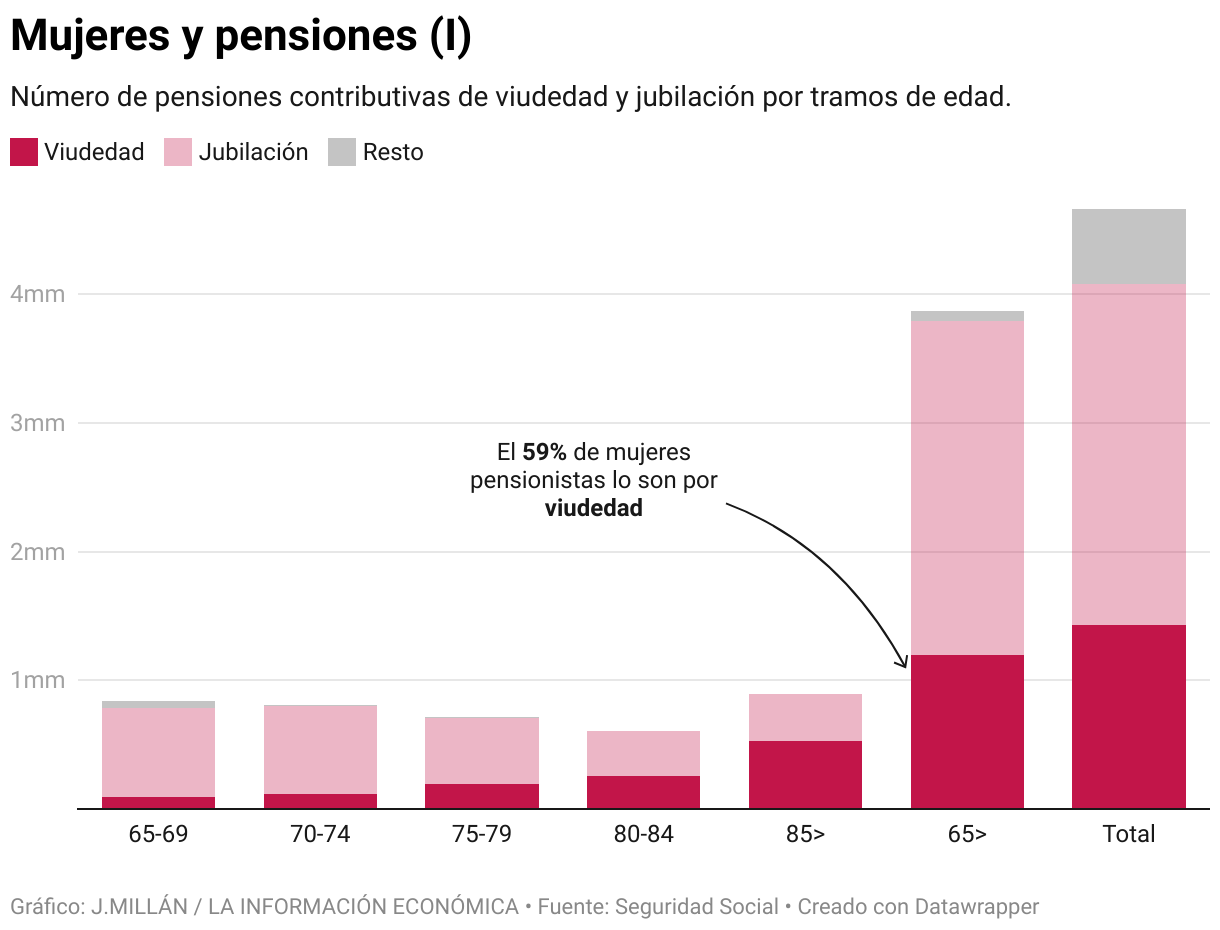
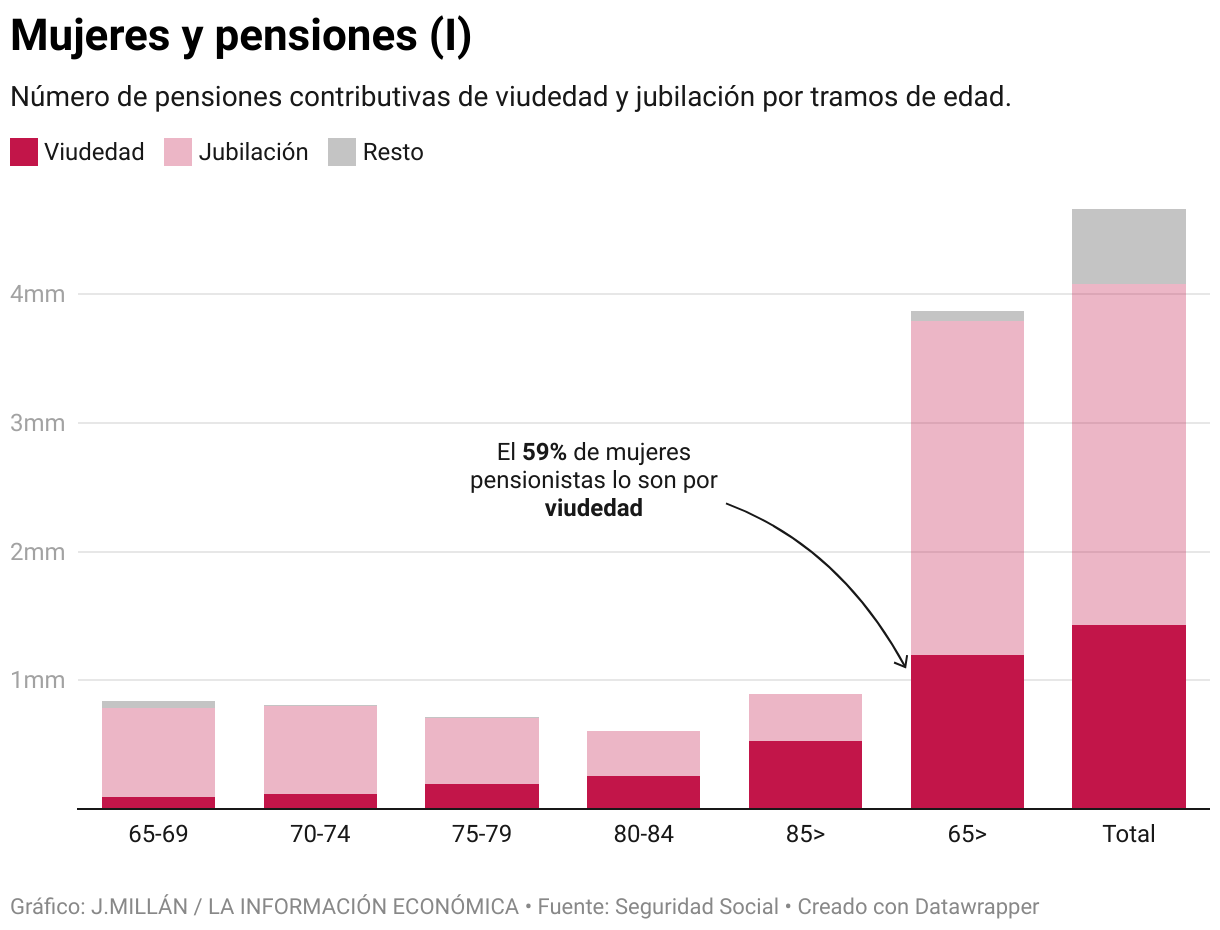
The contributory pension statistics published by Social Security on Tuesday reflect that 40.3% of the contributory pensions received by women aged 65 or over are widow’s pensions. A percentage that, in the case of men, is tiny: it barely reaches 4.2% of the entire public system.
This significant gender gap is a delayed image of what the labor market was like several decades ago. Back then, a large proportion of the female population was relegated to working at home, an unpaid job. When it came time to retire, the fact of not having contributed left women in a very vulnerable position to face the final stretch of their lives.
In this situation, One of the few ways to access a benefit was the death of the husbandwhich had had a sufficient listing career. The widow’s pension—which is for life and is calculated based on the deceased’s Social Security contribution—acts as a patch for hundreds of thousands of women who have not been able to retire through ordinary means because they have not contributed enough.
When analyzed by generations, the data is illuminating. Among women over 85 years of age, 59.5% who collect a public contributory pension receive a widow’s pension. A percentage that falls to 42% in the segment between 80 and 84 years old, is reduced to 26.8% in the group between 75 and 79 years old and stands at 11.4% in the recently retired group (65 to 69 years old).
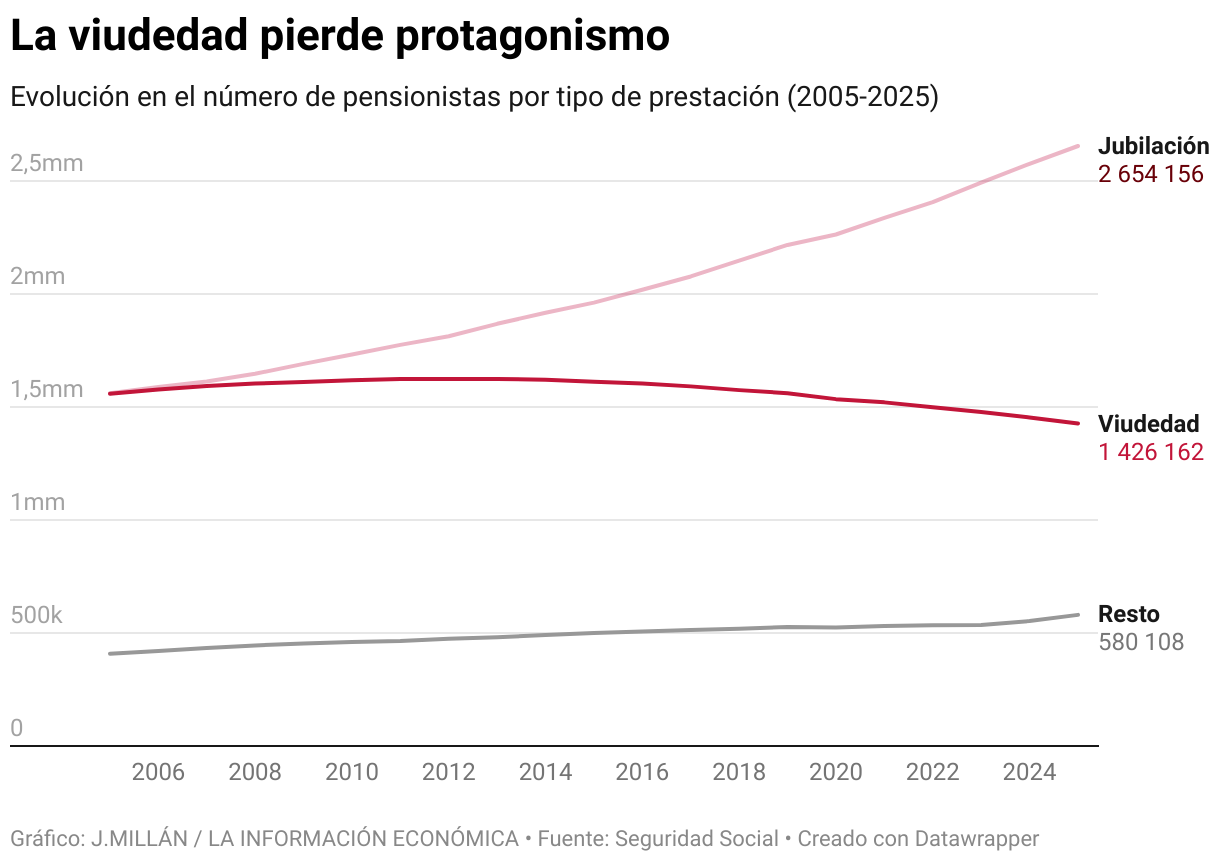
These figures reflect the progressive incorporation of the female population into the labor market. As these pioneering generations in the workplace retire, they do so with retirement pensions, which are much more substantial. The latest data released by Social Security show a boom in the number of retirement pensions owned by women, which have grown by 70% in the last 20 years. In that same period, widowhood has fallen by 8.2%, mainly due to the progressive death of the generations of women who most depended on this benefit.
241 euros less per month
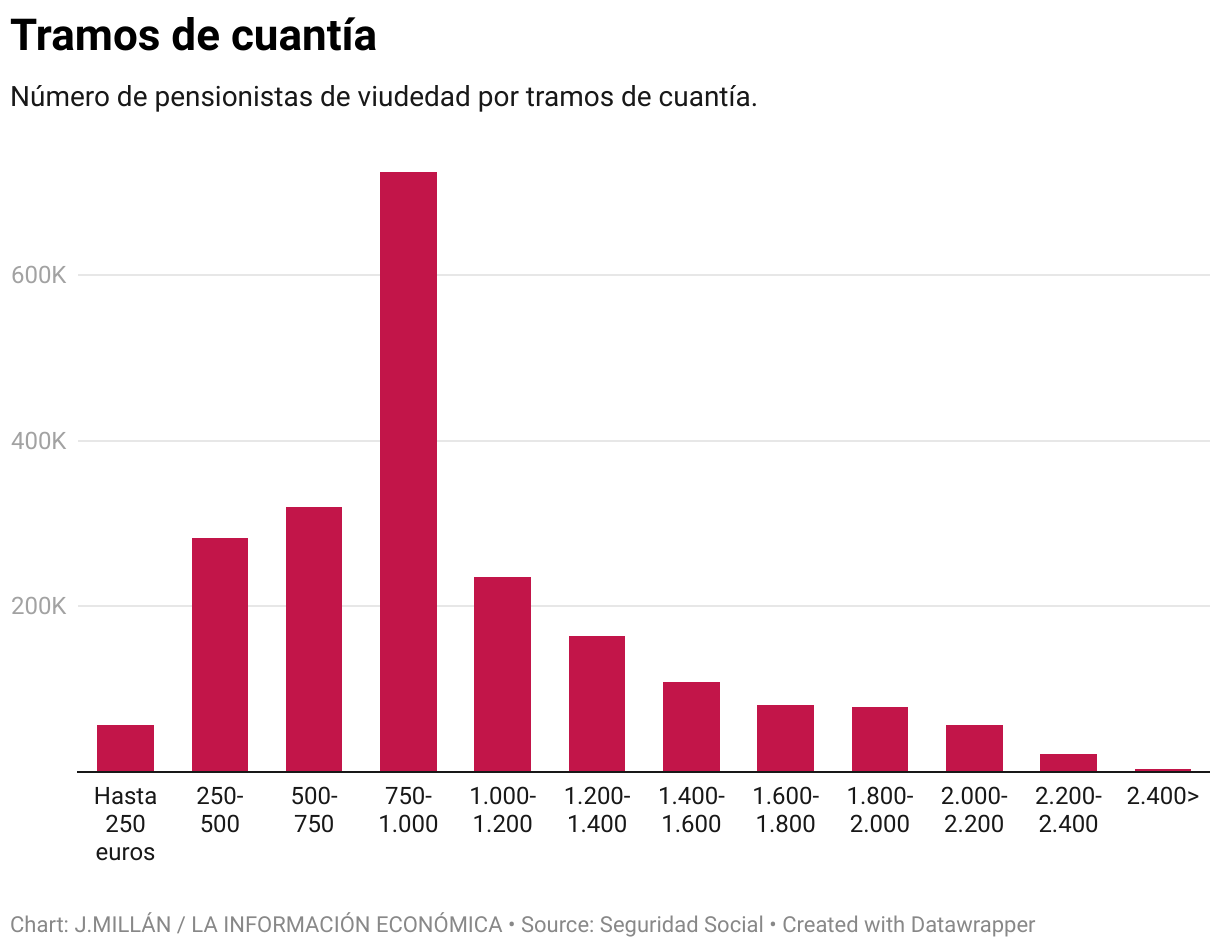
Although widow’s pensions continue to act as a ‘lifesaver’ for many women, their amount is very modest. According to the latest Social Security data, The average widow’s benefit is 966 euros gross per month in 14 payments. An amount 241 euros lower than the average retirement pension received by women (1,207 euros) and 544 euros lower than the system average. In fact, two out of every three widow’s pensions do not reach 1,000 euros and only 3.8% exceed 2,000 euros per month.
The widow’s pension has been in the media spotlight recently because the Ministry of Social Security is studying expanding the group of beneficiaries to also include relationships that did not get married or register as a de facto couple. According to a draft to which he has had access Economic Informationthe ministry proposes that the widows or widowers of couples who can prove at least five years of stable and continuous cohabitation.
Towards a full retirement
The demographic trend suggests that The role of the widow’s pension in supporting income will gradually lose importance in the future. Women who retire today generally do so with a proper retirement pension, so the role of widowhood will become residual in the future.
However, there are voices that advocate maintaining this feature, even if its design is modified to adapt it to new times. “This annuity provides insurance to married couples against the risk of seeing their purchasing power diminished when one of the spouses dies“says Luisa Fuster, professor at the Carlos III University of Madrid, in a monographic report on the subject published by Fedea. “It is possible to argue that there are economic benefits derived from publicly providing this insurance and it is not convenient to eliminate widow’s pensions,” she adds.
“Currently, the widow’s pension plays a fundamental role in avoiding situations of poverty for women who did not contribute in the past. Indeed, If today we did not have a widow’s pension, 50% of pensioners would not receive a contributory pension. Furthermore, the widow’s pension reduces the gender gap in contributory pensions,” concludes Fuster.