Labor concludes the first meeting to raise the minimum wage without specifying its proposal

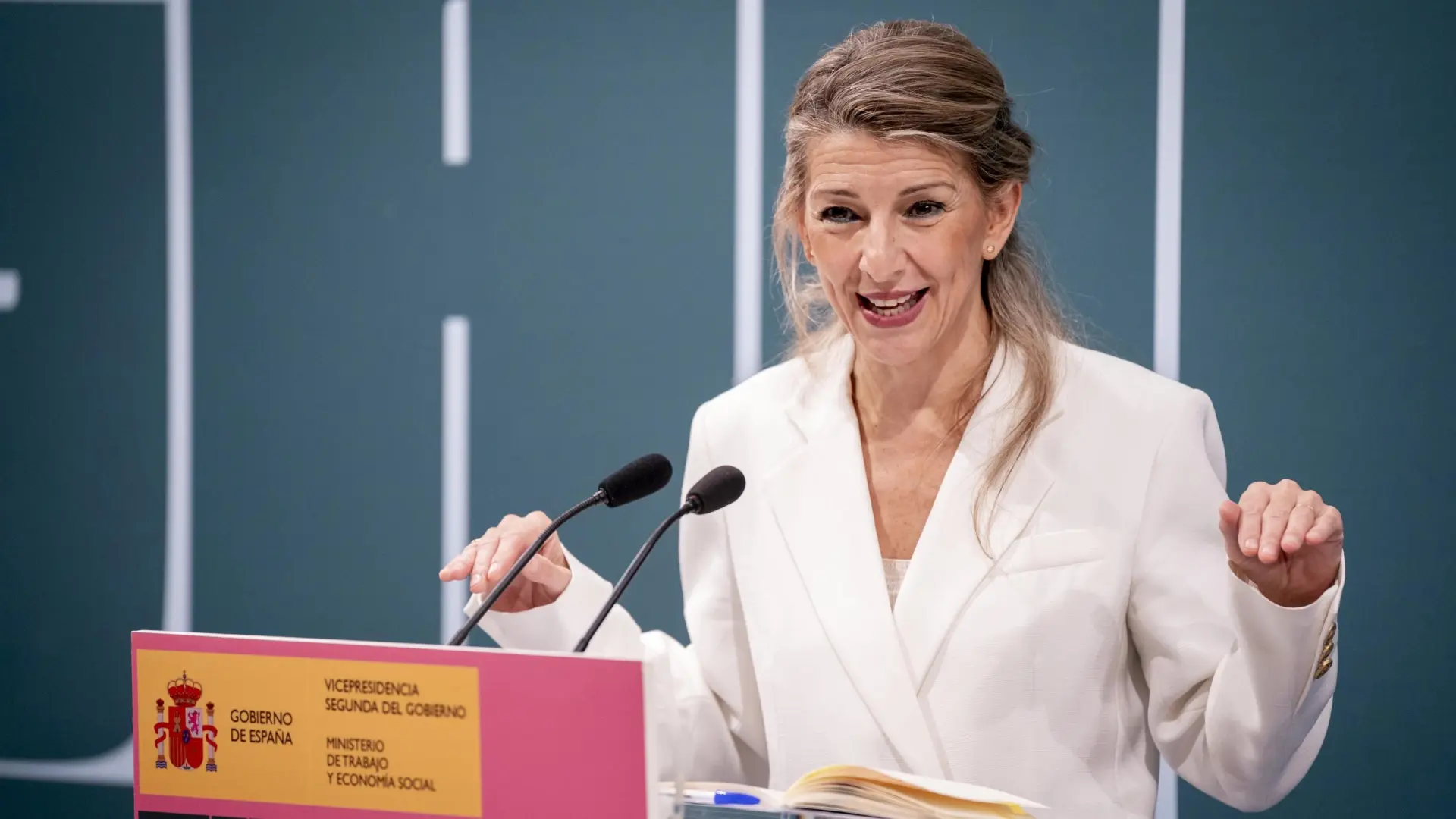
The first official meeting between the Ministry of Labor, unions and employers to define the increase in the interprofessional minimum wage (SMI) has concluded without the Government putting a figure on the table to discuss. Official sources from the department headed by Yolanda Díaz have indicated that the meeting has served as the first contact to present the report of the committee of experts appointed by Labor.
The advisory commission proposed raising the lowest remuneration allowed by law between 3.1 and 4.7%depending on whether or not the SMI begins to be taxed next year. The question was whether Yolanda Díaz’s team would already have a closed proposal within that range, but they finally chose not to do so. He will do so, predictably, in the next meeting, the date of which has not yet been specified.
Everything indicates that the department he directs Yolanda Díaz is waiting for the Treasury to make a move on taxation of the minimum wage. The question of whether the SMI should be taxed or not was the subject of strong discussions between the Ministries of Labor (against it) and the Treasury (favorable) last year.
The dispute was resolved in favor of Yolanda Díaz with the creation of a deduction in the income tax return so that no worker who earned the minimum wage would have to pay personal income tax. The question is whether or not this deduction will be expanded in 2026 to avoid taxation.something that the Treasury has been open to studying, but has not yet decided.
Labor’s position has surprised the unions, who expected to find a figure already on the table at today’s meeting. The negotiator of the Workers’ Commissions, Javier Pacheco, has stated that union organizations are willing to bring forward their initial proposal (an increase of 7.5%) to thresholds closer to those managed by the Government.
“We are in a position to assess figures beyond the union proposal, guaranteeing that the SMI is guaranteed to collect 60% of the average net salary,” said Pacheco. The confederal secretary of Union Action and Strategic Transitions of CCOO has insisted that It is necessary to end the compensation and absorption of the SMI in salary supplements, a goal shared with Labor.
This second mechanism has a slower processing, so The unions have demanded to approve the increase in the SMI as quickly as possible in a decree, while the rest of the aspects regarding the minimum wage are specified in another text, which will take longer to implement. In any case, he has indicated that the two parties must be included in the political agreement that is signed with the ministry.
For his part, Fernando Luján, UGT negotiator at the table, has stated that There are still some discrepancies about how to calculate how much 60% of the average net salary is. (the reference that the Government uses to set the minimum wage). Luján, who is deputy general secretary of Trade Union Policy at UGT, has insisted that the data that should be used is that of Eurostat, which would show a minimum salary of 1,398 gross euros.
Luján has complained about the attitude of the employers’ association, which proposed raising the SMI by 1.5%, a proposal that has already been rejected by Labor. “We have the feeling that, for some time now, the employers’ association has other issues other than negotiation within the scope of social dialogue. It has extraneous calculations, it does not seem that it is going to enter the path of any negotiation,” he noted.
CEOE sources consulted by Economic Information They have limited themselves to pointing out that Labor has not made any proposal and that the parties will meet again, although without a specific date yet.