
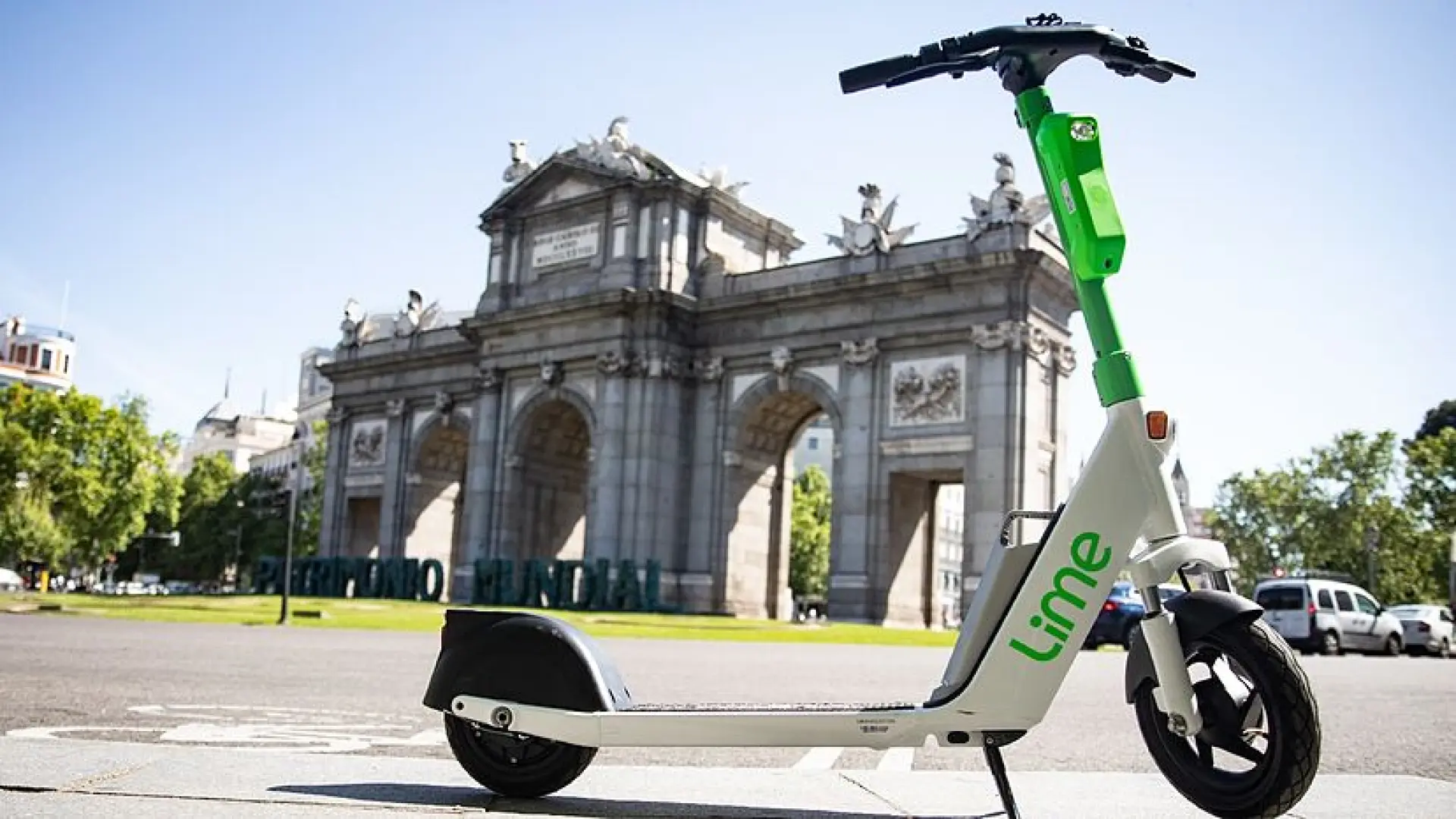
Lime took advantage of Moncloa’s accounting moratorium to avoid dissolution before withdrawing its scooters

The business of Lime Technologythe micromobility company with an American accent, raises alarm bells in Spain. The company that depends on the Californian Neutron Holdings began the year on a tightrope after receiving two blows in just four months with the municipal revocation of its electric scooter rental licenses in Malaga and Madrid. And its accounts confirm that the impact came at the worst possible moment: the subsidiary reveals in its last two balance sheets a negative net worth that would have placed the company in danger of dissolution if it had not been for the accounting moratorium that the Government approved to soften the accounting impact of the pandemic.
The company drags a negative equity greater than 200,000 euros which, under normal conditions, would place it in cause for dissolution. However, the company alleges in its latest management report that “the losses for the years 2020 and 2021 will not be taken into consideration until the end of the year that begins in 2025.” The firm thus takes advantage of this exceptional provision, which the Government extended in April until the end of the year to cushion the impact of the tariff war.
Likewise, the company recognizes a negative working capital in its annual accounts, although it clarifies that this situation does not compromise its operational continuity. The imbalance is due, above all, to more than 8.1 million euros in short-term liabilities with companies in the group itselfwhose enforceability is guaranteed by the parent company, which has agreed not to demand payment and to provide the necessary resources so that the company can meet its obligations and maintain its activity normally.
With this accounting situation, Lime has had to face the departures from Madrid and Malaga. In the capital – where it maintained the bulk of its business in Spain – the firm ceased its scooter operations last January after the decision taken months ago by the Madrid City Council to rescind the 6,000 licenses that were distributed together with Dott and Tier Mobility for “failing to comply with the obligations established in the rules.” In Malaga, their departure became effective at the end of April after the municipal government revoked the permits of Lime, Bird, Link, Dott, Bolt and Tier, which until then allowed them to operate up to 225 personal mobility vehicles (VMP) each in the city.
Lime already made reference to this situation in its 2023 balance sheet, when it anticipated that the impact of the loss of activity in Madrid would be “mainly at the level of income” without generating a loss for the vehicles it operated in the city since, as it alleged, “they could be used in other locations or transferred to other companies in the group.” While waiting to know the extent of the impact, Its income was devalued to 5.6 million in 2024, 12% below those recorded in the previous year, giving rise to a negative result of 37,000 euros.
Trust Seville and Barcelona to mitigate the impact
In this scenario, the company relies on geographical diversification within the Spanish market as the solution to “mitigate the financial impact of the loss of licenses in any city, including Madrid and Malaga, and support business continuity”, as it explained in the reports that accompany its accounts deposited in the Commercial Registry. And this strategy focuses on the shared electric bicycle service that it has provided in Seville, for more than three years, and in Barcelona, where it began operations this year. “Management anticipates that the possible loss of the Madrid and Malaga markets will be partially offset by the successful launch and growth in Barcelona“he added.