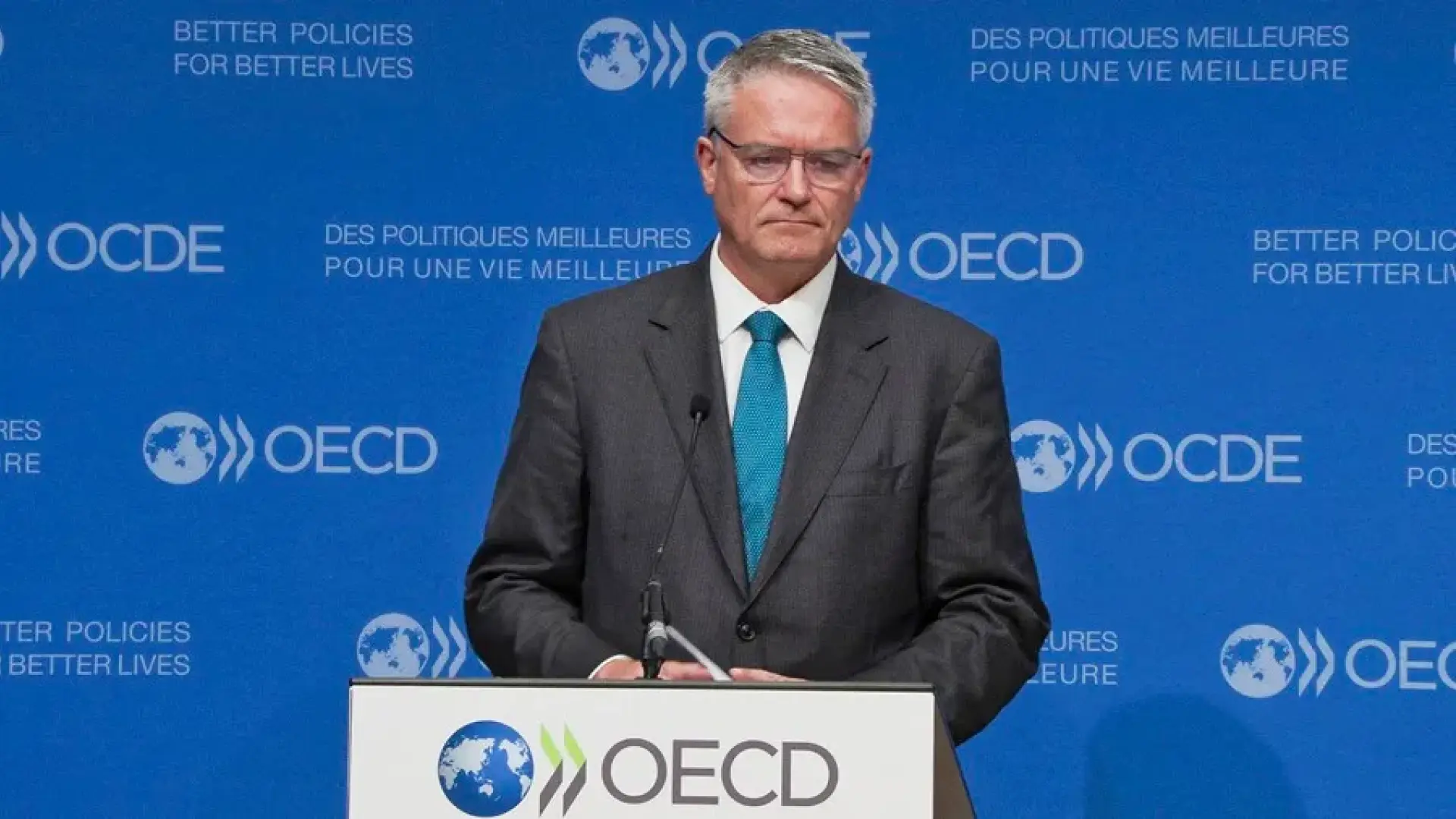
The OECD announces an international agreement for the application of a minimum tax on multinationals

More than 145 countries and jurisdictions have given their approval for the rules of application of the minimum tax on multinationals that has been negotiated for years and that includes a particular exemption mechanism for US companies in the face of Washington’s threat of being left out of the device. The Organization for Economic Cooperation and Development (OECD), which announced the agreement this Monday, presented it in a statement as a “juxtaposed solution” that represents “a great political and technical commitment that will lay the foundations for the stability and legal security of the international tax system.”
He also assured that in addition to maintaining the achievements that had been obtained during the long negotiating process, which had led to a first agreement in October 2021. “It will guarantee the capacity of all jurisdictions, particularly developing countriesto exercise their priority taxation rights on the profits generated in their territory,” he added.
The negotiating process of the inclusive framework was conceived with the objective of establishing a minimum rate of 15% in corporate tax that, if not charged by the country in which a multinational has its headquarters, would be collected by the jurisdictions in which that company operates. According to the OECD explanations, There are five key elements in the compromise on the guidelines for the minimum taxbut there is a particularly controversial one about the differentiated system for American companies, although it is not presented that way.
In its statement, the OECD speaks of “the establishment of new protection regimes for multinational groups whose headquarters are located in an eligible jurisdiction that meets minimum tax criteria.” This derives from a commitment reached at the end of June 2025 by the G7 countries (and then criticized by Spain) by whichand the US is allowed to maintain its regime on the profits obtained by their multinationals abroad, which does not correspond to the logic that had been established in the OECD negotiation on a global minimum tax.
The other members of the G7 accepted it in the face of the threat from the Donald Trump Administration of move away from the so-called “inclusive framework” because it was opposed – according to its own logic – to other countries being able to take advantage of the effect of some of its tax incentives for its multinationals due to their activity abroad. This first G7 agreement has been worked on in recent months with the rest of the members of the inclusive framework.
Beyond this particularly controversial issue, the agreement announced this Monday includes other points, such as simplification measures that will reduce the cost for multinationals and for tax administrations for their calculation and declaration. Furthermore, it is established “more coherence” in fiscal incentives devices and “an evidence-based balance to ensure a level playing field is maintained for all.” Those elements also include the United States.
The OECD also noted that these agreed guidelines mean “confirmation that the qualified minimum complementary tax collected locally is an essential pillar of the global minimum tax framework, which ensures the protection of local tax bases, particularly in developing countries“. For the Secretary General of the OECD, Mathias Cormann, the agreement “constitutes a historic decision in terms of international tax cooperation.”