Oil, wine, chocolate… Spanish agriculture must dress premium to take advantage of the agreement with Mercosur
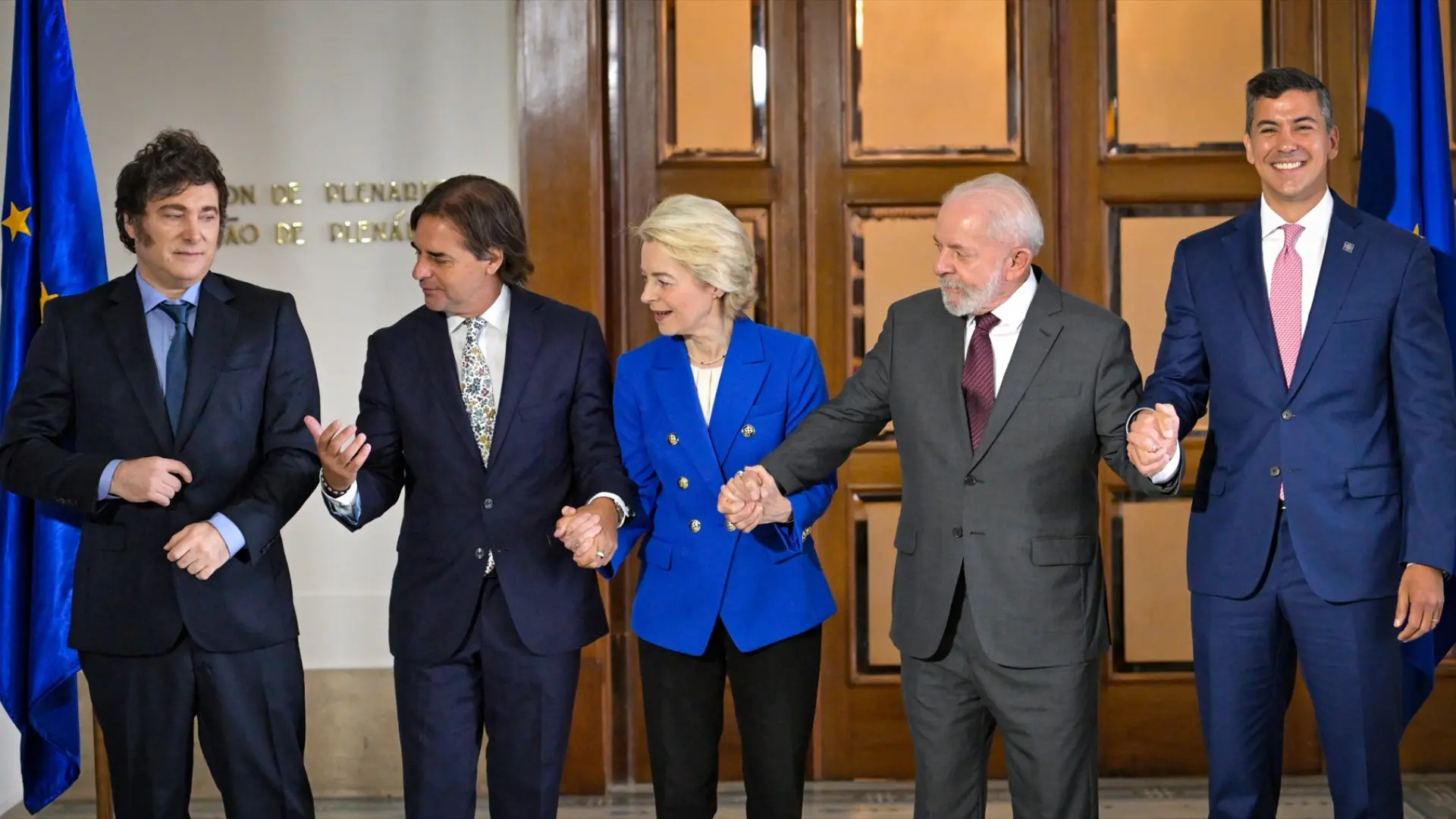
The commercial agreement between European Union (EU) and Mercosur (Brazil, Argentina, Uruguay and Paraguay) is heading into its final stretch in Brussels, at least in its commercial part. Which generates no little concern in an important part of the Spanish countryside, especially in everything related to beef and bovine meat. According to consulted sources, Brussels’ intention would require ratification at the next European Council (in principle set for December 18 and 19), so that “the European Parliament would do it in 2 or 4 months.” However, this would not prevent its provisional entry into force (especially in its most commercial part). The sources consulted are also skeptical about the ability of the rest of the countries to overcome the blocking minority led by France. In a report prepared by the Spanish Federation of Food and Beverage Industries (FIAB)in collaboration with ICEX, the European Commission and the consulting firm How2go, detect opportunities in “products with high added value” such as gourmet items, innovative drinks or Denomination of Origin wines, as well as canned fish or premium pet food, among other options.
Possible opportunities country by country
The document also maintains that The agreement opens a market of 275 million consumers and they are convinced that it will help eliminate bureaucratic obstacles and simplify procedures. They also highlight that the agreement protects 357 European geographical indications, of which 59 are Spanish. By countries, in Argentinathe main opportunities are found “in products with high added value that do not compete on price” such as innovative drinks, Denomination of Origin sparkling wines and craft beers. Extra olive oil, despite the high tariff and the fact that it will not be liberalized for 15 years, shows strong growth that is higher than other Mercosur members. In Brazil the key will be in “value-added products without local substitute” such as canned fish and seafood, olive oils with Protected Designation of Origin (DOP), sausages and cured meats along with hams and cured cheeses (sheep or mixed). In addition to differentiated non-alcoholic drinks, vegetable juices, distillates or fruit or tomato preparations with added sensory or functional value.
In the case of Uruguaywhich has a strong production of meat and dairy products, the authors of the FIAB analysis detect interesting opportunities in items with added value such as sausages, crustaceans, extra virgin olive oil, healthy preserved vegetables, premium coffee, gourmet chocolates, and even, in chapters such as premium pet food‘0 sugar’ juices or high protein dairy products, among others. For its part, in Paraguay There are options to increase the Spanish presence in products that this country imports structurally, such as canned and frozen fish, our highest category liquid gold, Iberian hams, artisanal pastas, wines, chocolates in gift format and differentiated blends of tea and coffee. This Latin American country it is very difficult to find a place in categories such as fresh meat and poultry, dairy products and wheat flour.
Dairy products, the most protected
The study by FIAB, the main agri-food employers’ association, confirms that liberalization will not depend on the type of product “but on the level of economic sensitivity of each sector.” For example, Mercosur maintains high initial tariffs and very relevant reductions “in industries with greater local weight” such as meat, dairy products, sugar, oils, prepared fruits or pastas while the opening is rapid in those products where they are less relevant. “Most products are largely liberalized in 8-10 years,” The report highlights that it gives names and surnames to the categories where there are “clear windows of opportunity for the Spanish supply”: non-strategic fish, prepared and preserved fruits and vegetables, wines, beers, ciders, vermouths, prepared dishes and non-sensitive sauces. On the other hand, FIAB analysts warn “dairy is the most protected sector of the agreement”: There are exclusions, effective access that is delayed for more than a decade or large contingents. They are cheeses, powdered milk and infant formulas.
At the other end are the drinkswhich will be liberalized in a relatively short period of time, and where the study sees “a chapter with great potential for Spain in the short and medium term.” The first to see their tariffs drastically reduced are distillates such as el whiskey and liqueurs, wines and beers they will in 10 years without any exclusion while functional waters and beverages will do so in 4 years. “When there is no risk for the local industry, liberalization is immediate or very accelerated,” they highlight. A situation that is also shared by products such as cod, frozen tuna, nuts, prepared citrus fruits, corn oil, couscous or bulk whiskey.
Trade deficit with Mercosur
The commercial relationship between Spain and Mercosur (Brazil, Argentina, Uruguay and Paraguay) in the agri-food field is radically unequal, according to an analysis of data from the Ministry of Agriculture: exports from Spain to this economic block last year they barely accounted for 0.6% of the total (463 million euros compared to a global amount of 75,090.12 million), while the imports From this group of Latin American countries to Spain they were 7.4% of all agri-food imports: 4,118 million euros. Which shows a negative trade balance of 3,655 million. An imbalance that increased by 0.6% last year compared to 2023, despite the fact that exports in value terms grew by 10.3% compared to just 0.5% of imports. The main market was Brazil followed by Argentina, Uruguay and Paraguay.
In its analysis, FIAB highlights that Spanish exports are concentrated in the categories of oils and fats, beverages and other food products. These 3 headings already account for almost 70% of everything exported. Added to all of the above is the dynamism of products such as meat, fruits and vegetables prepared together with animal feed, what the experts of the agro-food employers’ association consider as “a sign of a increasing diversification”. On the contrary, oscillations in fishing or milling products show a sensitivity towards regional competition and movements in local demand.
Spain is the fourth EU exporter to Mercosur by volume, according to the FIAB report. It is positioned behind Portugal (648 million euros in 2024) focused almost entirely on Brazil (olive oil, frozen fish and wine); as well as Italy which sold products such as pasta, canned tomatoes, fruits, processed vegetables, olive oil and wine for an amount of 397 million euros last year and Netherlands (329 million) that exports processed fruits and vegetables, animal feed and dairy products (Gouda and Maasdam cheese) to this group of Latin American nations, concentrating the majority in Brazil.
But, what were the products most exported by Spain to Mercosur? Our star product is olive oil of which last year we sold 106.6 million euros followed by the wine and must (33.6 million), the stone fruits (31.8 million), the spirit drinks (21.9 million) and the pome fruits (19.1 million), among other products. On the contrary, from the aforementioned block of Latin American countries we import soybean cakes (966.5 million euros), soybeans (914.9 million), coffee (381.7 million), crustaceans (317.4 million) and corn (196.8 million).