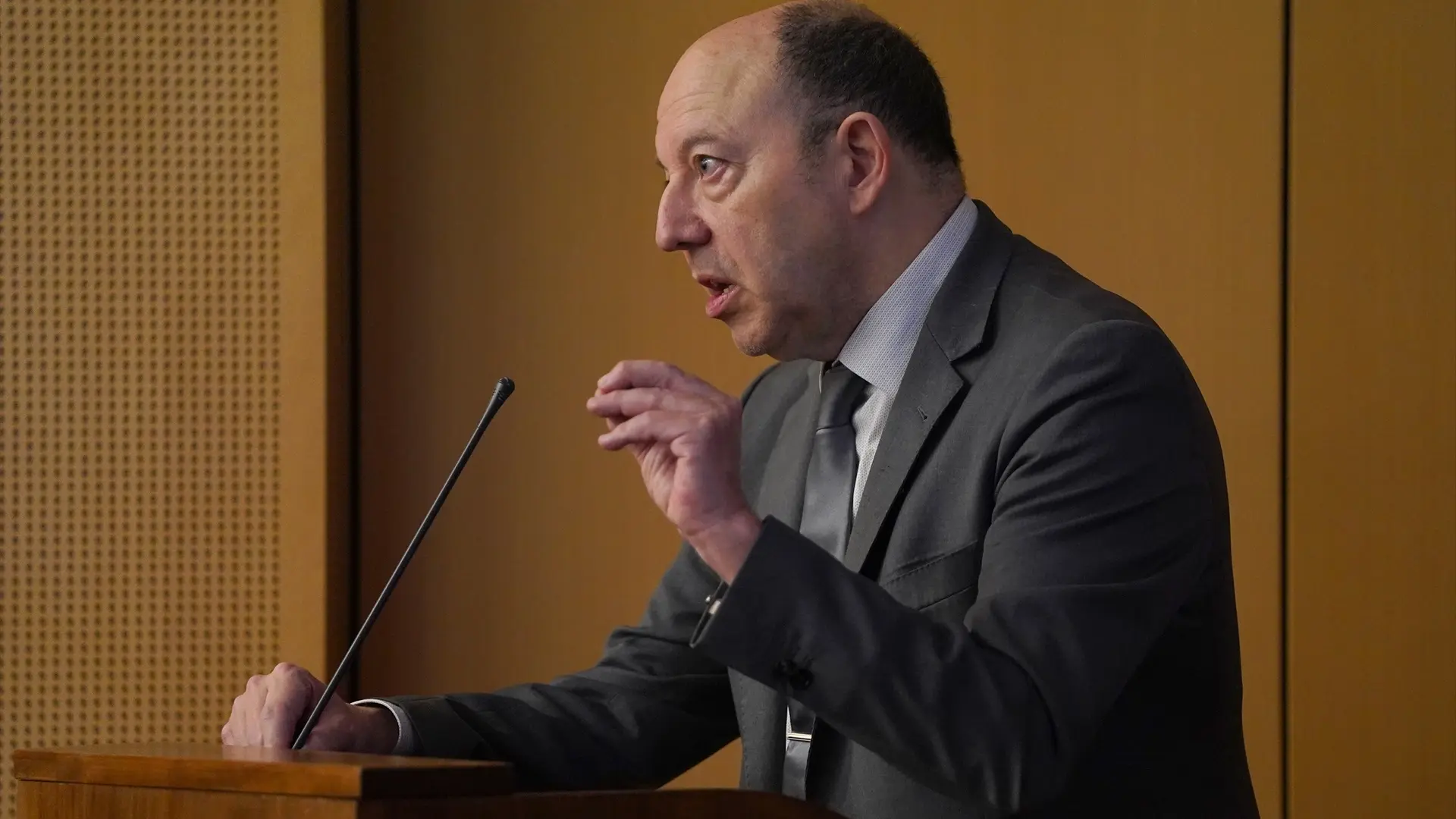
“People want to stop working at 55 or 57 years old, but that is not possible”

Retiring early is becoming an increasingly difficult aspiration to fulfill. The economist and professor at the University of Barcelona, Gonzalo Bernardos, has warned that he current The pension system makes it impossible for the majority of workers to stop working before age 65. In one of his economic analyzes Bernardos points out bluntly that “People want to stop working at 55 or 57 years old, but that is not possible”.
His statements come in a context marked by the aging of the population and by decisions such as the one adopted by Denmark, which plans to delay the retirement age to 70 years in 2040, a measure that, according to the economist, could also end up being applied in Spain.
The main problem, as explained by Bernardos , is the strong financial imbalance of the public pension system, which carries a deficit estimated at 65,000 million euros. Added to this situation is the progressive retirement of the ‘baby boom’ generation, which will further strain public accounts over the next decade.
“There is no choice but to retire later,” said the economist, who only sees a possible escape route in a very significant increase in productivity thanks to artificial intelligence (AI). However, he is skeptical that this increase will be enough to sustain the system: “Even if there is one, I highly doubt that it will allow public pensions to be paid.”
“The big problem is that people who are 55, 56 or 57 years old tell you that they are tired of working and want to retire and I tell them that I want to be 1.90 meters tall, be blonde, have blue eyes and be 20 years old again. It is not possible,” the expert said ironically.
Beyond the debate on retirement, the economist has also analyzed a cultural change among younger generations, who prioritize having free time over job stability. As reported, many companies detect that Candidates ask more about teleworking or free afternoons than about a long-term career plan.
Bernardos has attributed part of this change to excessive protection on the part of families and has warned of the economic consequences: impulsive spending, dependence on parents and less financial independence. All this in a scenario in which the “pension piggy bank” barely has enough resources to cover one monthly payment of current expenses.