Sleeping sickness or African trypanosomiasis, what is it?
Sleeping sickness or African trypanosomiasis is transmitted by the Tsetse fly in sub-Saharan Africa. Know symptoms, diagnosis and treatment.

Graduate in Medicine and Surgery, from the Faculty of Medicine of the University of Murcia. Specialist in Rheumatology. Doctorate in Psychopathology and Social Psychology. Currently (since 2002) he is a consulting physician in the Second Medical Opinion department at Teladoc Health. Collaborating doctor with the Traumatology group, specialist in Rheumatology, at the Teknon Clinic in Barcelona (since 2010). And Collaborating Physician Specialist in Rheumatology at the Poal Institute of Rheumatology since 1990.
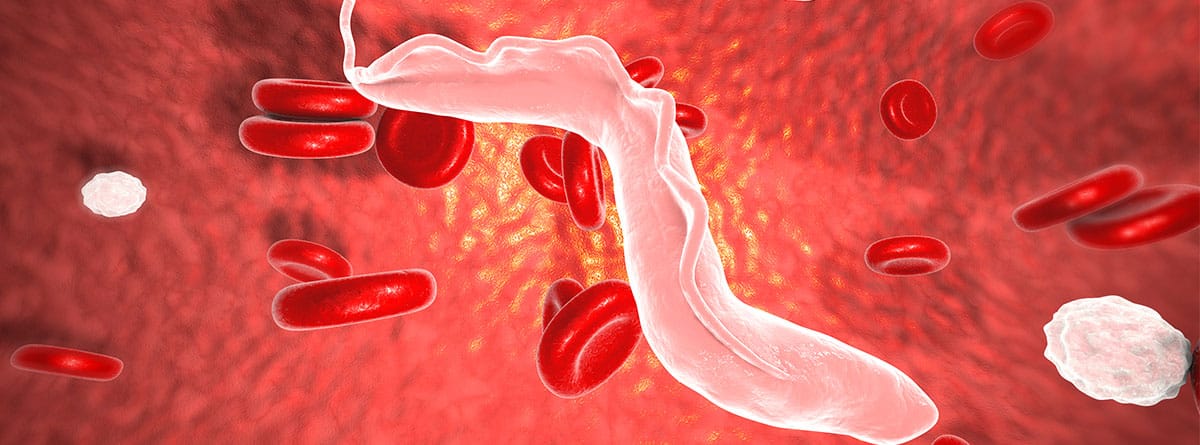
Sleeping sickness or African trypanosomiasis is a disease Transmitted by the bite of Tsetse flies (Human African trypanosomiasis) that by sucking blood from a human or animal that has been infected, allows the parasite to enter the salivary glands of the fly and then infects it by biting the human.
It is endemic in sub-Saharan Africaespecially in remote rural areas where health systems are precarious or non-existent, with the most exposed people being the inhabitants of rural areas who are dedicated to agriculture, fishing, livestock or hunting. Without treatment, the disease is often fatal..
Affectation
In Spain has only recorded imported casesgenerally from travelers who have been to endemic areas.
92% of reported cases are transmitted by Trypanosoma brucei gambiense (common in West and Central African countries) and the remaining 8% by Trypanosoma brucei rhodesiense (Eastern and Southern African countries).
Although it is also a Trypanosoma, It should not be confused with American trypanosomiasis. (Latin America) that causes Chagas Disease, which is a totally different process in terms of form of contagion and characteristics of the disease.
What symptoms does it produce?
A person can be infected for months or even years and not present significant signs and symptoms. When these appear it is usually because the disease is already in an advanced state and it is possible that the central nervous system has been affected, hence the importance of implementing active screening and exhaustive analysis of the population at risk to identify patients in the early stages, before they have symptoms and thus avoid or at least reduce transmission.
But given the areas where the disease affects, which are mostly areas of Africa with few resources, the result is many infected individuals who may die before being diagnosed. What happens is that once infected, trypanosomes multiply in the subcutaneous tissues, blood and lymph; It is the first stage of the disease called the “hemolymphatic phase”, where the symptoms are characterized by episodes of fever, headaches, lymphadenopathy, joint pain and pruritus.
Subsequently, the parasites cross the blood-brain barrier and enter the central nervous system, which is known as the “meningoencephalic phase”, or second stage, and this is when the most obvious symptoms begin to appear, such as confusion, sensory disturbances, behavioral changes, lack of coordination and fundamentally disorders of the sleep cycle, which is what gives its name to the disease.
Early, basic diagnosis
The ideal is to make the diagnosis as early as possible, in the hemolymphatic phase and before the neurological stage, to avoid complex, complicated and risky treatments and even patient death.
The diagnosis is made by serological tests (only available for Trypanosoma brucei gambiense infection, which is usually the one that most frequently causes the disease, in more than 90% of cases) and clinical examination
After suspicion of the disease, it must be confirmed by microscopic observation of the parasite in organic fluids, and sometimes analysis of cerebrospinal fluid obtained by lumbar puncture is required.
An early diagnosis is of vital importance. If you identify any of the symptoms mentioned in the previous section, remember that MAPFRE Health Insurance has the best professionals and medical assistance to help you find the most precise diagnosis and treatment.
CALCULATE YOUR PRICE
What is the treatment?
Treatment varies depending on the stage of the disease in which it is diagnosed. If diagnosed in first stage, these drugs are less toxiceasier to administer and more effective. The earlier the disease is detected, the better the chance of achieving a cure.
In the second stagewhere the infection has already spread to the nervous system, we must use a medication that can cross the blood-brain barrier to reach the parasite and these medications They are quite toxic and complicated to administer.
The drugs used are usually Pentamidine (generally well tolerated) intramuscular route or Suramine intravenous route (causes some undesirable effects in the urinary tract or allergy and is only effective for Tb rhodesiense).
In the second stage Melarsoprol (derived from arsenic and with many side effects, the worst of which is an encephalopathic syndrome that can be fatal) and intravenous Eflornithine (less toxic but only effective against a subspecies of gambiense TB).
To prevent the disease, it is essential to have detection mechanisms (screening) that allow identifying possible cases of infection. Furthermore, there must be effective methods to demonstrate the presence of the parasite, in order to confirm the diagnosis and initiate treatment in early stages, thus preventing the spread of the disease.
Some laboratories, which have these drugs registered, have provided them free of charge to endemic countries through WHO private-public partnerships.
As a curiosity, the 1920 epidemic was controlled thanks to mobile teams that organized the monitoring of millions of people in risk areas. By the mid-1960s, the disease had almost disappeared. After success, surveillance was relaxed, and the disease reappeared in several areas over the past 30 years. Recently, the efforts of WHO and national control programs and non-governmental organizations (NGOs) have slowed and reversed the increasing trend of new case reports.
What you should know…
- Human African trypanosomiasis, known as sleeping sickness, is transmitted by the Tsetse fly and is endemic in rural areas of sub-Saharan Africa. Without treatment, it is lethal.
- The disease progresses in two phases (hemolymphatic and meningoencephalic), eventually affecting the central nervous system. Early diagnosis is key to effective and less toxic treatment.
- Treatment depends on the stage of the disease; It is easier in the initial stages. Prevention is based on early diagnosis (screening) and access to medications, many of which are provided free of charge by international agreements.
Literature
- Human African Trypanosomiasis (Sleeping Sickness). Hollingshead CM, Bermudez R.2024 Feb 24. In: StatPearls [Internet]. Treasure Island (FL): StatPearls Publishing; 2025 Jan.PMID: 30571034 Free Books & Documents.
- Human African trypanosomiasis. Lejon V, Lindner AK, Franco JR. Lancet. 2025 Mar 15;405(10482):937-950. doi: 10.1016/S0140-6736(25)00107-2. PMID: 40089378 Review.