Spanish farms can continue selling ‘free-range eggs’ despite the confinement of chickens due to avian flu

It has been more than 10 days since the Department of agriculture decreed the ‘confinement’ of all poultry raised in Spain outdoors as a measure to prevent the spread of avian flu, in the midst of migration of bird species from northern and central Europe where the virus is much more present. To datethe latest outbreak of the disease in poultry It dates back to October 20, and the total number of outbreaks in Spain remains at 14. Half of them in Castilla y León. However, the trickle of wild bird cases continues, driven by the passage of migratory birds through our territory: This Monday, two cases were detected in Ortigueira (Galicia)affecting a pet (a common seabird on the Galician coast), and in Gijonwhere the disease has been located in a dead goose in the Isabel La Católica Park.
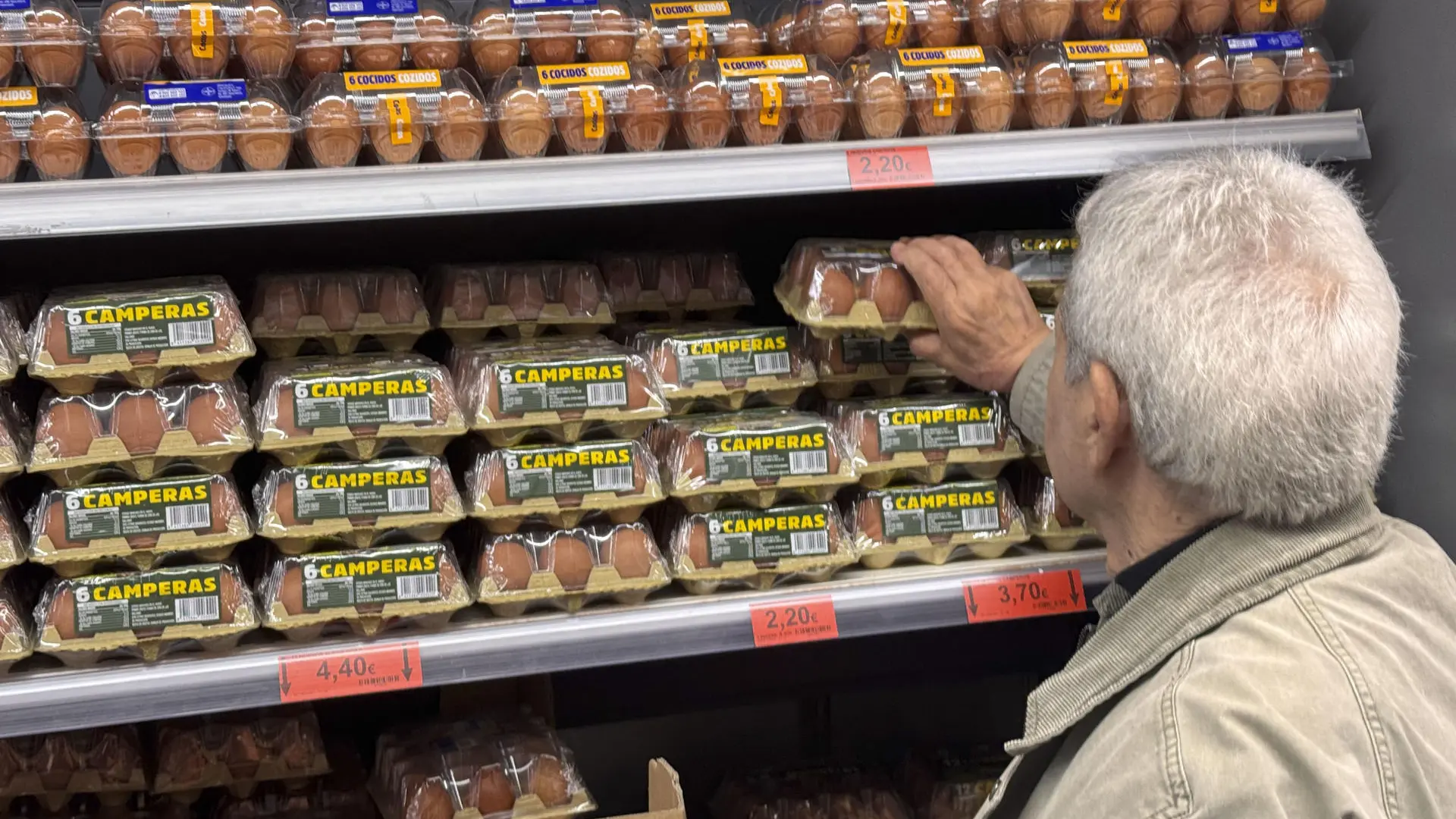
In this context, supermarkets must manage the impact of a virus that has forced the sacrifice of 5% of the poultry herd (about 2.5 million laying hens) and lock up the rest. All this, maintaining the commitments to animal welfare and quality acquired with our clients, who in many cases have been privileging the sale of free-range and organic eggs compared to more traditional breeding systems such as cages.
Exception in European regulations
The European regulations, specifically, the Delegated Regulation of the European Union (EU) 2023/2465 Approved on August 17, 2023, it leaves an open door for Spanish farms, which produce free-range eggs, to be able to continue serving large distribution without losing any quality seal or similar certification. Specifically, sources from the sector recall, in the first point of Annex II of this regulation when talking about the “minimum requirements for the production systems of the different breeding systems for laying hens” it is specified for “eggs from free-range hens” which “when temporary restrictions have been imposed under Union law, eggs may be marketed as ‘free-range despite such a restriction’.
The leading supermarket chain in Spain, Mercadonawarned a few days ago in an update on its animal welfare policy published on its corporate website that “due to the outbreaks of avian flu and the health measures applied by the Government to protect animal health” changed the percentage of eggs from cage-free hens that they are marketing. From Mercadona they assured that “the situation is specific” and, they added, that “our fresh egg service is guaranteed.” In any case, sources in the sector pointed towards the temporary nature of the measures imposed from Agriculture. Even yesterday, the Minister of Agriculture Luis Planas specified that he hoped to relax the confinement of chickens in a few weeks once the current wave of infections subsides. However, he insisted, need to apply biosafety measures within poultry farms.
Organic productions maintain their seals
And what about organic productions? From instances such as the Ministry of Agriculture, it is specified that, in line with what happened with ‘free-range chicken eggs’, which farms will be able to maintain their certifications and seals despite the confinement and all the measures adopted to combat bird flu. Sector associations such as the Spanish Federation of Companies in the Egg and Egg Products Production Sector (FEDEROVO) and the Spanish Association of Egg Producers (ASEPRHU) have been positively evaluating all the measures adopted by Luis Planas’ department. Both organizations remember that measures such as confinement “They have already been applied years ago in Spain” and they insist that “there is no risk of transmission to humans through cooked poultry, eggs or processed products.” In the poultry sector, they highlight that the food safety of eggs in Spain is subject to European Production Model (MEP)“the most demanding in the world in prevention, traceability and control.”
Between 6 months and a year to normalize the offer?
However, both FEDEROVO and ASEPRHU have also been warning that the supply will take time to return to normal and, to this end, they estimate “between six months and a yeartime necessary for the farms to progressively recover both economically and emotionally.” All this, despite the fact that Spanish production is 20% higher than the needs of the national market so part of it is exported. The farms are mostly family-owned and represent a true way of life for their owners. Furthermore, they point out that the sector continues to advance in its transition towards so-called “alternative systems” (free range, organic and released in chicken coop) that are requiring new investments and infrastructure, as well as the application for new licenses.