The arrival of migrant workers is not enough to compensate for retirements in four autonomies
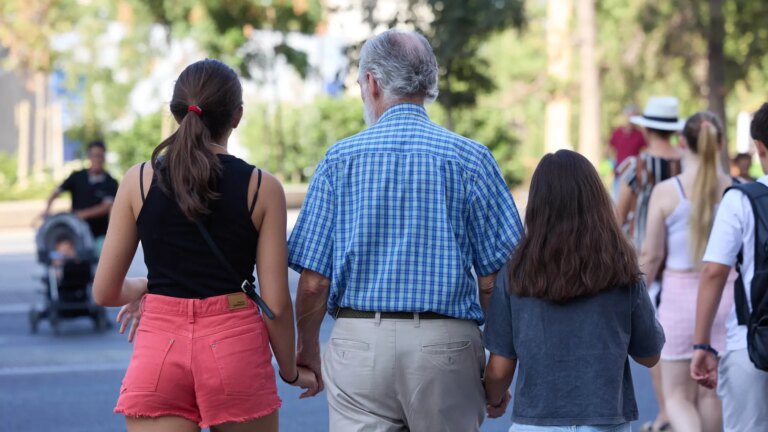
The mass retirement process that Spain is experiencing and that will be accentuated in the coming years represents a challenge on many levels. One of the most pressing is knowing who will replace the millions of workers who are going to retire and who will need a replacement. A study prepared by Fedea and BBVA Research highlights that This ‘great relief’ will not be possible without immigrants. In fact, even in some communities, the rate at which workers are arriving from outside is not enough to compensate for the rate at which current workers are retiring.
Specifically, there are four autonomies in Spain where the arrival of foreign workforce during the last migratory wave (2017-2024), added to the young native population, has not been able to cover the gap left by retirements in that period. It is about Asturias, Cantabria, Castile and León —which are among the oldest in the country— and Estremadura.
In these four territories, the ratio between young people aged 16 to 29 who work and migrant employees who have arrived in the last seven years and that of retirees is less than one. Which implies that More workers retire than young people join the market and migrants arriving to work can compensate.
In other territories such as Galicia, the Basque Country, La Rioja, Andalusia or Aragon, the combined effect of youth and migration barely exceeds the exits from the labor market. While in autonomies such as Madrid or Catalonia—the most economically vigorous— The relief of retirees is much more comfortable. For every person who retired between 2017 and 2024, there were two young natives working or migrant employees arriving in that period.
The effect of migration is essential to cover the gap that will be left by people who are going to retire in the next ten or twelve years. In fact, In no autonomous community are there more young people than people close to retirement. For every person between 55 and 67 years old, there are barely 0.76 between 16 and 29 years old. We are talking about a population of 7.3 million ‘senior’ active population, compared to 5.6 million young people. A situation that is radically opposite to what existed at the beginning of the century, when there were 1.4 young people for every person close to retirement.
The Balearic Islands, the Canary Islands, Madrid and Murcia are the autonomies closest to balance in the relief, with a ratio of 0.9 young people for each older worker. On the contrary, the situation is especially complicated in areas such as Cantabria, Castilla y León, Galicia, where the ratio is 0.6 or in the case of Asturias, where it falls to 0.5.
It is more difficult to replace the most qualified
The generational change in the labor market is only beginning. Demographic trends suggest that compensating for retirements that will occur in the coming years will be increasingly difficult. A substitution that It will be especially problematic in more skilled occupations.
If we focus on how the replacement of workers with higher education is going, we can see how All the country’s autonomies were able to replace retirees with young or foreign labor between 2017 and 2024. However, this will become increasingly complicated in the future, especially in communities such as La Rioja, Cantabria, Asturias, Castilla y León, Aragón or the Basque Country, which are already very close to having insufficient relief.
We are talking about doctors, lawyers, architects… “At a basic level, we replace low-skilled occupations with others. But higher education occupations are necessary and will become more and more so. The demand is enormous,” says Florentino Felgueroso, author of the study. Besides, Spain will have to compete for these profiles with other countries that offer better working conditionswhich represents an added difficulty.
The difficulty of generational change in the most qualified jobs is well summarized in a very striking fact. In 2000, for every person over 55 years of age with higher education there were 4.8 young people (1.27 million people compared to 263,500). However, currently the ratio is 0.9 young people for every person close to retirement (1.44 million compared to 1.6).