The ECB maintains rates at 2% for the fourth time and revises eurozone growth upwards
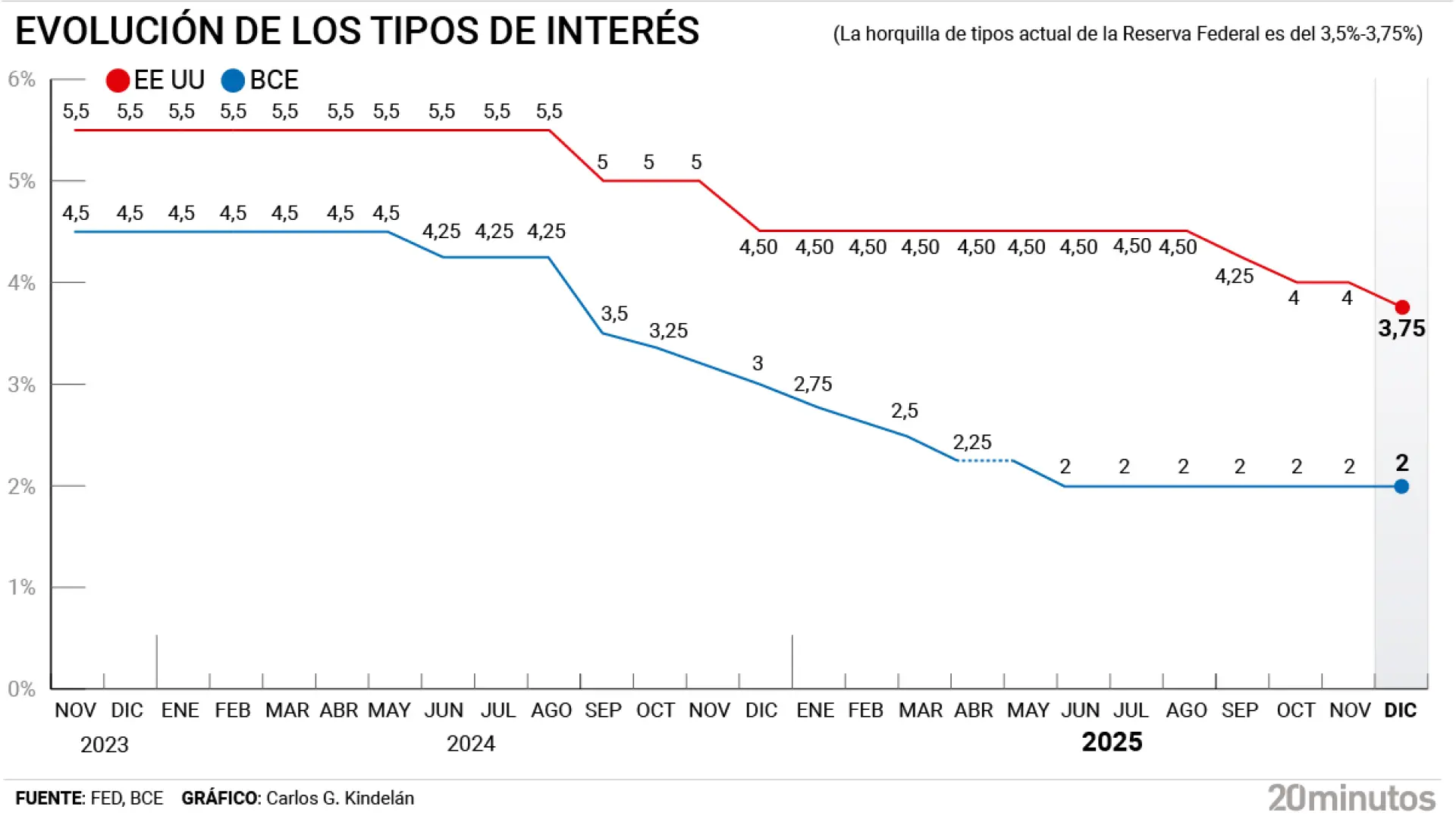
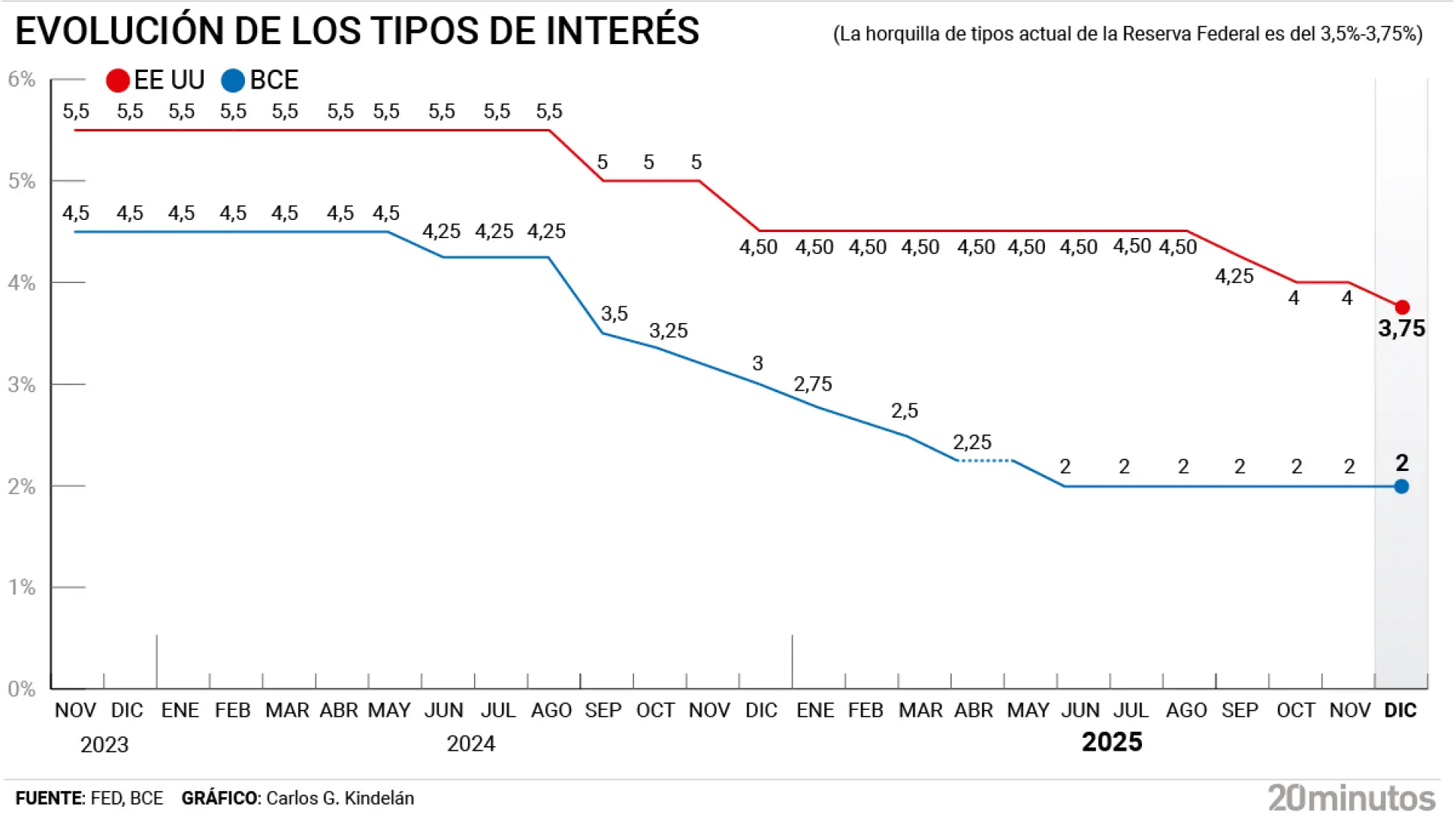
The European Central Bank (ECB) has decided to maintain interest rates for the fourth consecutive meeting. In this way, the deposit facility, which marks the reference of money, stands at 2%, while the operations financing principals and the marginal credit facility They are placed at 2.15% and 2.4%, respectively. The Governing Council of the Frankfurt-based body meets market expectations.
“Their updated assessment continues to confirm that inflation should stabilize at the 2% target in the medium term,” they explain in a press release. The November inflation data supports this decision after closing at 2.1%, one tenth above the target, removing the worst fears about the economic impact of the tariff crisis or the war in Ukraine.
In this context, it has revised growth forecasts upward with the expectation that activity will be more “vigorous” than anticipated in September due to the boost in domestic demand. Specifically, it projects a GDP for the eurozone of 1.4% in 2025, 1.2% in 2026 and 1.4% in 2027, to remain at 1.4% in 2028. At the September meeting it calculated an expansion in activity of 1.2%, 1% and 1.3%, respectively.
On the contrary, expects inflation to close on average at 2.1% this year -without changes compared to September-, but it raises the photo for 2026 by two tenths, to 1.9%, and places that for 2027 at 1.8%, one tenth less. from the bank central explain that they have revised inflation upwards for the next twelve months mainly because experts now expect services inflation to decline more slowly. The projections would put aside the hope of undertaking further increases in interest rates, at least in the short term to stimulate the economy.
Far from stabilizing the Euribor, the brake on money reference rates has caused this indicator, which is taken as a reference when updating variable rate loans, to turn around. Specifically, the increases started in August from the floor of 2.079% and they arrive at the end of the year close to 2.3%, which in practice implies an increase in the cost of loans for housing that are reviewed semi-annually, the second since March 2024, but not for those who receive annually, in which case their quota would be reduced by an average of 3% this December.