The EU ‘short circuit’ with Venezuela as it begins to raise alarm bells over Trump’s threats with Greenland
The European Union It began with “deeply concerned” and has ended up divided, almost short-circuiting, after the actions of the United States in Venezuela and the fall of Maduro: Once again, in Brussels it is difficult to find unity between the countries despite the lukewarm statement issued by 26 partners, without Hungary. The reality is that there is not a very clear consensus, with France asking that María Corina Machado now preside over the country and Spain joining Latin American countries to censure Trump’s operation; On the other hand, the joint message is limited to saying that we must “respect International Law.”
The European Commission has been more direct, which has said through its spokesperson that The transition in Venezuela “has to include” both Machado and Edmundo González; On the other hand, the lack of agreement in the message is seen in the national governments, which are the ones that actually set the foreign policy of the community club due to a question of competencies. The reason for the Union’s existence once again plays against it on this issue.
The bloc, despite how events have gathered, has taken a day and a half to react. “The European Union calls for calm and restraint from all actors to avoid an escalation and guarantee a peaceful solution to the crisis,” the statement begins. In this context, the signatories – all except Viktor Orbán’s Hungary – consider that “at this critical moment it is essential that all actors fully respect human rights and international humanitarian law”, while demanding the “unconditional release” of the political prisoners imprisoned in Venezuela.
That is something important for Europeans but at the moment it is not in Trump’s plans: The US is going to “govern” the Caribbean country, but “now the important thing is the oil”warned the magnate, willing to work side by side with Delcy Rodríguez, until now Maduro’s vice president and already acting president, who has already reached out to Washington.
The community document insists on the need of “respect under all circumstances” for the principles of international law and to the UN Charter, and recalls that the members of the Security Council “have a particular responsibility in respecting these principles, a pillar of the international security architecture.” Furthermore, the 26 countries reiterate the EU’s position regarding the Government of Nicolás Maduro, stating that “it lacks the legitimacy of a democratically elected president”, and they are committed to a peaceful transition towards democracy that respects the country’s sovereignty: they ask that “the right of the Venezuelan people to decide their future” be respected. That is to say, They are not in favor of how Trump has acted… but neither are they against. The EU is therefore once again left in no man’s land.
However, the Union does buy some of the US arguments and considers the “fight against transnational organized crime and drug trafficking” a priority, understanding that they represent “a significant threat to security throughout the world”, although it insists that they must be addressed through cooperation and with “full respect for international law and the principles of territorial integrity and sovereignty.” In this framework, the signatories claim to be in “close contact” with the White House and with countries in the region to “support and facilitate a dialogue with all the parties involved”, with the aim of reaching “a negotiated, democratic, inclusive and peaceful solution to the crisis” that respects the will of the Venezuelan people, “the only way for Venezuela to recover democracy and resolve the current crisis”.
Very different positions
The consensus is, in any case, fictitious because the EU does not want to anger the United States, and it also faces important internal differences such as those seen, for example, between Spain and France. The Government of Pedro Sánchez has positioned itself against Trump’s movements very openly, together with Brazil, Colombia and other South American countries. On the other hand, Emmanuel Macron has been very emphatic in the other sense: now is the time for the Venezuelan opposition, led by María Corina Machado and Edmundo González. Other EU members such as Italy follow the Paris line. Hungary, for its part, talks about collapse. “In these first days of the year, we have received a reminder that the liberal order is in a moment of confusion,” Orbán wrote.
The mix of positions is completed by Poland, one of the historically most Atlanticist countries, which has asked to detach itself from the US. “No one will take a weak and divided Europe seriously: neither enemy nor ally. It is already clear. We must finally believe in our own strength, we must continue to arm ourselves, we must remain united like never before. One for all and all for one. Otherwise, we are lost,” Prime Minister Donald Tusk reacted, joining a mix of positions full of nuances that make a unified discourse difficult within the Union.
In Brussels they still do not understand what the place of the EU is, with the US completely detached from the transatlantic alliance and seeking its own sphere of influence. Europe, meanwhile, does not achieve its goal. It did not recognize Maduro as the winner of the elections in 2024 but it has not moved much to strengthen ties with Latin America, it has still not closed the agreement with Mercosur and it has not found a ‘captain’ in the region: It could be Spain, but the Government has a position that generates certain misgivings in the community capital and that France and Germany do not like.. The conclusion? The ineffectiveness.
“We need Greenland for national security”
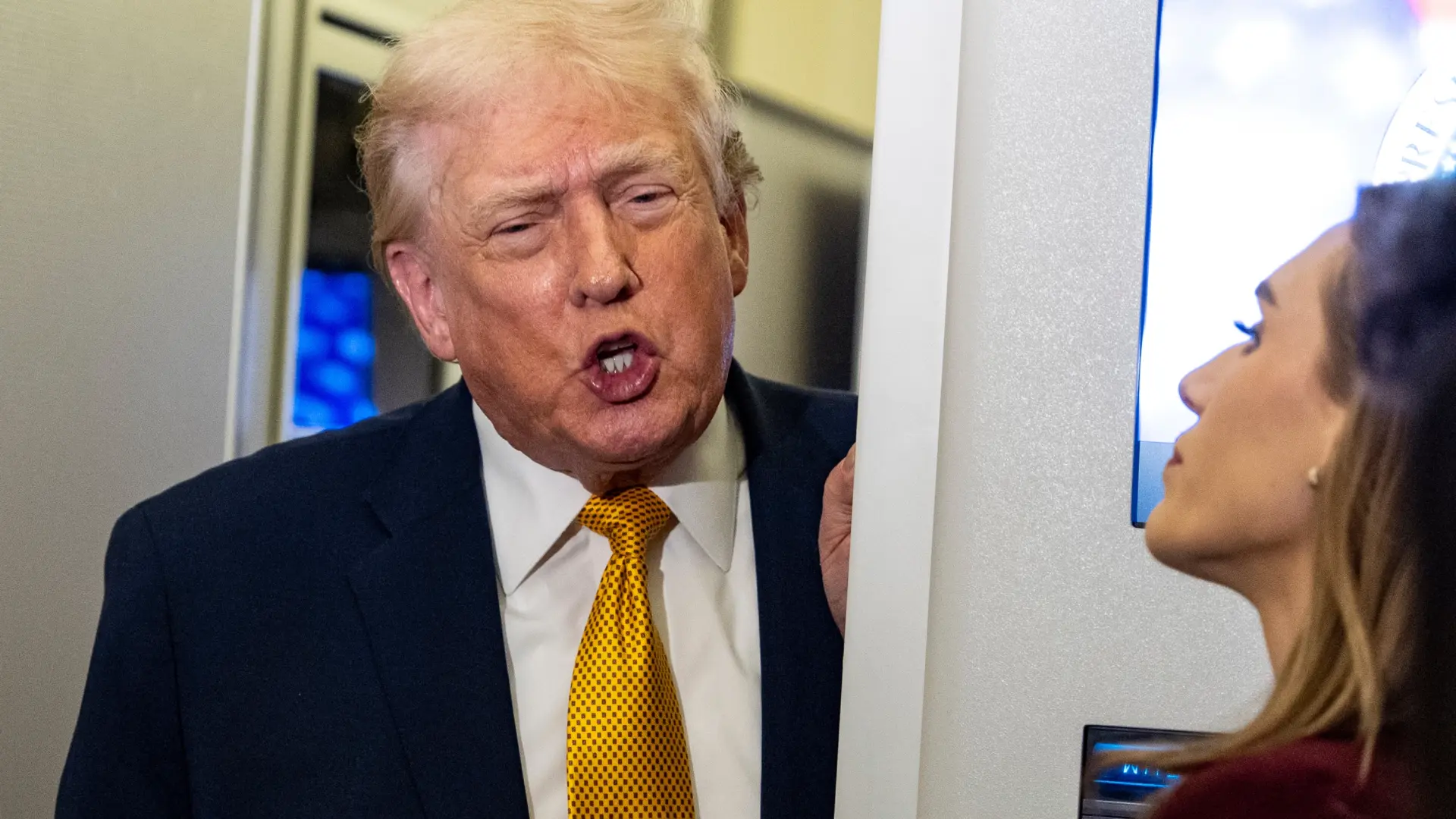
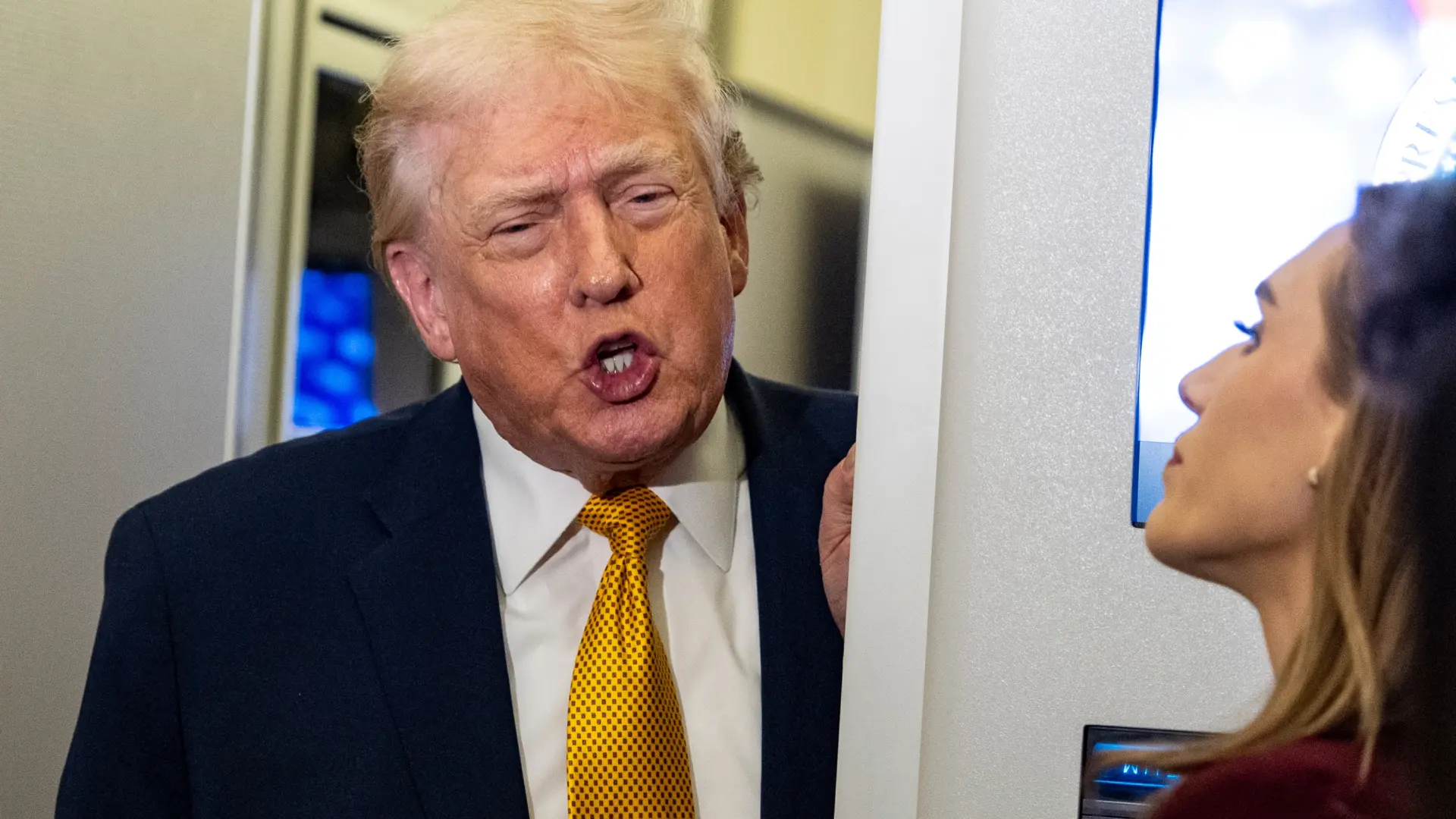
And now Greenland is also starting to worry. “We will talk about Greenland in 20 days,” Donald Trump warned from his Air Force One this Monday, putting more words to an intention he has been planning for years. He has even spoken of “annexation” while the Danish Government, on which the island depends, asks him to “stop the threats” because there are no reasons for these movements. “We need Greenland for national security reasons. At this moment it is a very strategic place, full of Russian and Chinese ships,” he said, and he criticized the fact that Copenhagen’s increase in security was based, he said, “on adding one more sled.”
However, the question remains as to what would happen if the US attacked Greenland with its Army. What would the EU do? In principle, it could not resort to article 42.7 of the Treaty, which requires military assistance to a partner of the bloc, in this case Denmark, because Greenland is not actually part of the Union. Of course, we could act with other measures such as sanctions or tariffs, according to some experts consulted by 20 minutes. Of course, a Washington operation on the largest island in the world would be, de facto, an attack against the European Union.
The European Commission does not see a “possible comparison” between Venezuela and Greenland, in the words of Von der Leyen’s spokesperson, Paula Pinho. “I remember that Greenland It is an ally of the United States and is also covered by the NATO allianceand that is a very, very important difference. Therefore, we completely support Greenland, and in no way do we see a possible comparison with what has happened,” in Venezuela, he explained. Despite this, Brussels has recalled that “the principles of national sovereignty, territorial integrity and the inviolability of borders” must prevail.
Everything is, in fact, part of a ‘battle’ for the Arctic, where the US, Russia, China and the EU converge, which has also begun its diplomatic deployment there because it is an area very rich in rare metals, key right now for technological development and which are in Brussels’ sights for its medium and long-term strategy of being more autonomous in this sense. Greenland also has a decisive geographical position. It is in the North Atlantic, between Europe and North Americaacross Baffin Bay from Canada. It is the largest island in the northern hemisphere and 85% of its 2.1 million square kilometers are covered by ice. Its population barely reaches 60,000 inhabitantsconcentrated on the south coast. About 88% of them are Inuit.
Under the ice, immense treasures. In Greenland there are ruby deposits, which have been exploited since 2007, and large deposits of iron, aluminum, nickel, platinum, tungsten, titanium, copper and uraniumall of them to be extracted. In 2021, the Greenlandic Government passed a law banning uranium mining.
Between lukewarmness and doubts about Venezuela, The EU faces an impossible balance and the useless diplomacy of the “deeply concerned”: Try not to anger Trump, reject Maduro and fall into inaction, while the US strengthens itself strategically and approaches, for the moment, an offensive on Greenland and therefore on the community bloc. Meanwhile, in Brussels and the European capitals they continue to navigate contradictions and disagreements: a resounding position of the Commission, unmarked by Trump, but at the same time 27 speeches, 27 positions… compared to one, and very clear one, that comes from the White House.