The government seeks de-dollarization and people bet on bitcoin
Bolivia is currently experiencing a period of political turmoil for several reasons, one of which is a shortage of dollars that has affected the country’s economic agents since last year and which, far from disappearing, has worsened in recent months.
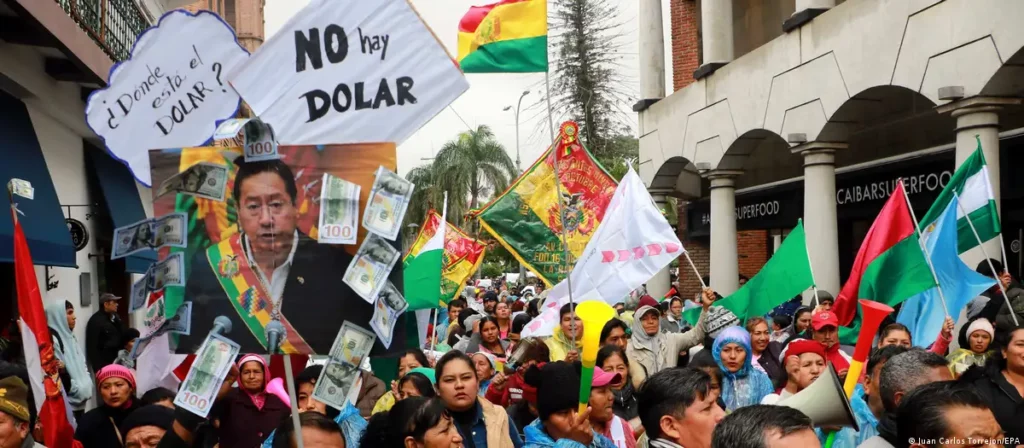
The difficulties in obtaining foreign currency have generated a worrying scenario, with direct impacts on the supply of products and fuel that have led to massive marches and road blockades in different regions of the country.
Associations of retailers, heavy transport and importers lead the demonstrationsdenouncing restrictions on access to dollars by banks and high commissions that inflate the value of the US currency.
Even for this June 27, the transport union had planned to hold a national strike in demand of foreign currency and gasoline. At the last minute they reached an agreement with the government, but the situation remains desperate.
“You have to buy goods from abroad, because nothing is produced here,” Cesar Gonzalez, executive secretary of the Confederation of Trade Union Workers and Self-Employed Workers, told local media.
«Everything is bought with dollars, unfortunately in the country there are none (…) and this shortage of dollars is giving rise to many essential products go up«said the union leader.
The official exchange rate is quoted at more than 6 bolivianos (BOB) for every dollar, but in the parallel market it has reached up to 9 bolivianos, which represents a depreciation of more than 27% in practice.
«The Central Bank He no longer has dollars in his reservesbasically to supply importers, who have to go to the parallel market or the financial system, but the financial system also does not have enough dollars, which has caused commissions to grow strongly,” explained Bolivian economist José Luis Evia.
The government aims for de-dollarization, but with the Bolivian
Faced with this chaotic panorama—often denied by the government—the authorities have resorted to several strategies, one of them being the dedollarization of the economy.
This is a proposal that President Luis Arce presented last year and contemplates the use of the Chinese yuan instead of the US dollar, for the foreign trade of the Andean country.
The Bolivian government’s plan is part of the de-dollarization process that, for several months, China and Russia drive around the world, in a geopolitical strategy that seeks to reduce the global dominance of the dollar. Thus, in the search for solutions, Arce’s leftist government tries to turn to the two Asian giants, which are its political allies.
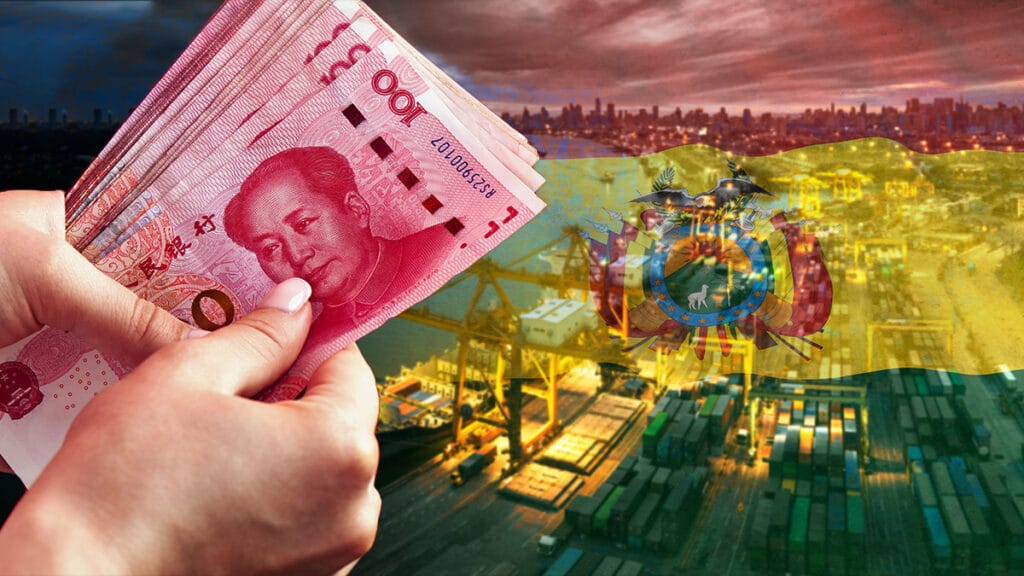
However, it seems that the plan has not given the expected results in Bolivia, at least within the country, although the authorities insist on the de-dollarization of the economy to resolve the situation, even talking about “yuanization.”
The failures are due, according to experts, to the fact that substantial changes have not been implemented in the application of monetary policies. Furthermore, the government strategy also aims to the dollar be replaced by the Bolivianin an internal dynamic that they have called “Bolivianization.”
“The persistent desire to replace the dollar without implementing structural measures or modifying the exchange rate is accelerating a crisis of unsuspected dimensions that is already affecting massive sectors of the population,” says businessman Ronald Nostras.
A vision that Jaime Dunn shares. In a recent interview, the financial analyst spoke about the problems that the country is experiencing, pointing out that the de-dollarization of Bolivian international trade could partially work. In his opinion, the measure would be effective with countries that follow the same trend. But most cross-border trade still running in dollars.
For the expert, The economic situation of the South American country may become even more complicatedsince his investigations show him that the government is resorting to monetary emission with the objective of solving the fiscal deficit. A practice that generally generates higher inflation.
Bitcoin transactions doubled amid ban
Dunn not only notes that the economic model implemented by the Arce government has flaws, but that — as the crisis continues — Bolivians have been increasingly using bitcoin (BTC). This, even though (until June 26) there has been a ban on the use of cryptocurrencies.
The truth is that it is not being spread much in the media and it is something very important that is happening in Bolivia. “Cryptos like bitcoin and stablecoins are two of the types of currencies that people are increasingly using.”
Jaime Dunn, financial analyst.
According to the data handled by the analyst, currently There are about 285,000 cryptocurrency accounts. “That means that 285,000 Bolivians are using crypto assets every day to be able to face the crisis.”
It is a mechanism that has allowed people to access foreign currencies, by converting bolivianos into cryptocurrencies. It has served as a way to protect their money from inflation and face the lack of dollars.
«They turn to cryptocurrencies because they are referenced in dollars and it is a way to dollarize their assets. And since bitcoin is volatile, they also buy stablecoins like USDT,” he says. They have done this on platforms not authorized by the government, circumventing the ban.
That is why transactions They do not tend to be very high and do not usually exceed 4,000 or 5,000 BOB (about $700 to $800), Dunn says. “They have not been done in larger quantities due to the illegality of these movements.”
A situation that is likely to change, given the recent decision announced by the Central Bank of Bolivia (BCB) to eliminate the restriction on trade with cryptoassets.
There was a clamor to remove the bitcoin ban
In the midst of the lack of dollars, the figures show a substantial growth in the adoption of cryptocurrencies in Bolivia compared to previous years, as reported this week in X by the Bolivian representative Mariela Baldivieso, who used the social network to publish a compilation of transaction data.
The numbers shared by Baldivieso, who last March presented a bill to regulate crypto assets before the Chamber of Deputies, reveal that Transactions have doubled in 2024.
Statistics show that more than 2% of Bolivians use cryptocurrencies.
That is why most analyzes agree in seeing bitcoin as part of the solution to the critical situation that affects Bolivians.
Dunn believes that the legalization of bitcoin will be very beneficial because it will serve as pressure relief valve that exists for the US currency.
“Cryptocurrencies would facilitate access to foreign currencies, decreasing the demand for physical dollars.” Hence the efforts of several legislators, NGOs and members of the Bolivian ecosystem because the prohibitions will be eliminated.
As reported by CriptoNoticias, the project presented by Deputy Baldivieso joins another proposal introduced last year by lawyers Gabriel Perez and Carlos Yupanqui Moreira. Everyone wants legislation. A clamor that was finally heard by the government, by repealing the resolution valid since 2020.
In the midst of the delay that has existed in debating the law proposals, the representative has led a movement that has been urging the authorities to meet the requirements of the ecosystem, launching the so-called “Cryptoactive Freedom Management in Bolivia.”
Through this kind of crusade debate is promoted and interest is aroused of public opinion on the issue of cryptocurrencies.
Therefore, once the decision of the Arce government was known, to allow trading with bitcoin, the legislator expresses her satisfaction. It is now expected that, in the midst of the dollar crisis, Congress and the Bolivian ecosystem will focus on achieving the approval of legislation for the sector.