The network as the axis of the energy transition

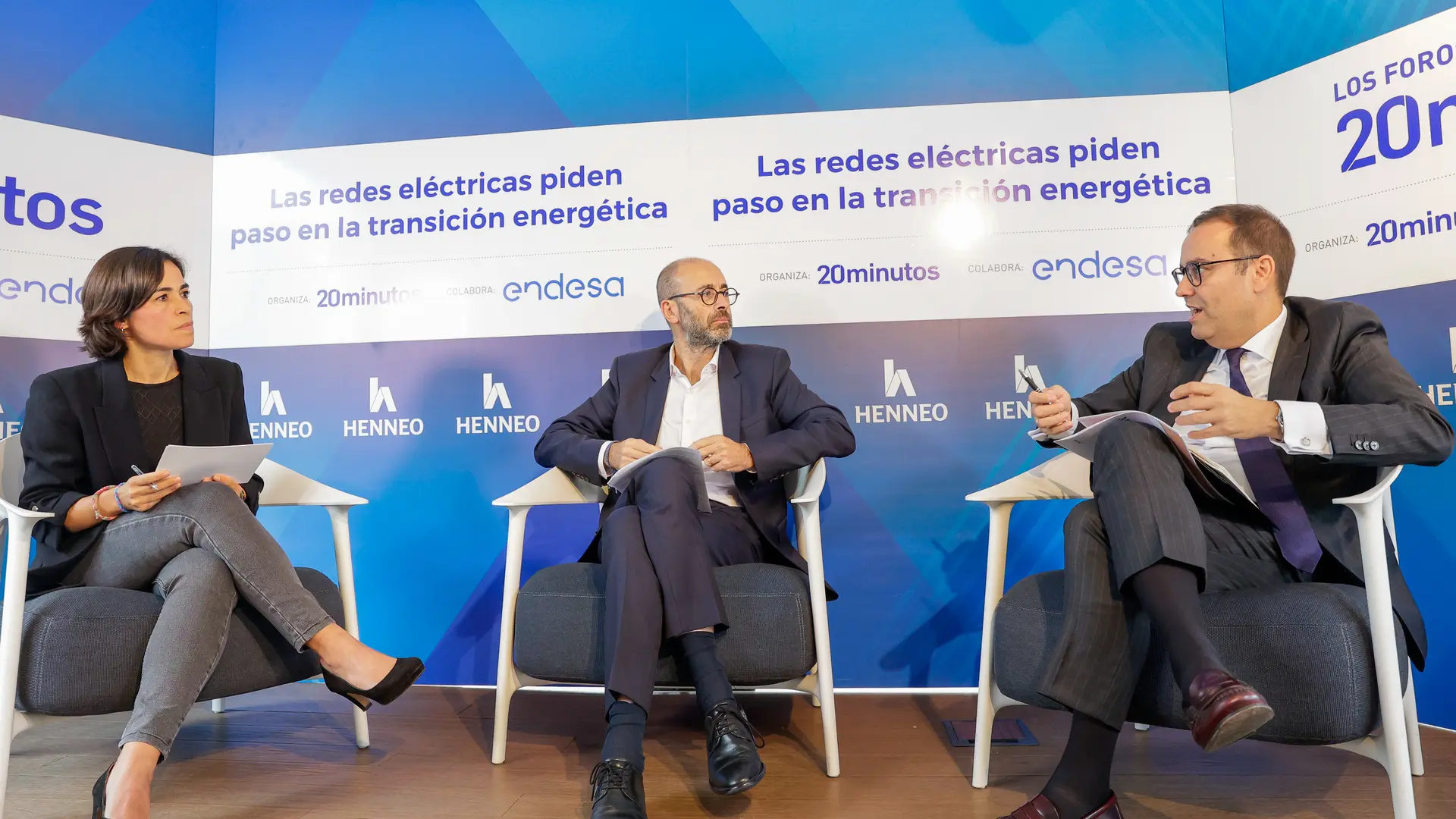
Spain is facing a “historic opportunity” to lead the energy transition, but this objective is at risk if modernization and investment in electrical distribution networks is not urgently addressed. This was the main conclusion of the debate that took place in the forum Electrical networks ask for a step in the energy transition organized by 20 minutes in collaboration with Endesa. The general director of Redes España at Endesa, José Manuel Revuelta Mediavillaand the partner responsible for the Energy sector at PwC Spain, Oscar Barreroparticipated in a round table moderated by Ingrid Gutierrezcoordinator of Economic Informationin which they analyzed the current situation of the electrical networks.
The speakers highlighted the need to make a quantitative leap in investment, which must be multiplied by three compared to the current pace, as Barrero pointed out, because it requires “modernize and strengthen” current networks to prepare them for an environment in which managing electrical networks is “increasingly complex.”
The PwC manager argued that, when comparing investment to GDP ratios with other European countries, the current pace in Spain is, “at least half”. Barrero insisted that this investment would not only generate a positive impact in terms of GDP and employment, but it is “a strategic factor” to continue in this energy transition and advance in the decarbonizationfor which networks are beginning to be seen as “the great fundamental element” to integrate renewable sources.
In this sense, Revuelta explained that these investments must have an effect on the country as a whole, since he believes that, “if they are done well,” they will have “a knock-on effect” when it comes to attracting different industries. Thus, the general director of Redes España at Endesa stressed that electrification is “the key lever” for the country’s productivity and competitiveness. “In order for this to be enabled, what we have to do is have these good quality infrastructures“Revuelta warned, to which he added that this will generate “a call effect” that will lower electricity rates.
However, despite the investment urgency and the opportunity to attract demand, there are several bottlenecks that should be addressed, as conveyed by the speakers. One of them is the “brutal” global competition for resources, which is added to the fact that building a high-voltage line can take up to seven years, according to Revuelta, which means that an investment decided today would not be in service until 2032.
Another of these obstacles that was discussed at the meeting is that of climate change, which is generating unpredictable phenomena, such as danas and subtropical storms. Both speakers warned that the network is not prepared to respond to these external events, so they warned that if a robust network is not worked on, “electrification can be a problem rather than a disadvantage”: “What you have to do is be prepared, not so much to be able to hold on, but to be prepared to act in the second afterward.“
On the other hand, Revuelta and Barrero pointed out that the regulatory model must favor this increase in investment, since it is currently penalizing companies with respect to those from other countries, which is why Barrero indicated that progress must be made towards a model “more encouraging and anticipatory”. Specifically, the director of the consulting firm stated that the model proposed by the CNMC showed a scenario in which demand grows little, while the scenario proposed by companies in the sector is “very different, they are two different realities.” “It is not so much a technical question, but rather a question of approach,” said Barrero, because there is a model in which “there is clearly an objective of limiting the demand that is connected”, in order to try to “limit as much as possible” the investments that are made. “We have to have a totally different approach”Barrero concluded in this regard.
For his part, the Endesa leader shared the same diagnosis and stated that the regulatory model is a “necessary condition”, so he assured that the first thing is “ensure adequate quality standards on the network” and then invest in generating new capacity, since the network is currently “saturated.” Barrero also considered it essential to increase investments in innovation and digitalization so that they bring “a lot of efficiency in both economic and technical terms,” and stated that they must be recognized in the regulatory framework.
Finally, Revolt He stressed that it must be ensured that behind all the demand there are “solid projects, because it is a very precious asset, and we must ensure that the projects are developed as soon as possible”, while Barrero maintained that we must work on providing a response that is “sufficiently agile and fast”, so that in some cases the demand is not discouraged.