Wine sales in the United States fall by nearly 7% due to Trump’s tariff

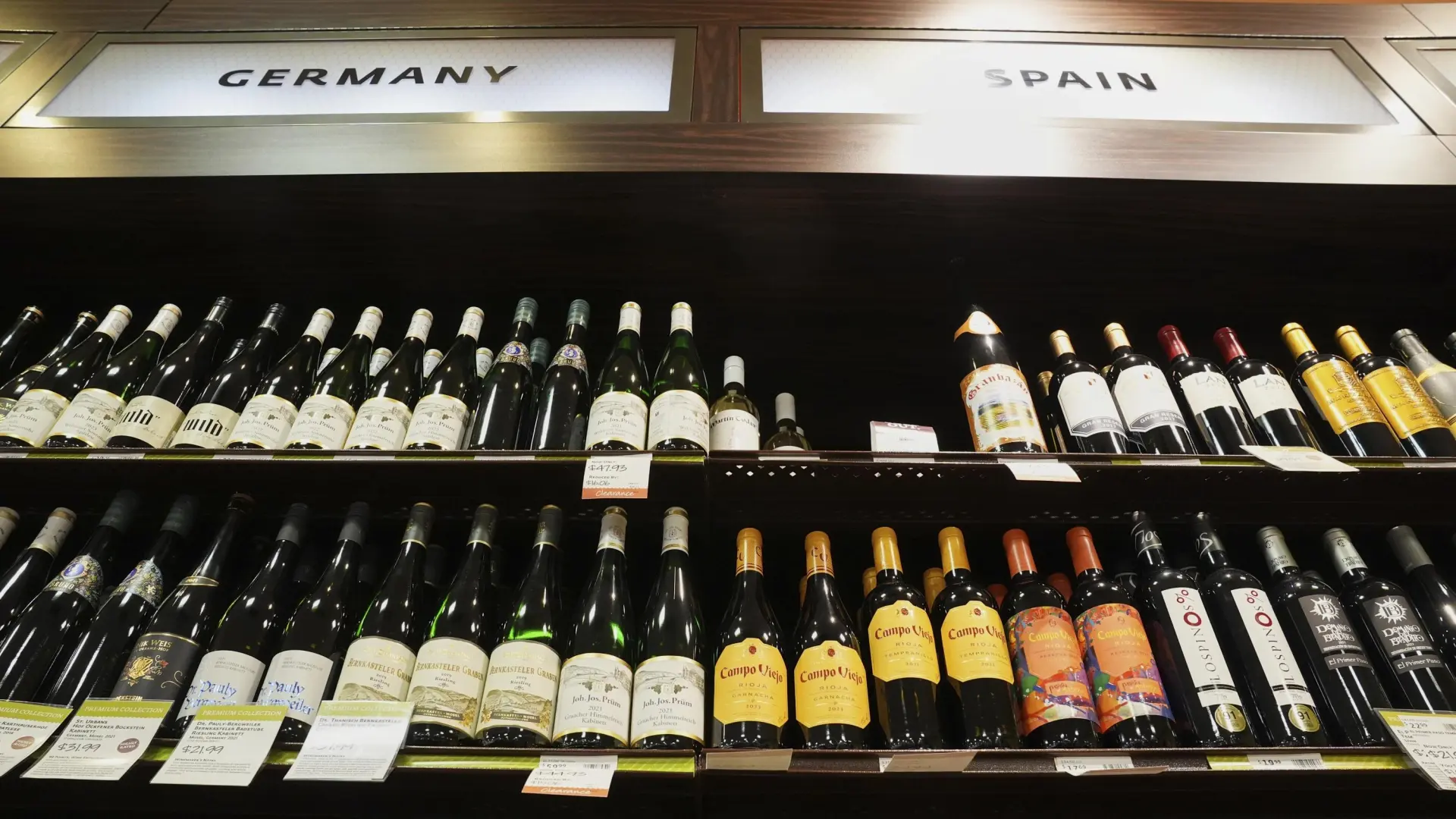
He 15% tariff agreed between Washington and Brussels, which applies to an immense majority of products exported to the US market, is already affecting sales of the sector in this country where Spanish wines were exported last year por an amount of 334.85 million euros. The general director of the Spanish Wine Federation (FEV), José Luis Benítez, has recognized that sales in that market They have decreased by 6.7% until July while the general manager of Marqués de Riscal, Ricardo Diéguez, has pointed towards “a slowdown in sales in the Rioja and Rueda appellations of origin.” A fall that has entailed 6% only in the case of the DO Rioja. Some statements that he made in the context of the Mass Consumption Congress organized by the Association of Manufacturers and Distributors AECOC that closed this Thursday. Diéguez added that the real scope will not be seen until next November and December.
Beware of the appreciation of the euro
For his part, Benítez (FEV) has acknowledged that at the end of last year there were “a large collection” which would then have been paused and, now, they are seeing “in general, a slight drop in sales in all categories, perhaps less than we would have expected with a higher tariff rate.” The general director of the winery employers’ association has warned that “the appreciation of the euro does more damage to the strength of wineries more than the tariff” in the current economic context. In this sense he has admitted that “it is what worries me most in the short term.” Which, the representative of the winemakers added, contrasts with the good performance of the national market, which has been positive for more than a year and a half. “Very good news,” Benítez stressed.
In this sense, the general director of the winery association has reported that in a recent survey carried out among the more than 950 associated wineries throughout Spain “There was everything depending on the exposure to the United States market, which in some cases, is 3 or 4% exposure to SMEs whose exposure can reach 30%, which can be more affected.” Likewise, he added, “There are those who have raised prices with mixed results: A Galician winery has raised its prices somewhat with the importer and good. Many others sent stock at the beginning of the year…” Regarding this very disparate reaction, Benítez estimated that the interesting thing will be how the loss of the margin develops. “It is affecting practically every country in the world,” has emphasized tariffs whose effect he believes is overlapping with the latest inflationary crisis.
Mercosur as an alternative
As an alternative, the winery employers have opted for diversification although they have recalled that Spanish wine is already exported to almost 200 countries. “Mercosur is a fundamental point and we hope for its approval at the end of the year. We encourage all MEPs to vote in favor,” said the general director of the Spanish Wine Federation (FEV). This was justified by the fact that there are safeguard clauses and countries such as Brazil They are “a similar market and as much investment will not be necessary as in the United States.” In this regard, he recalled that in this Latin American country the tariff is 30% compared to the US 15% and has been in favor of signing the free trade agreement that is being negotiated with India. “We are trying to have an annex for wine and spirits,” Beníte explained.