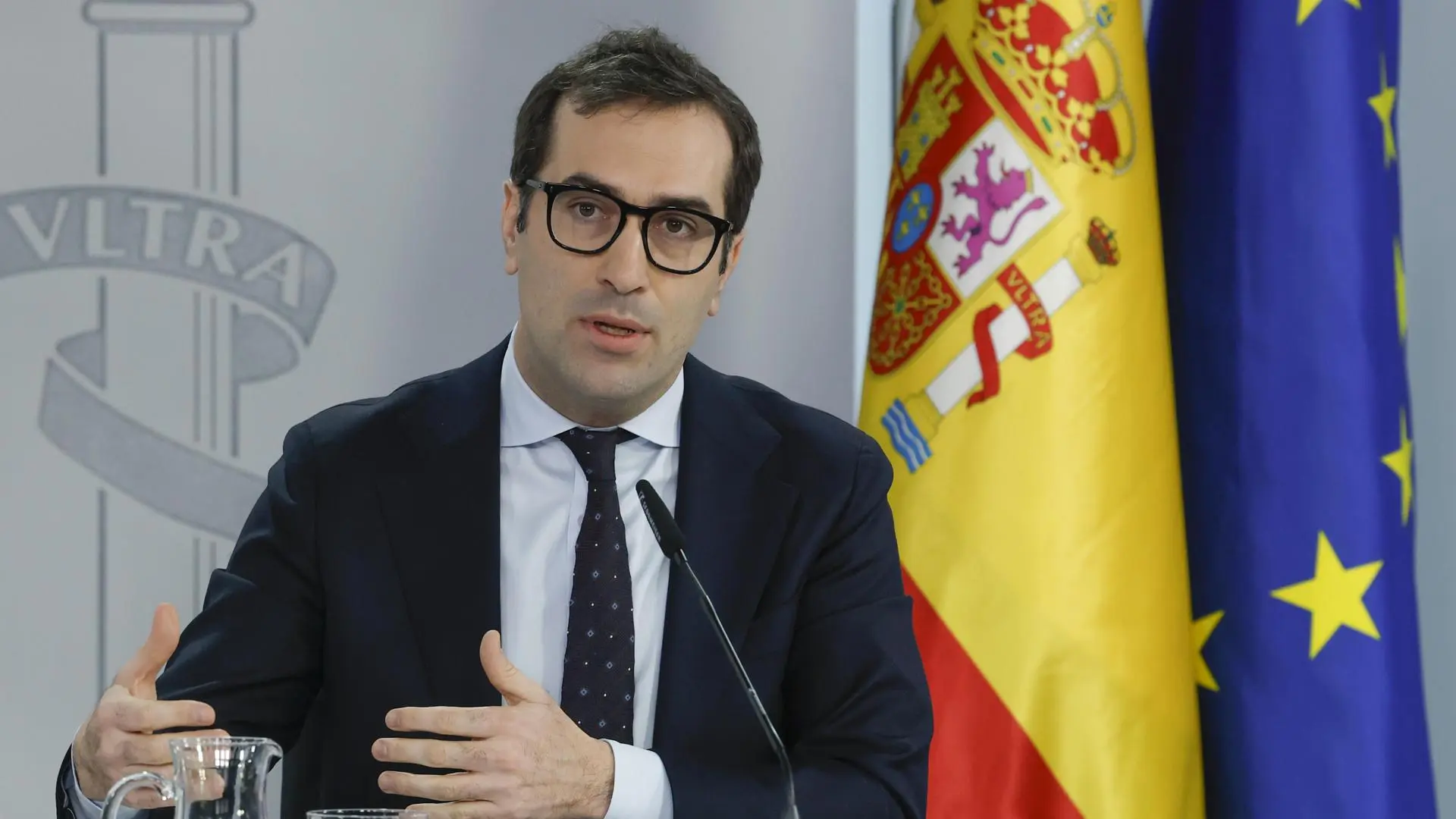
The Spanish economy begins the year with an advance of 1% thanks to the carryover effect of 2025

The Spanish economy starts the year with a growth of 1% only due to inertia of a 2025 that closed better than expected despite the tariff war and geopolitical tensions in Ukraine, the Middle East and Taiwan. The dynamism of the labor market, thanks to the boost of migratory movements, and the boost in private consumption and investment lead the Government to raise the quarterly growth forecast between last October and December to 0.7%.
This was announced by the Minister of Economy, Commerce and Business, Carlos Body, at the press conference following the meeting of the Council of Ministers in which he recognized that the foreign sector “is going to deduct a few tenths” to the growth of activity within the framework of this complex context. The advance in GDP at the start of the year allows the Executive to be optimistic regarding the estimate that the economy will grow by 2.2% for the year as a whole.
Body has also highlighted the “healthy and balanced” growth pattern and that job creation – last year, for the fourth consecutive year, Social Security affiliations increased by more than 500,000 – is concentrated in sectors with high added value, with higher salaries and which also lead to greater productivity. This, at the same time that temporality falls to historic lows.
Other elements that the Minister of Economy wanted to highlight were the growth in hourly productivity and the evolution of the real per capita income of Spanish households, which “has evolved since 2022 and until the second quarter of 2025 above the main OECD countries.”
Body has also insisted on the “healthy” financial situation of Spanish households – generalized for all income levels – and the increase in savings, which is “compatible” with the increase in consumption and therefore there is “room to continue growing and continue improving our growth.” All this causes, in his opinion, “a feeling of greater confidence, of greater optimism among economic agents in Spain vis-à-vis our main partners” despite the “complex international context.”