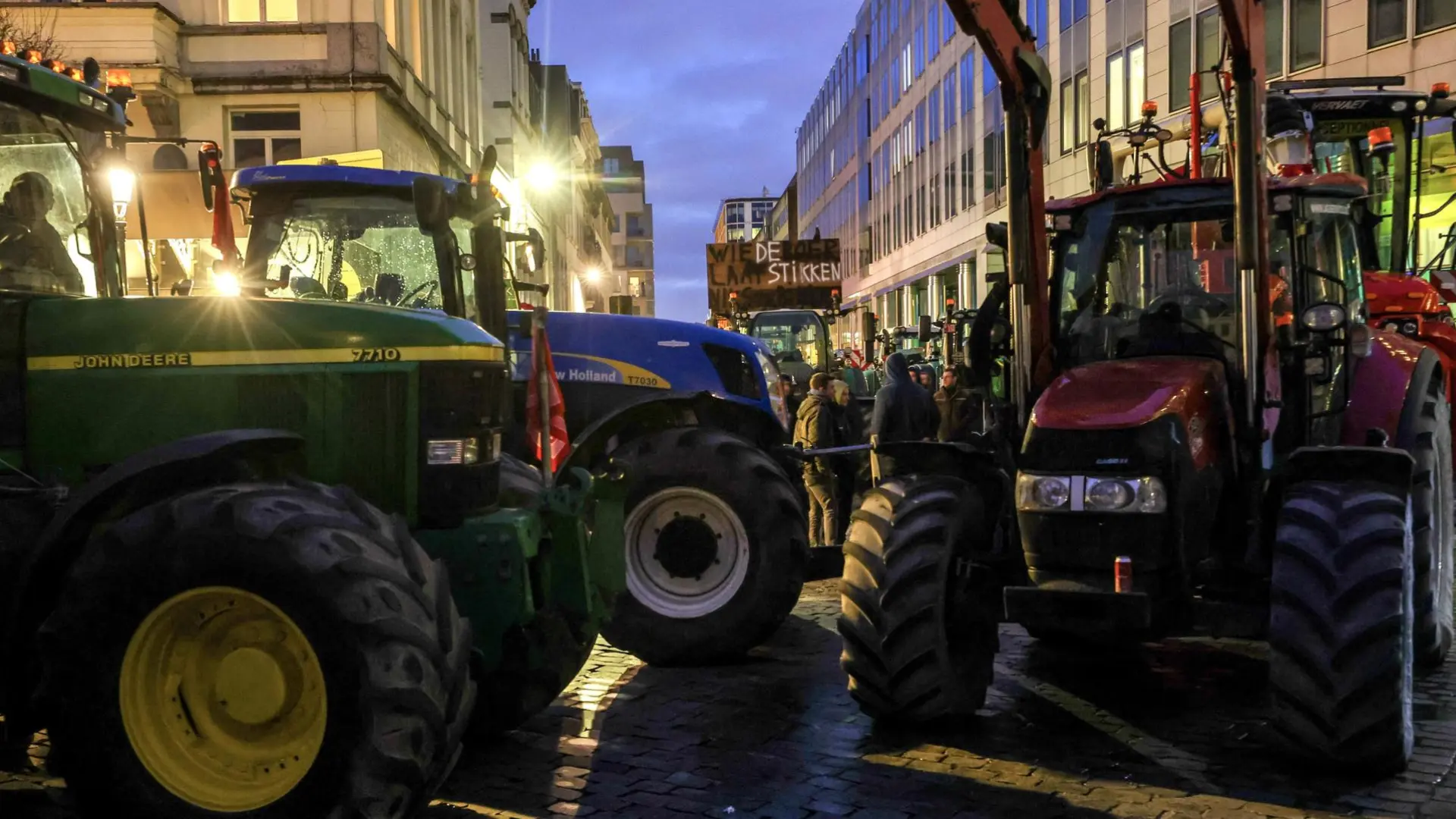
Up to 15,000 farmers from all over Europe and 500 tractors will fill the streets of Brussels this Thursday against the cut in aid to the countryside and Mercosur
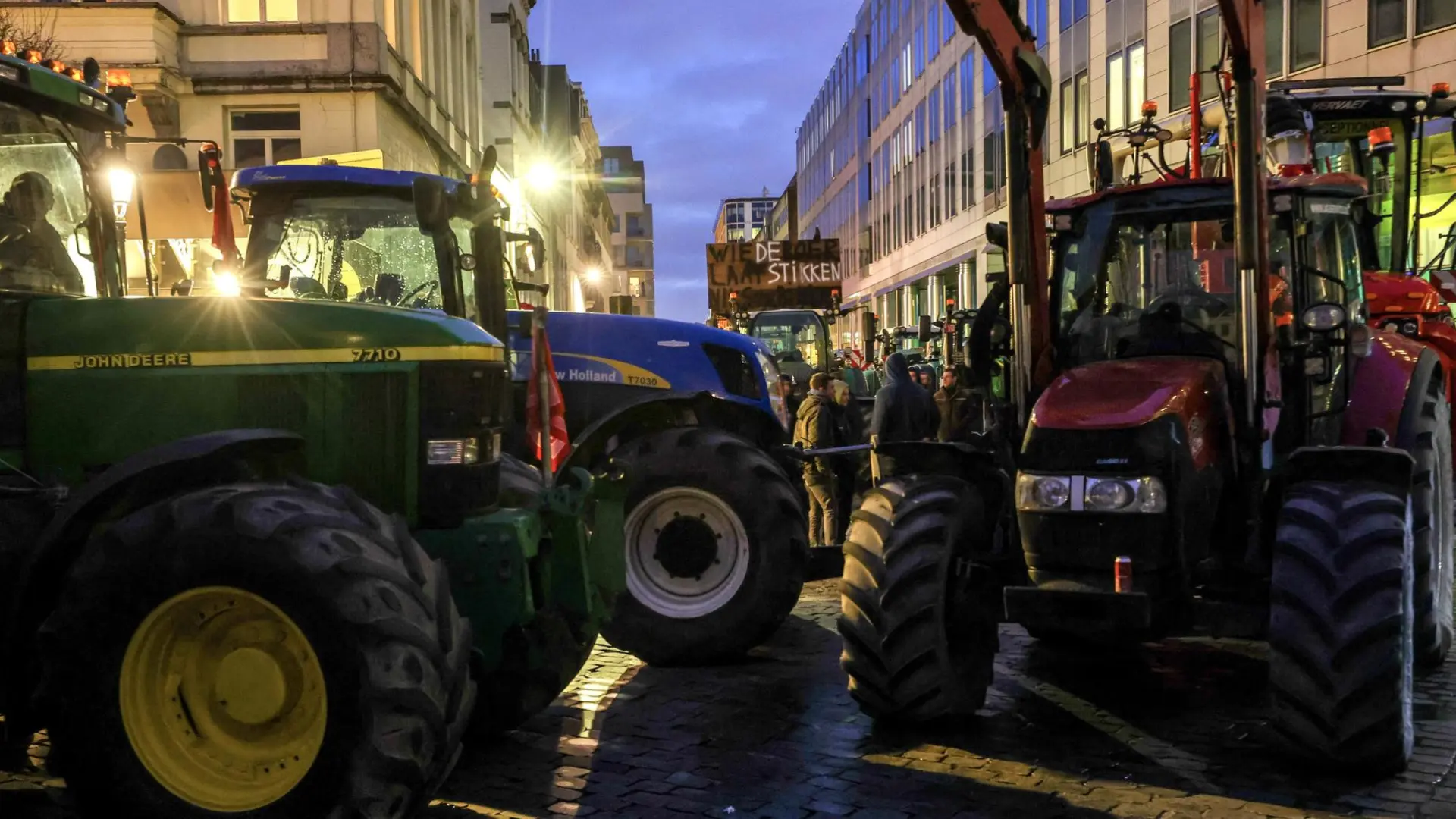
The European field has this Thursday’s date marked on its calendar. Up to some 15,000 farmers from 27 countries that form the European Union (EU), linked to 40 different organizations gathered under the umbrella of COPA – COGECA (the largest agricultural entity in the EU) will walk the streets of Brussels. Among its demands is the withdrawal by the European Commission (EC) of its proposal to cut 22% of the funds of the Common Agricultural Policy (CAP), the paralysis of the ratification of the free trade agreement with Mercosur and a real simplification of the CAP. At least 500 Belgian and Dutch tractors They will be part of the advance party of a march that will begin at the intersection between Boulevard Alberto II and Boulevard Botanique, passing through the central Rue Arts-Loi and concluding at the Luxembourg Square, where the European Parliament (EP) building complex is located.
Spanish agriculture will be well represented and the main agricultural organizations, Asaja, COAG and EPS They will send dozens of protesters. The estimates at the close of this article are around 500 people that the three aforementioned entities will contribute, plus the several dozen cooperative members linked to Agri-Food Cooperatives of Spain. The Italian delegation It is expected to be among the largest and estimates from various sources speak of up to 2,000 farmers and ranchers in the large protest in Brussels.
It is estimated that up to 15,000 farmers from the Twenty-Seven EU countries may gather in Brussels today, led by 500 tractors ‘contributed’ by the Belgian hosts. It is estimated that today there will be around 500 people representing the Spanish countryside.
Appointment with Commissioner Hansen and…
Until the closing of this article, only the European Commissioner for Agriculture and Food Christophe Hansen has formally met today in Brussels with the representatives of the protesters. The general secretary of the Union of Small Farmers and Ranchers (EPS), Cristóbal Cano, pointed out this week during the presentation of the mobilization of European farmers that he hopes that today’s mobilization in the heart of the European Union “make the Agriculture Commissioner grow within the Commission Hansen” to whom he grants “good will but less weight than it should have for the sector in question.”
His counterpart at COAG, Miguel Padilla, also recognized the damage that the Brussels proposal would do to the European field and denounced what he called “a dismantling of the CAP opening the door for each country to promote its policy.” Which, in his opinion, would leave the southern European countries with almost no activity and would add a new threat for consumers: if aid to primary producers disappears, the shopping cart can explode between 6.8% and 9.5%, this is between 350 and 501 euros more per year, according to COAG calculations.
National contributions to the budget, key
For a great expert in the sector such as Fernando Moraleda, current director of the Food Office of LLYC and former secretary general of UPA between 1987 and 2005, the proposed cut in aid to farmers and ranchers in the CAP “will fall off the table of the European Council if reforming the Budget is considered for the Food Sovereignty Strategy and increase contributions to GDP.” That is, increase national contributions to community accounts because for this expert it is “impossible” at the same time have a common defense policy and a strong CAP. “The Commission is constrained if there is no expansion of the Budget by the member states.” The ball is now in your court.
France and Poland, whose primary sectors have a strong weight in their economies, act as leaders of a minority bloc that Italy has joined and that threatens to prevent the ratification of the trade pact with Mercosur
Trade policy, in the spotlight
The trade policy of the European Union has become the other ‘black beast’ for the agricultural sector, especially during this last year: first was the trade pact between Brussels and Washingtonvery controversial since, although it establishes a transversal tariff of 15%, it does not contemplate exceptions (still under negotiation) for certain European products and, in exchange, US imports enter community territory with zero tariffs. Then came the changes to the Association Agreement with Morocco and the endorsement of the European Parliament (EP) that products grown in the former Spanish colony of Western Sahara do not include this legend on their labeling and use the Arabic name of the regions that comprise it. Something that agricultural organizations such as COAG have accused of deceiving the European consumer and going against recent rulings by the Court of Justice of the European Union (CJEU).
And finally the agreement with Mercosur... Closed on December 6, 2024 after more than two decades of eternal negotiation, since then it has followed a tortuous path to its ratification. Despite the fact that the European Parliament has strengthened safeguards this week, facing possible imbalances in the community market Due to the massive entry of imports from countries like Brazil and Argentina, doubts about it remain more valid than ever. Along with the opposition of the vast majority of European farmers and ranchers, there has been a active blocking minoritywhich threatens to paralyze its entry into force at the meeting of heads of State and Government today and tomorrow: France and Poland, whose primary sectors have a strong weight in their economies, have recruited to their cause Italy among other countries. Spain has been at all times in favor of this agreement.
An unbalanced business relationship
Moraleda (LLYC) believes that criticism of the trade policy of the European Union (EU) is not so unanimous and remembers that it is an exclusive competence of the EC “so blocking minorities come into play here and the different interests.” This analyst values the reform of the safeguard clauses and points out that the core of today’s protest is the snip at the PAC. For María Ángeles Ruiz Ezpeleta, professor at EAE Business School, “the problem of the farmer is not in Mercosur but in the minimum levels of the workers. A global problem of the internal market.” Ruiz Ezpeleta supports the sector demonstrating in Brussels and focuses on cutting the CAP and recognizes the weight of political interests in EU trade abroad.
“The agreement with Mercosur seeks to bring order and create a market with Mercosur”, María Ángeles Ruiz Ezpeleta (EAE Business School)
In his opinion, the trade pact with Mercosur benefits the EU because “we are more open and have the lowest tariffs”. Furthermore, it confirms the strong imbalance in the trade balance between both blocks: foreign trade between both blocks accounted for 0.5% of all European exports and 3.5% of imports, both increasing in value terms last year, according to a report from the Ministry of Agriculture. The EAE Business School professor and international trade expert concludes that “the agreement seeks to establish order and create a market with Mercosur.”
In the last year, the Twenty-seven exported agri-food products worth 3.5 billion euros while it was imported from Mercosur for an amount of 24,734 million. Which generated a negative balance, against the community block, of 21,235 million. 4.2% less than in 2023. In the case of Spainlast year it sold products for 463 million euros to the Mercosur countries and imported 4,118 million euros. An imbalance that reached 3,655 million