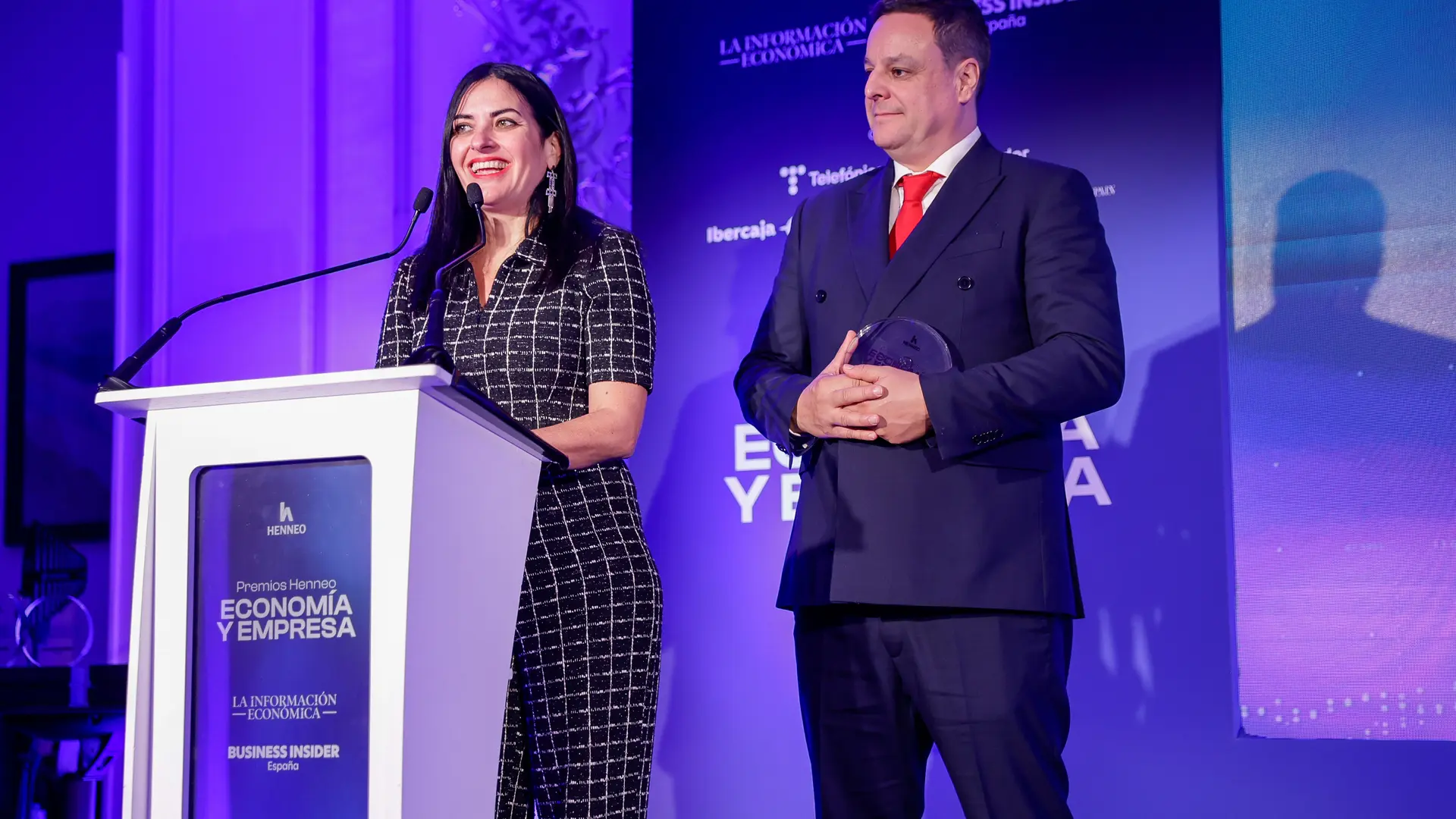
“We have tripled the rate of people trained in digital skills thanks to European funds”
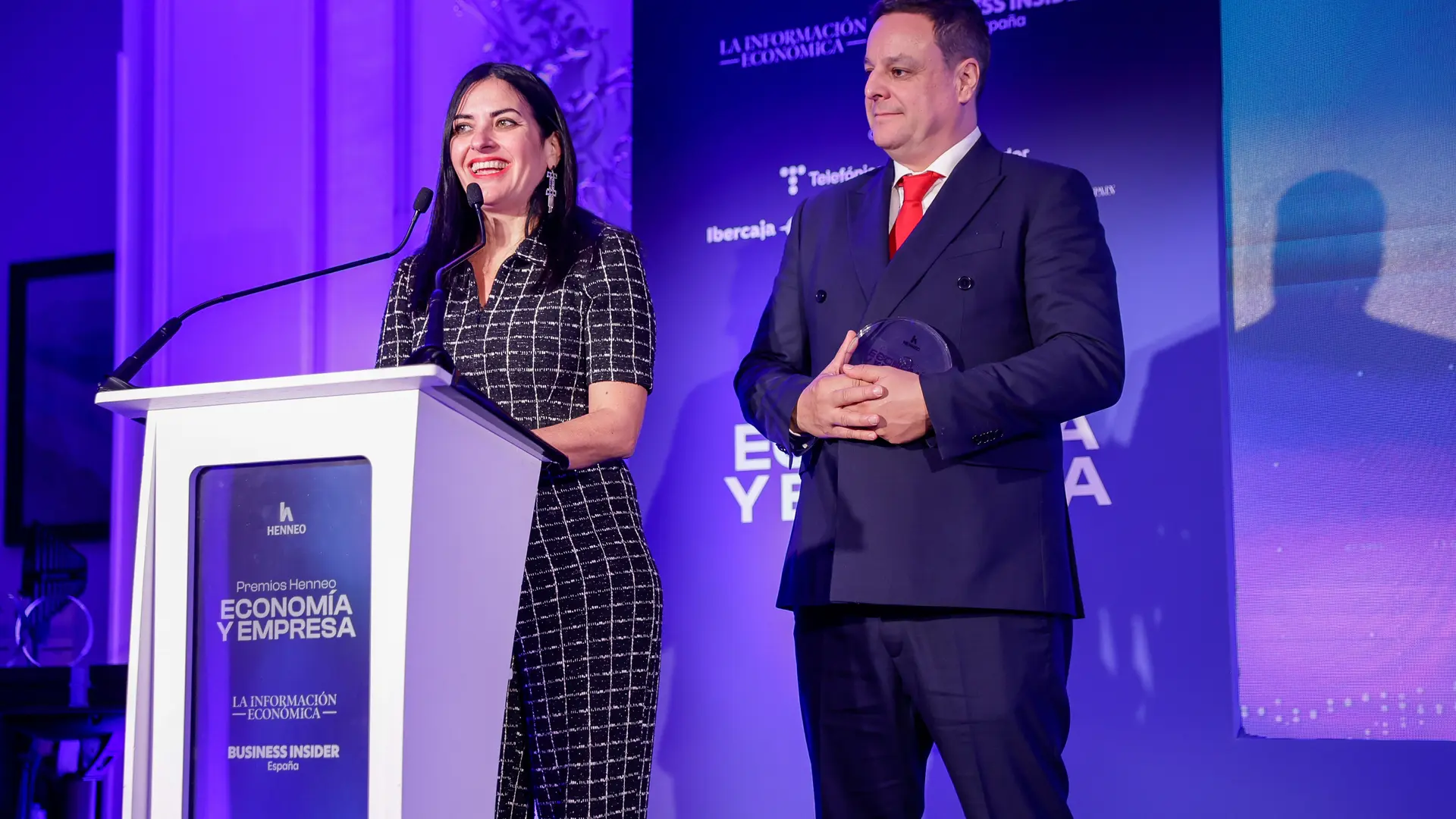
Yolanda Rueda (Málaga) defines herself as an entrepreneur (and passionate) about new technologies. Graduated in Communication Sciences from the University of Malaga, most of her work experience revolves around the digital world. Its first foray into business took place in 1997 with the promotion of Campus Party, which became a reference event in the Internet, technological innovation and electronic entertainment. It was not until 2001 when he launched the Cibervoluntarios Foundation, an award-winning initiative in the first edition of the Henneo Economy and Business Awards of Economic Information and Business Insider in the ‘Responsible Leadership’ category.
How do you define Cibervolunteers?
We are social entrepreneurs, but we did not know it when we started in 2001, because the concept as such did not exist, at least here in Spain. At that time, people were already beginning to talk about the digital divide and the exclusion that the development of technology was generating for many people. My life changed when they explained to me all the technological tools available at that time. This turning point led me to think that if someone has helped me discover all this, even if I was also self-taught, I wanted to contribute to others discovering it. There is a significant portion of people who lack basic digital skills to be an active agent in the information society, which leads to a greater risk of vulnerability. Access to technology is of no use if you do not have the necessary skills.
Is digital vulnerability measurable?
The National Digital Skills Plan shows that in Spain there are around 15 million inhabitants who lack basic digital skills. Anyone can have an Internet connection, what is needed is that it is of quality, because then it is of no use. The European Commission has taken these figures into account when assigning the distribution of European funds to each country.
Around 15 million people lack basic digital skills
Does artificial intelligence threaten to exacerbate this gap?
Technology advances at a dizzying pace. Therefore, we have to look at it from a more proactive perspective and think about how we can be an active agent and what purpose it can serve. The reality is that technology is used very guided by business interests or from the prism of the administration’s needs. The great strength of technology is precisely that it can alleviate many inherited social gaps. That is one of the lines in which we have been working with the objective of people acquiring digital skills so that they can take advantage of them and know how to take advantage of the tools as a form of citizen empowerment. We have been working on this line for some time to achieve citizen digital sovereignty, which is under construction. This is the result of an open and participatory process in which almost half a thousand people have taken part, focusing on five major themes: digital life, transparency, data, decision-making power (Agency) and equal opportunities.
As citizens, we have to be increasingly aware of the uses and properties of the technology that is within our reach. Therefore, not only is the issue of literacy important, it is also necessary to talk about the appropriation of technology. Basically, it means that the important thing is to learn to ideate through these tools and that is why we talk about that appropriation, about how technology can be useful for us. We have to raise our voices and guarantee our rights, which are increasingly being reduced. In Spain we are pioneers in the Digital Rights Law, but we have to be careful so that it is not reduced to an initiative promoted by the administration, because otherwise, there may be more and more misinformation.
In which areas of Spain do cybervolunteers have the greatest presence?
Cibervoluntarios has a lot of capillarity when it comes to developing activities. More than 45,000 volunteers collaborate with us throughout Spain. In the summer months alone we have reached more than 1,711 municipalities, equivalent to 21% of all localities, in which we have carried out more than 15,000 activities, with an average of almost 300 weekly projects. This would not be possible if we as an entity did not use technology efficiently. Each zone has three coordinators. However, a large part of our action focuses on rural spaces. In fact, 38% of the projects have been developed in towns with fewer than 200,000 inhabitants and 17% of them have fewer than 5,000 people. Altogether, taking stock of this 2025, we have trained more than 270,000 users. This is one of the greatest satisfactions.
A large part of our action focuses on rural spaces
How do cyber volunteers finance projects?
Through public-private collaboration. European funds have allowed us to triple the rate of people trained from the 100,000 users we had previously reached. Prior to this, almost 60% of our funds came from public financing, as well as donations from taxpayers who later deducted them in personal income tax or from initiatives promoted by the European Commission. Right now we receive donations from individuals and private entities, as well as from the public administration. We have worked to achieve diversified sources of income. Of course, everything we do is free for the final beneficiaries.
What do you consider to be the greatest achievement of Cibervoluntarios?
Convert an idea into an action and maintain it over time for almost 25 years, through which we have shared knowledge. Our motto is continuous improvement. We are always creating, innovating and improving, maintaining the passion for what we do. This is the great challenge for us. Our programs are articulated based on groups that range from seniors to SMEs and the self-employed, young people between 16 and 25 years old, among others, the range is large. Of the 7,000 organizations we work with, almost a third of those organizations are NGOs dedicated to immigration, older people or women. They help them with bureaucratic issues and we teach them tools to manage them. I like to talk about this collaborative work, which also includes the city councils, which give us all the spaces.