What is known about the 16,000 layoffs announced by Nestlé

Nestlé is in the spotlight more than ever. The Swiss food giant, chaired by the Spanish Pablo Isla (former president of Inditex and Altadis) since last October 1, shook the markets this Thursday with the announcement of 16,000 layoffs throughout the world until 2027. What has sown concern among the 4,060 employees that the company has in Spain, and who at the close of this article do not know if the cuts will reach a company with strong presence in the Spanish market (10 factories spread across half a geography). Union sources defend the good performance of Nestlé Spain. Here we give you the keys to the open crisis in the multinational:
What do we know about the layoffs announced at Nestlé?
What the new CEO of Nestlé, Philip Navratil, has announced is the elimination of 16,000 positions of jobs around the world over the next two years (12,000 of them administrative). The objective is reduce the costs of the food giant by more than 1,000 million Swiss francs (1,075 million euros) in 2027. What Navratil has justified in a decrease in sales during the first nine months of the year of around 1,200 million Swiss francs (1,290 million euros), as well as in a changing world environment which forces tough measures to be adopted such as workforce reduction. To this end, a savings target of 3 billion Swiss francs has been set until 2027. As we will mention later, Nestlé already closed last year with a drop in sales at a global level of 1.8% (in Europe it was 0.9%) compared to 2023.
What impact will the cuts have in Spain?
It is the million dollar question, although at the moment there is hardly any information. This medium has contacted Nestlé Spain, where they acknowledge that they still do not have more data and limit themselves to adding that “the announced staff reduction applies to markets and functions globally over the next two years.” In a similar vein, the new CEO of Nestlé assured that the ‘snip’ would occur in all the geographical areas in which the company is present and, he added, that despite the current complex geopolitics and some more prudent consumersthe food group would maintain its investment commitments.
From Nestlé they justify the 16,000 layoffs announced around the world in the complex international context and in a decrease in sales since January, which they estimate at 1,200 million Swiss francs (1,290 million euros)
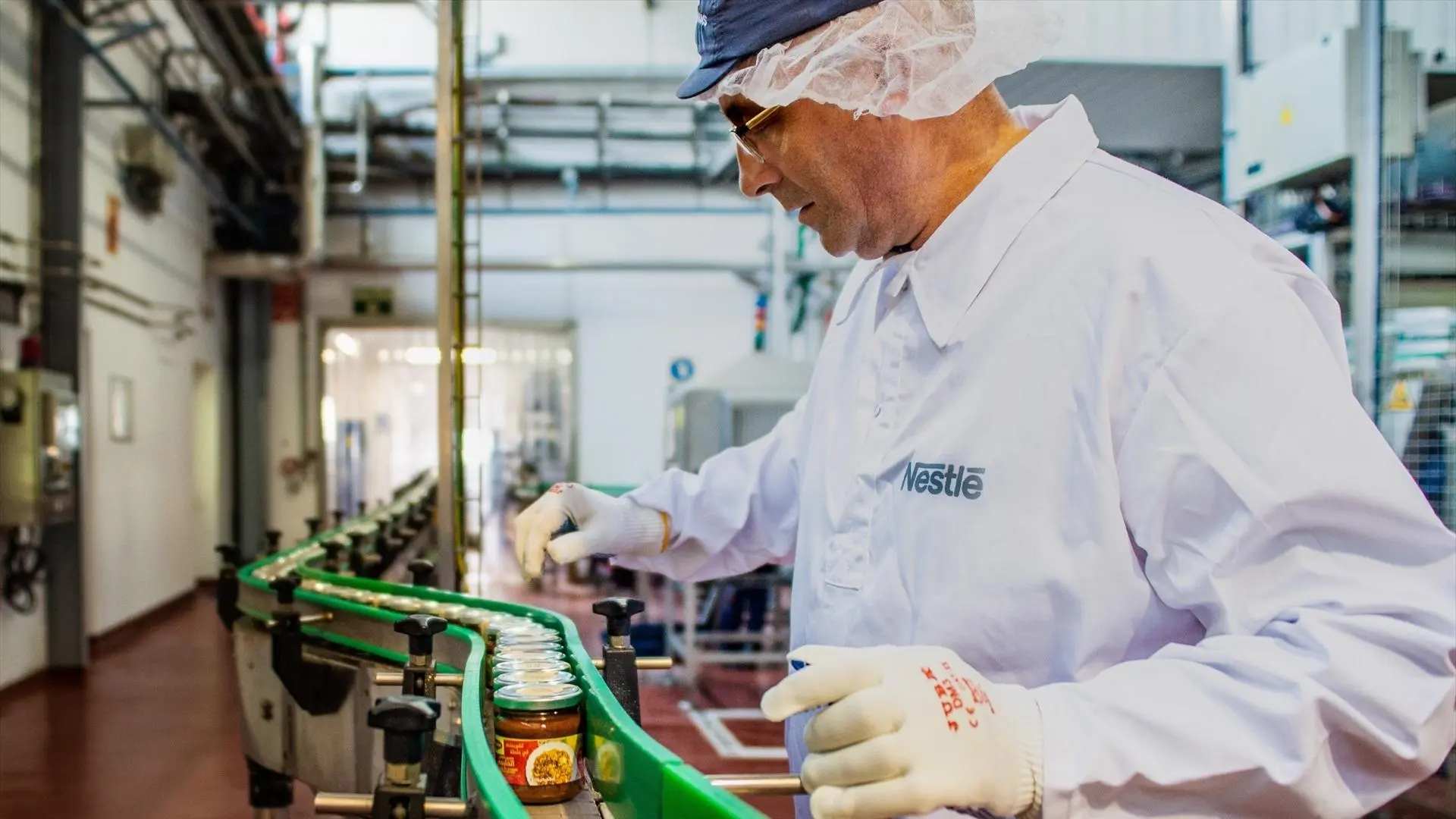
It must be taken into account that Nestlé Spain employs 4,060 people distributed throughout its 10 factories and the central offices in the Barcelona town of Esplugues de Llobregat. From CSIF, with representation in the company, they recognize the “concern” that generated the ad among the template. The head of Private Enterprise of this union, Pedro Poves, declared to ’20 minutes’ that they have requested the food group “to clarify whether the layoffs are going to affect Spain and to what extent.” Poves also flatly rejects reducing the workforce in the country “due to the good economic situation of the company.”
What reasons are behind the layoffs?
Experts such as EAE Business School professor, Martí Pachamé Barrera, point to several reasons behind Nestlé’s drastic decision: white label strength “which is already almost 50% of the shopping basket in Spain”, the changes in consumer habits especially in Europe “with a consumer more concerned about price and less brandsespecially young people”, as well as the sharp increase in the price of raw materials such as chocolate and coffee, “which has increased by up to 70% since the beginning of the year”.
Are Nestlé Spain’s figures good?
Union forces such as CSIF have rejected that the cuts announced this Thursday affect the Spanish subsidiary and have argued that the company is going through “a good economic situation”. Is this so? Globally, the food giant closed the last year with organic growth of 2.2% compared to 7.2% in 2023 and with real internal growth (RIG) of 0.8% compared to a decrease of 0.3% in the previous year. Sales ended in 2024 below the previous year, going from 92,998 million Swiss francs (95,730 million euros) in 2023 to 91,354 million (95,914 million euros) the following year. This is a decline of 1.8%. However, in the first semester This year, the multinational has also seen its global profits decline to 5,065 million Swiss francs (5,400 million euros). What it means a drop of 10.3%compared to the first six months of 2024. Sales reached 44,228 million francs (about 47,400 million euros) between January and June, 1.8% more year-on-year.
Experts point to several causes to explain the layoffs: the strength of the white label, consumer habits and the increase in the cost of raw materials.
In Spain the numbers are more positive: Last year closed with income of 2,582 million euros. This represents 4.1% more compared to the previous year (2,496 million in 2024). Furthermore the sales in Spain of the company reached 1,544 million euros as of last year, 1.7% more. Likewise, the exports of the Spanish subsidiary They rose 7% compared to 2023 and they reached 1,038 million. That is, 40% of total sales. Likewise, Nestlé’s investment pace in Spain was maintained compared to previous years since these exceeded 76 million euros (in 2023 they reached 78 million). The majority of this amount was destined for its 10 factories in Spain (67 million).
What products does Nestlé manufacture and market in Spain?
The portfolio of the Swiss food giant in Spain is very broad. In our country it manufactures instant cocoa, chocolate, roasted and instant coffee, condensed milk, liquid diet milk, powdered milk, baby flour, bottled water, ready meals and even pet food. It does so through brands as recognizable as ‘Kit kat’, ‘Nestlé Extrafino’, Chocapic, Nesquik, Nespresso, Nescafé, Purina, Aquarel, Viladrau, Maison Perrier, Nancare, Magi, Solís, Litoral, La Lechera or Cafés La Estrella, inter alia.
What is your presence in the national market?
Nestlé knows Spain well. The Swiss multinational opened its first factory in 1905 in the Cantabrian town of La Penilla Cayónfor its good maritime and land communication routes along with its industrial tradition (canning) and livestock farming (especially dairy). It currently has a dozen factories spread throughout Spain in The Penilla (Cantabria), Reus (Tarragona), Viladrau (Girona), Girona, Castellbisbal (Barcelona), Miajadas (Cáceres), Pontecesures (Pontevedra), Gijon (Asturias), Sebares (Asturias) and Herrera del Duque (Badajoz). Its headquarters are located in Esplugues de Llobregat (Barcelona) and its workforce reached 4,029 people at the end of last year, according to the report. ‘Nestlé in society’. Of which 94.76% were with indefinite contracts and covered by 11 different collective agreements.
Nestlé Spain, which employs around 4,060 people, closed last year with revenues of 2,582 million euros, 4.1%. Sales in Spain were 1,544 million. This is 1.7% more.
How did Pablo Isla become president of Nestlé?
The cuts come with a renovated dome: the Spanish Pablo Islaformer president of companies such as Inditex, assumed the presidency of Nestlé last October 1 replacing Paul Bulcke. Isla was already vice president of the multinational since last year and its director since 2018. In parallel, the Swiss company also has a new CEO after the sudden dismissal last month of former CEO Laurent Freixe, for an “undeclared romantic relationship with a direct subordinate.” Which also accelerated the landing of the senior Spanish executive, initially scheduled for next April. Freixe’s position has been taken by a man from the house, Philipp Navratilwho until then was the head of Nespreso.