“2% military spending may fall short, but 5% is nonsense”
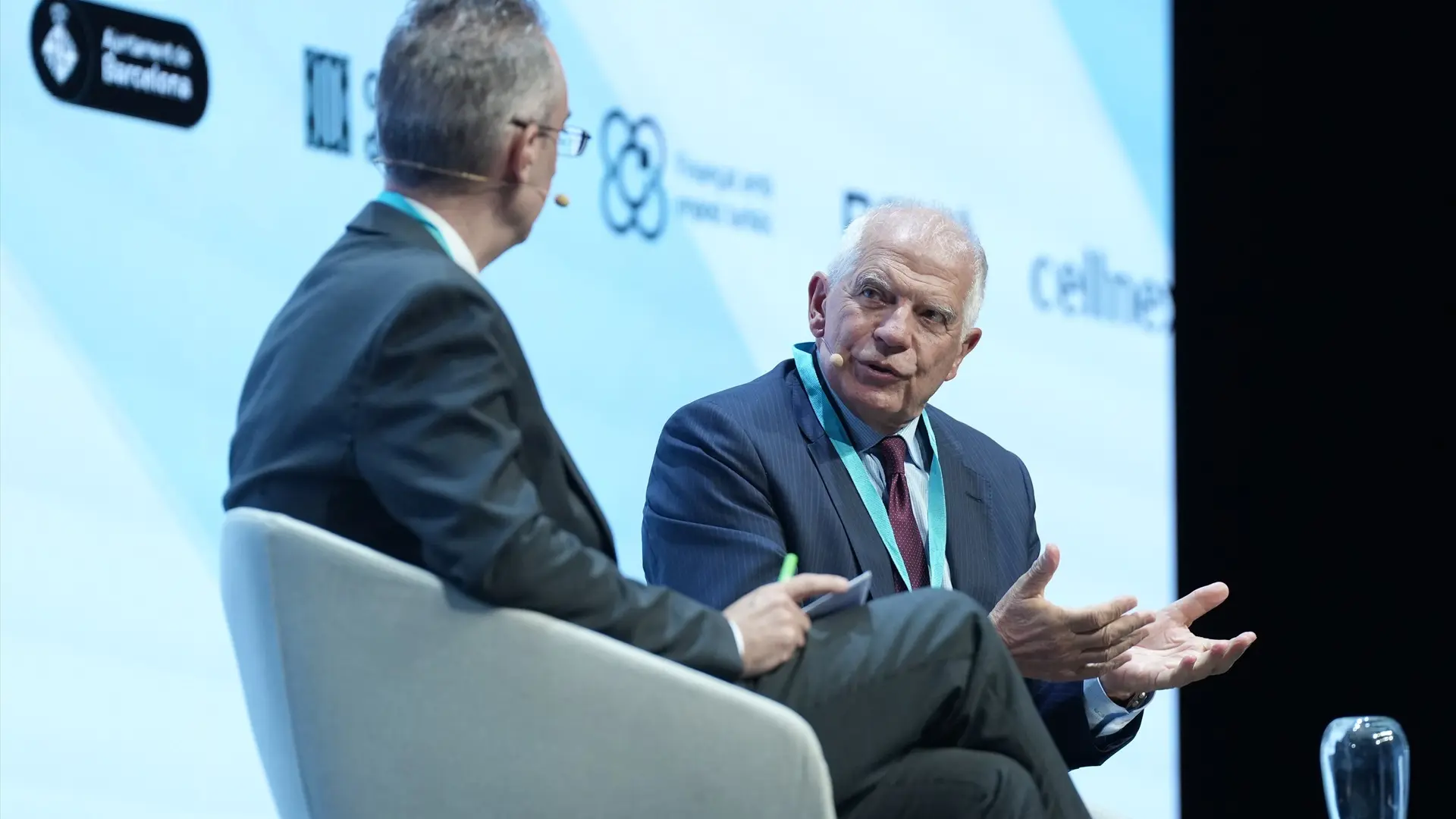
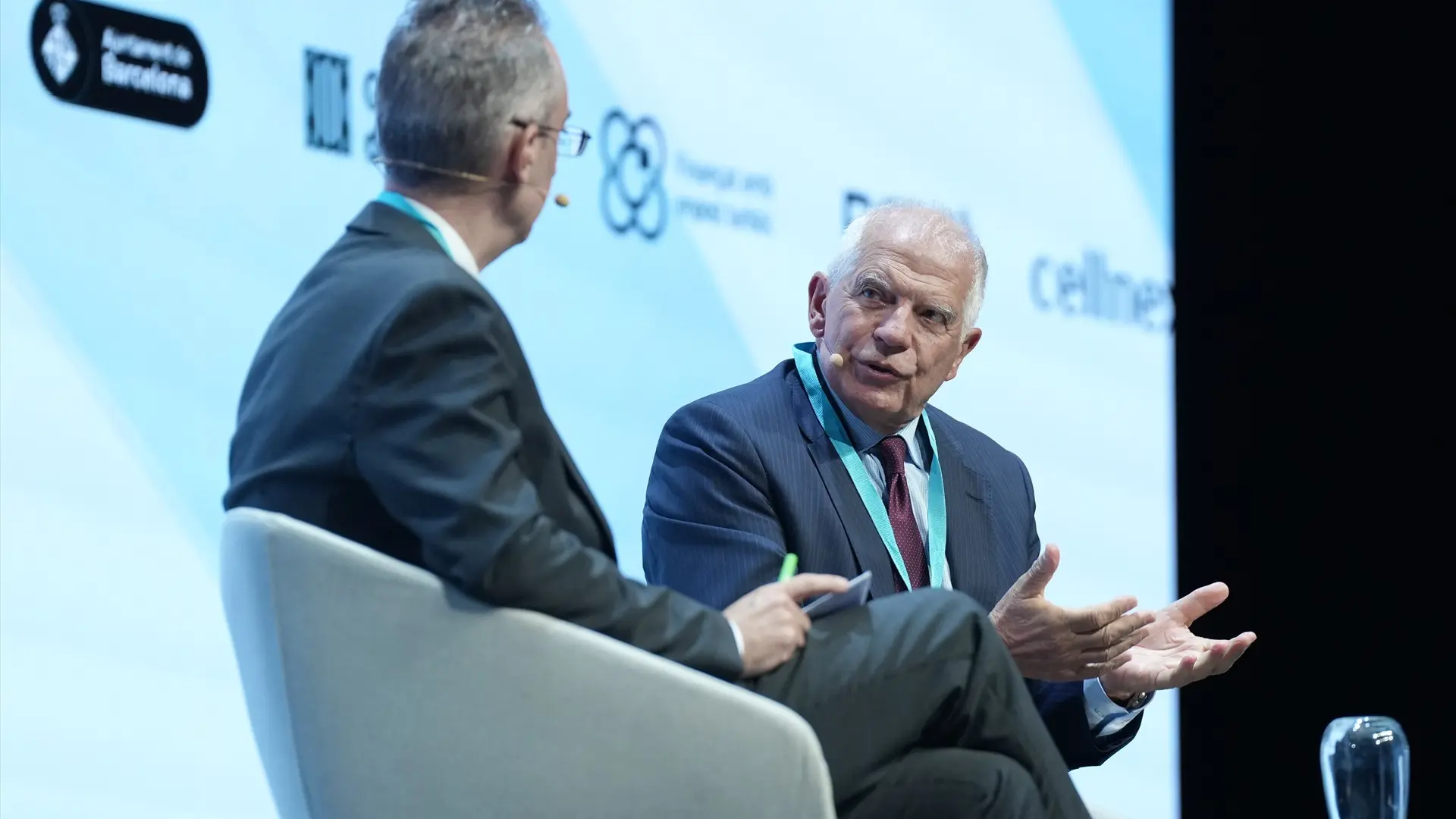
The former high representative for foreign affairs and security policy of the European Union and current president of Cidob, Josep Borrell, pointed out this Thursday in statements to the media that “2% military spending may fall shortbut 5% is nonsense that only responds to Trump’s will to impose his rule.” Borrell has replied that “Acquiring commitments with NATO consists of making military capabilities available. If he does so, he has complied with NATO and military capacity is not money but frigates, planes…” However, he has warned that “his warnings should not be taken on deaf ears: he does not like being contradicted at all.” Some statements he made this Thursday during the AECOC Consumer Congress, which closes this Thursday in Valencia.
The current president of CIDOB has supported the position of the President of the Executive Pedro Sánchez on military spending in NATO. “I think the Spanish Government did well and I wish there had been other countries that had said it,” he noted. Asked about hypothetical retaliation, Borrell recalled that “they cannot impose tariffs on us because Spain does not exist commercially. It is the European Union, which is a customs union. If you raise tariffs, you have to do it to everyone.” In this sense, he explained that the rest of the European countries would have to defend Spain and oppose it. Regarding a hypothetical expulsion from NATO, he maintained that “andThe North Atlantic treaty does not foresee expelling anyone. What happens is that the United States is the great factotum within NATO.” In this sense, he added that “maybe it will find support, but with the law in hand it cannot.” In any case, he maintained that someone will have to explain to Trump the important contribution of Spain to the military deployment of the United States in Europe with bases like Rota.
From a unipolar world to a multipolar world
In his speech, the former head of foreign policy of the European Union highlighted that The current world is in transition from a unipolar order to a multipolar order. with two fundamental protagonists such as the United States and China. Borrell has identified up to 7 ruptures in the world order such as the redefinition of globalization from economic efficiency to security. “The key word is ‘security’, which declines with everything,” highlights the former politician. Likewise, he added that “we now prefer to have stocks rather than be at risk of supply interruptions.” Along these lines, he has added other aspects such as the erosion of multilateralism, the transition from the unipolar hegemony of the United States to multipolar competition and “a reconfiguration of soft power.”
In any case, Borrell’s biggest concern is that “democracy declines in the world and polarization increases, that happens in Spain and many parts of the world.” For the exalted representative, all this “opens the door to authoritarian models, of which China presents itself as an apostle” and he has regretted that Europe does not seem to care about what is happening in Africa. He has also talked about what we are facing “a change in the spirit of the times” for which he believes that the architecture of the European Union is not prepared. “It has been designed for another world, that of the Lisbon Treaty after the euro crisis. “We had to invent solutions outside the treaties.”he has maintained. Borrel has recognized that “the governance system is incapable of making decisions” and admitted that unanimity would require the endorsement of the 27 member countries of the EU “and those who see this as the right to veto are not going to do it.”