consumption pulls GDP and compensates for external weakness
The GDP growth data in the third quarter revealed on Wednesday by the INE have revealed a change in the engine that moves the Spanish economy. The foreign sector —what companies and citizens export and import— begins to show clear signs of exhaustion. But, just as it begins to falter, household consumption and investment have taken the lead and are driving growth.
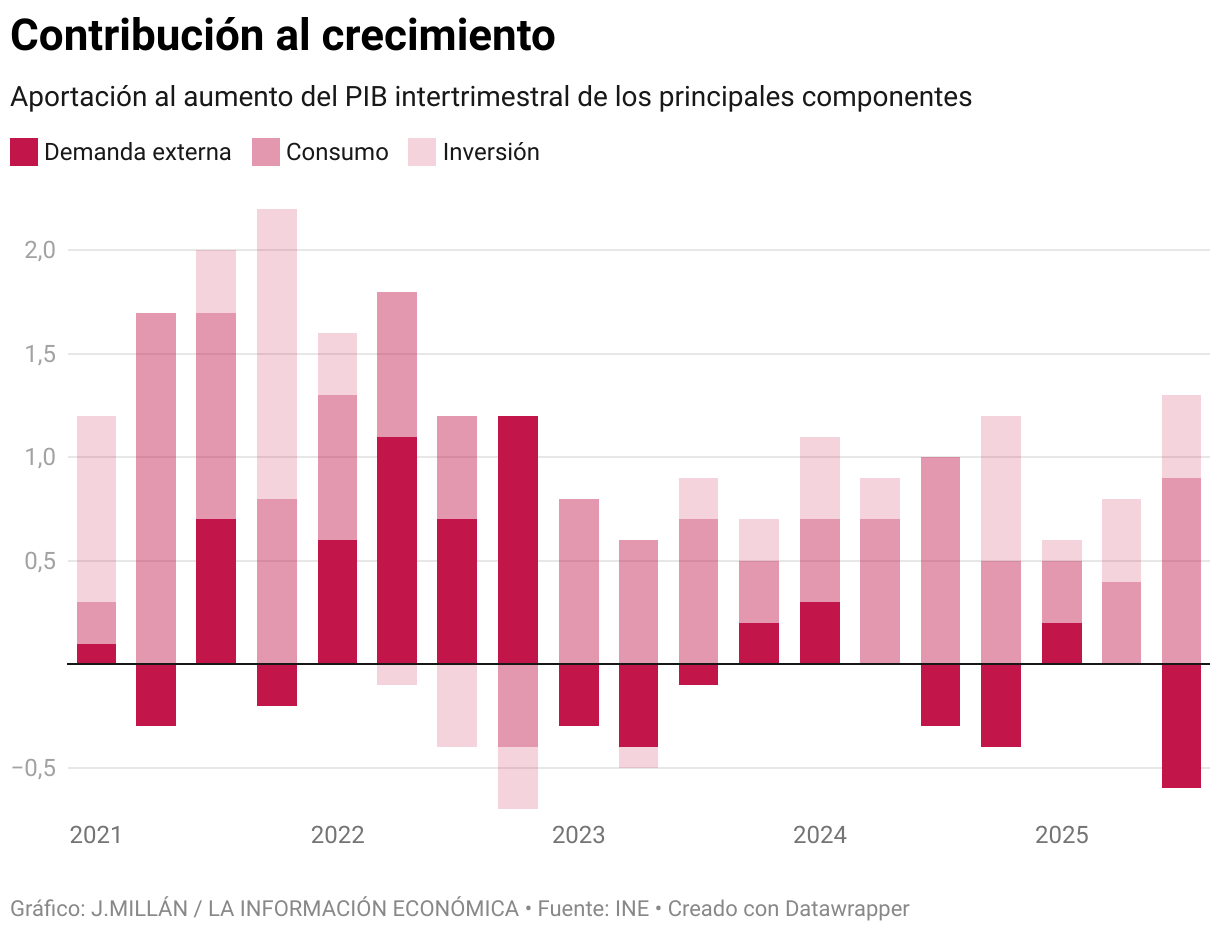
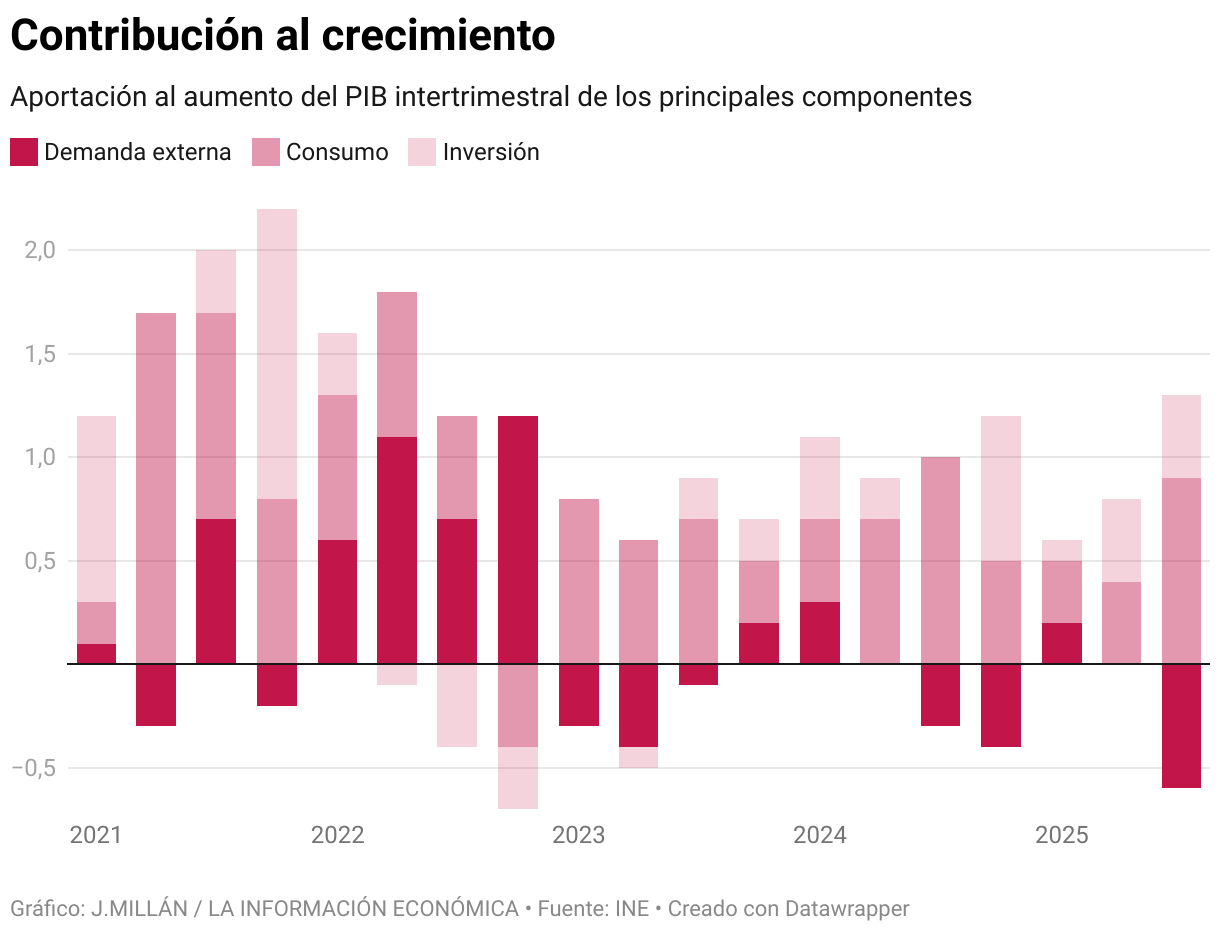
The balance of factors that explain the 0.6% increase in GDP in the third quarter – a growth rate that continues to be much higher than that of other European countries – has two sides. On the one hand, external demand (combined effect of exports and imports) subtracted six tenths from the GDP between July and September. A brake on growth, as has not been seen since the pandemic suddenly interrupted foreign activity. On the other hand, domestic demand accelerated and contributed 1.2 points to the progress of the economy.
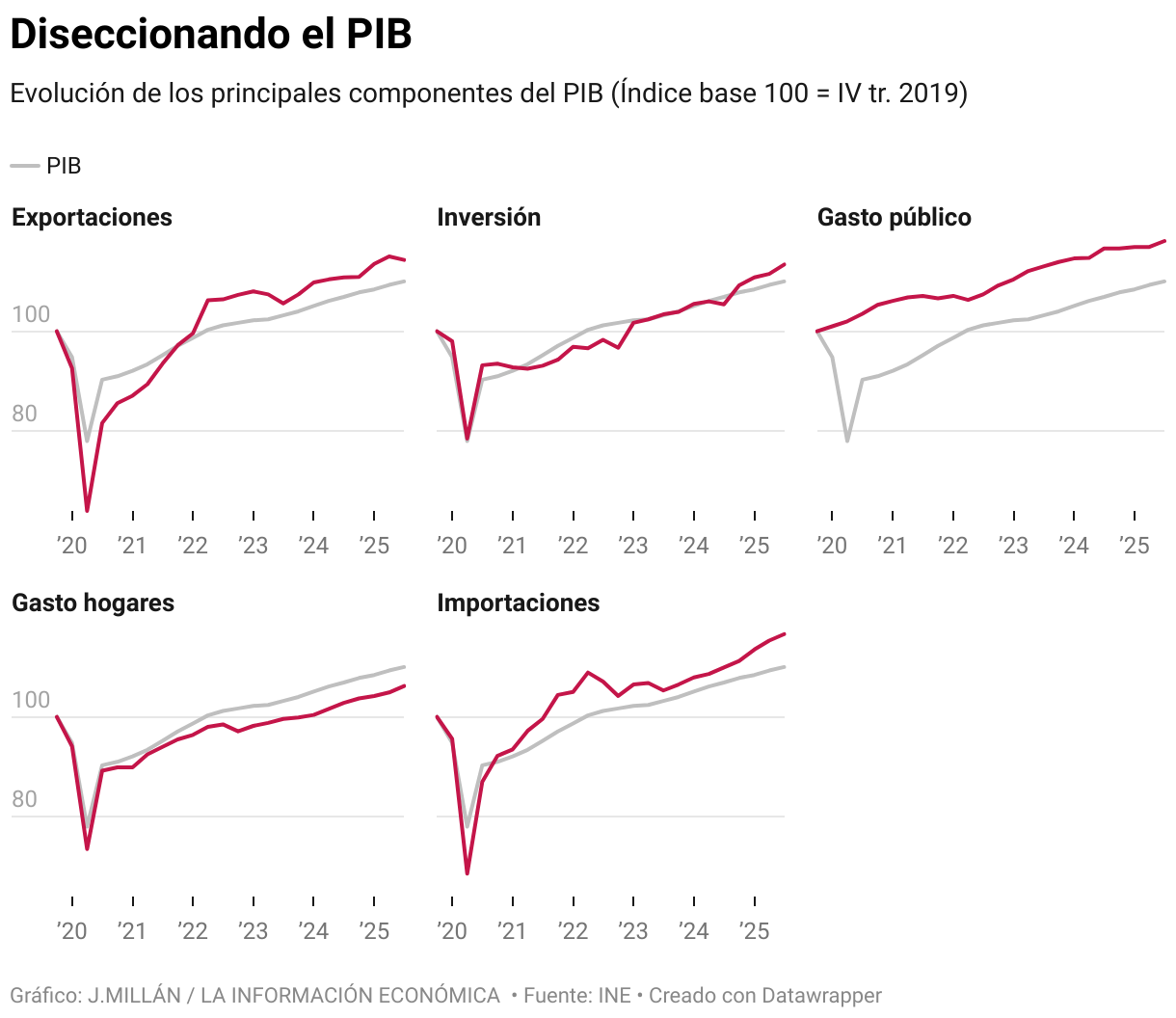
Within the foreign sector, two different realities coexist. On the one hand, exports, which have fallen 1.3% compared to the previous quarter after they had accelerated by 1.7% in the second quarter. This factor has reduced growth by two tenths, mainly due to the contraction in trade in goods (the sale of services abroad continues to rise).
The other side of the external sector is la of imports, which continue to grow driven by the rise of the country’s internal consumption. By increasing purchases from abroad, the negative effect of external demand is amplified (to calculate GDP, imports must be subtracted from exports). Specifically, purchases from abroad detracted four tenths from the GDP which, added to the two due to the fall in exports, explain the six tenths that external demand has subtracted from the economy.
Trump’s tariff offensive and global uncertainty begin to filter into GDP Spanish although, for now, to a lesser extent than other countries. Manuel Hidalgo, professor at the Pablo de Olavide University and Senior Fellow at EsadeEcPol, believes that the turbulent international context may have weighed down, but points out that if the situation normalizes, the foreign sector could once again gain momentum.
For their part, ING analysts point out that the weakness in exports reflects a trend that “is likely to be observed throughout Europe as tariffs have begun to take effect during the third quarter.” “The context of international geopolitical uncertainty and the increase in tariffs is having a negative impact on exports of goods,” observe, for their part, analysts from the Spanish employers’ association CEOE.
Homes and investment take over
At the same time that the foreign sector begins to falter, household consumption and business investment have taken over, offsetting this negative effect. National demand accelerated 1.3% in the third quarter thanks to the rise in household consumption — which increased by 1.2% compared to the second quarter — and investment, which rose by 1.7%.
In terms of contribution to GDP growth, national demand contributed 1.2 points, four tenths more than in the previous quarter. Family consumption, alone, was enough to contribute six tenths to the increase in GDP (two more than in the previous period), while public spending contributed another two. For its part, investment (gross fixed capital formation) contributed four tenths to the progress of the economy, with a fairly prominent weight of the construction sector.
“For a few months we have been warning that there was going to be a change in the model and it is happening. We have more internal demand and less external demand. There is no alarm signal. It’s not a matter of thinking that something is happening. In the first quarter of this year we already grew 0.6%,” explains Hidalgo.
“It seems that there is finally a certain positive dynamic that is maintained over time,” he reflects, regarding the investment. “Companies are beginning to encourage themselves to make the investments they want to make. I don’t dare say if it is a definitive change, but there is something three consecutive quarters. We haven’t had it since the pandemic,” he concludes.