from pork to almond

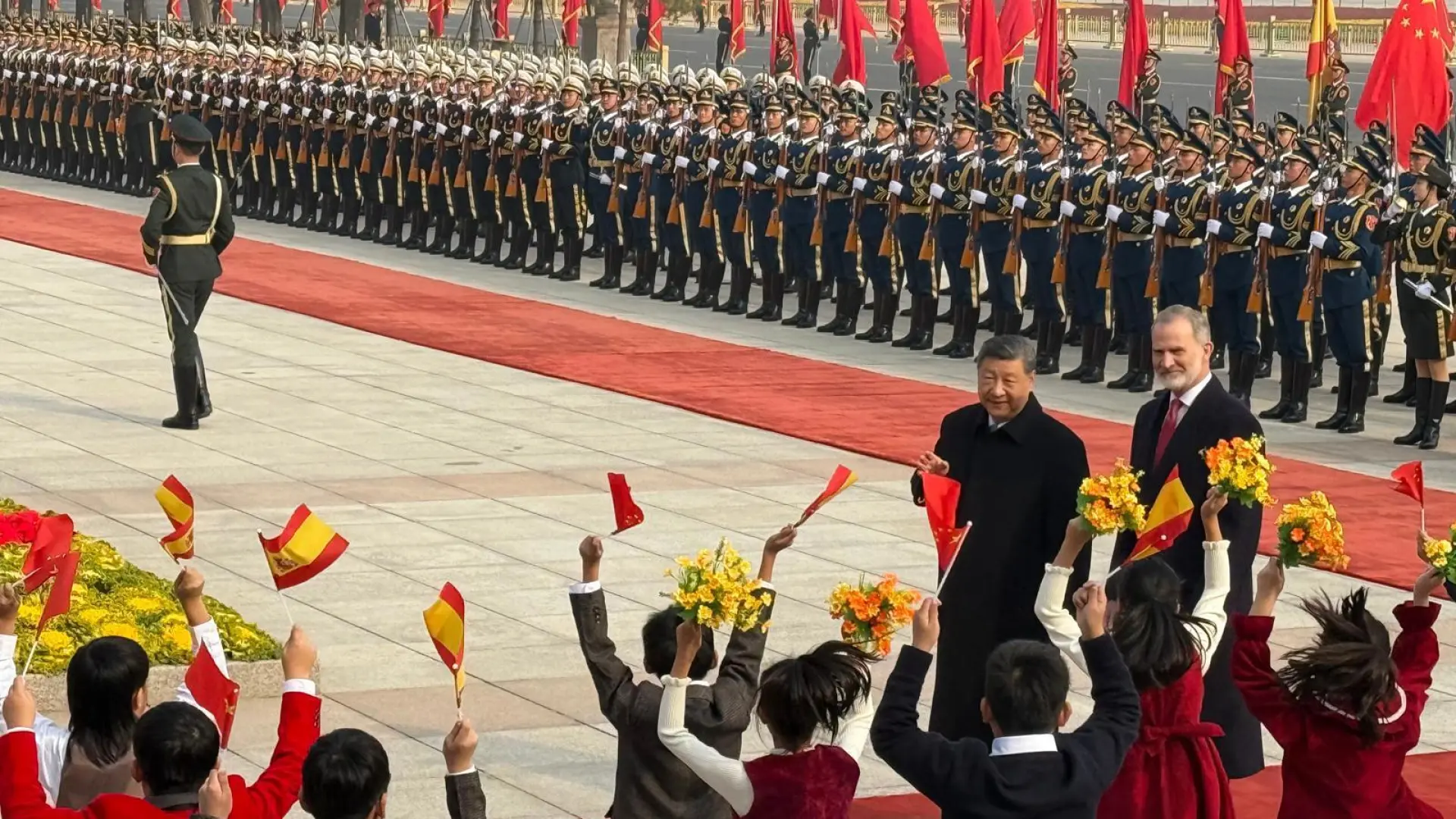
The relationship between China and Spain is going through a particularly sweet moment, which has crystallized in the last state trip of the Kings to the Asian giant a few days ago, and which puts the finishing touch to the three visits to Chinese territory by the President of the Government, Pedro Sánchez, since he came to power in June 2018. Both in the president’s last tour in April, and in the most recent of Their Majesties, agri-food exports had a prominent place on the agenda: pork, almonds, cherries, chicken meat… Only in this area have both countries signed 15 protocols in recent years to open this market to Spanish products or reinforce its presence on Chinese soil. Especially in the case of pigs. However, the path to access the Asian power is a winding road that requires time and skill.
The Chinese journey of Felipe VI and Doña Letizia It ended with a milestone for Spanish swine: the signing of the ‘swine fever regionalization protocol’. A document, already in force, that will prevent China from being completely closed to the export of Spanish pork in the event that this disease appears in an area of Spain. Sales may continue from areas that are considered “free” of this pathogen. What the Interprofessional Agri-Food Organization of White Coated Pigs (INTERPORC) described as “a historical milestone” and “a decisive step to guarantee the stability of procine trade flows between both countries.” In pork alone, 570.7 million euros were exported to the Asian giant from Spain in 2024. It is, by far, the first ‘agro’ export, far behind olive oil (141.5 million).
Spain exported agri-food products for an amount of 1,864 million in 2024, while imports reached 1,611 million, with a positive balance of ‘only’ 253 million
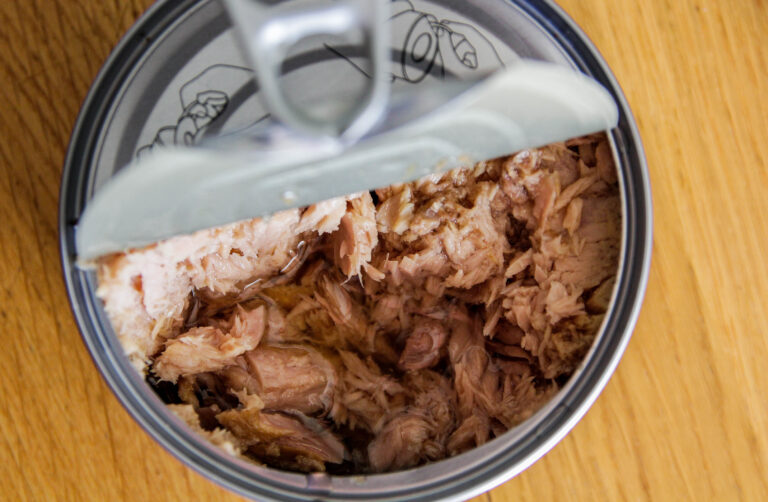
All of this, within a commercial relationship that only in the agri-food field maintains a more or less balanced relationship: Last year it was sold in that market for an amount of 1,864 million euros (pork, beef offal, olive oil, frozen heavy meat, wine…), while was imported for a value of 1,611 million (cooked fats and oils, canned fish, pepper…). This represented a positive balance of ‘only’ 253 million euros (in 2023 it was 496 million).
A politics of winks?
The researcher at CIDOB (Barcelona Center for International Affairs) specialized in East Asia and Chinese politics, Inés Arco, does not hesitate to talk about “symbolic measures from Spain towards China and from China towards Spain”. This expert considers that China has taken note of our more favorable attitude towards its positions, on issues such as tariffs on electric vehicles within the European Union (Spain abstained in the decisive vote against other partners such as Germany) and, as an example, mentions that within the tariffs adopted against European porkSpanish companies are in a lower range than their community partners, between 15 and 20%.
However, this does not mean that the road to the Chinese market is not free of curves and suffers from poor signage. The CIDOB researcher recognizes that “There is a certain Chinese willingness to open some sectors in the last 2 years” and gives health machinery as an example. To the above, he adds that the Asian giant “is learning from the United States by introducing controls on exports of rare earths. In this way he replicates the same policy that the Americans have promoted.” What, in his opinion, he is doing under the idea of “economic security” using these types of policies in their own economic interest. For Arco there is a third element: “In China, when they talk about wine or olive oil, they think more about Italy and France,” he warns.
“China is learning from the United States by introducing controls on rare earth exports. In this way it replicates the same policy that the Americans have promoted,” Inés Arco (CIDOB)
The ‘demanding’ warming of the Spanish cherry
China has opened the doors to Spanish ‘agro’ products such as persimmons, almonds and cherries. The export protocol for this latest stone fruit was signed last Aprilalthough the authorization from the General Customs Administration came in mid-August with the registration of Spanish establishments authorized to sell in the Asian power. According to the most recent data from the Ministry of Agriculture, for the month of April, Spanish production reached 121,429 tons last year and, for this year, more than 158,000 tons are projected. Regarding export, sources from the Valle del Jerte Cooperative Group assess that “the signing of the protocol is an opportunity” but that it will take time to disembark in China.
“You have to make investments, get a client portfolio… Then there are cultural differences, but “we are preparing”point out the sources consulted who acknowledge that they have received visits from Chinese officials to inquire about the production system (facilities, machinery, quality…). The Group currently exports to countries throughout the European continent such as the United Kingdom. In this regard, the consultant and professor at ESIC & Marketing School recognizes that “Access to mainland China continues to require protocol signatures between countries that authorize entry” and admits that “there are still many categories of products that cannot be exported from Spain to China.” This expert explains that “our European standards are high and, in Spain, in all sectors we produce high quality products.” In any case, she is confident that “open cooperative dialogue with China” serve as a boost to our exports. In his opinion, he adds, “the challenge is to accelerate the processes” since “the competent Chinese body requires examining all traceability, visits at origin, reviews are required… and this is logical.”
The Spanish almond and the US ‘monopoly’
The Spanish almond is another of the ‘agro’ products to which China has opened its market in recent years, although using the football simile it has not yet played as many minutes as expected. The negotiation of export protocol corresponding dates back to October 2017 and was finally signed during the second visit of the President of the Government in March 2023. It should be remembered that Spanish production reached 366,465 tons in 2024according to the department of Luis Planas, which estimates for the current 2025-2026 campaign 27.6% more almonds, exceeding 467,000 tons. The Spanish fruit represents around 7% of all availability worldwidethe same percentage as Australia, and only behind the United States (almost all production is concentrated in California), which dominates the market with 76% (1.27 million tons in 2024, according to ‘California Almonds’).
“We were the first to export almonds to China, and the truth is that that market is very stagnant, because the administrative procedures are tremendously complicated,” Rafael Sánchez de Puerta (DCOOP)
“We were the first to export almonds to China”
In a meeting with the media earlier this month, the general director of the cooperative giant DCOOP, Rafael Sánchez de Puerta, pointed out that “We were the first to export almonds to China, and the truth is that that market is very stagnant, because the administrative procedures are tremendously complicated.” In any case, Sánchez de Puerta added that ““We don’t rule it out at all.” and eager for a possible door of opportunity due to the ups and downs of commercial relations between the two leading powers in the world.
“China was normally covered by the United States, we saw an important gap there, because there was a significant increase in tariffs and, later, we had many administrative obstacles but this is our objective,” explained the ‘number two’ of DCOOP, who also points out that they have been the first to sell to India and that they are now penetrating both Europe and Latin America. The nuts section of the cooperative group produces more than 30,000 tons of almond shell and last year it managed to export nuts for an economic value of 16.51 million euros mainly to Italy, China and India.