The Mediterranean fleet is rushing a solution with Brussels to save the Christmas campaign

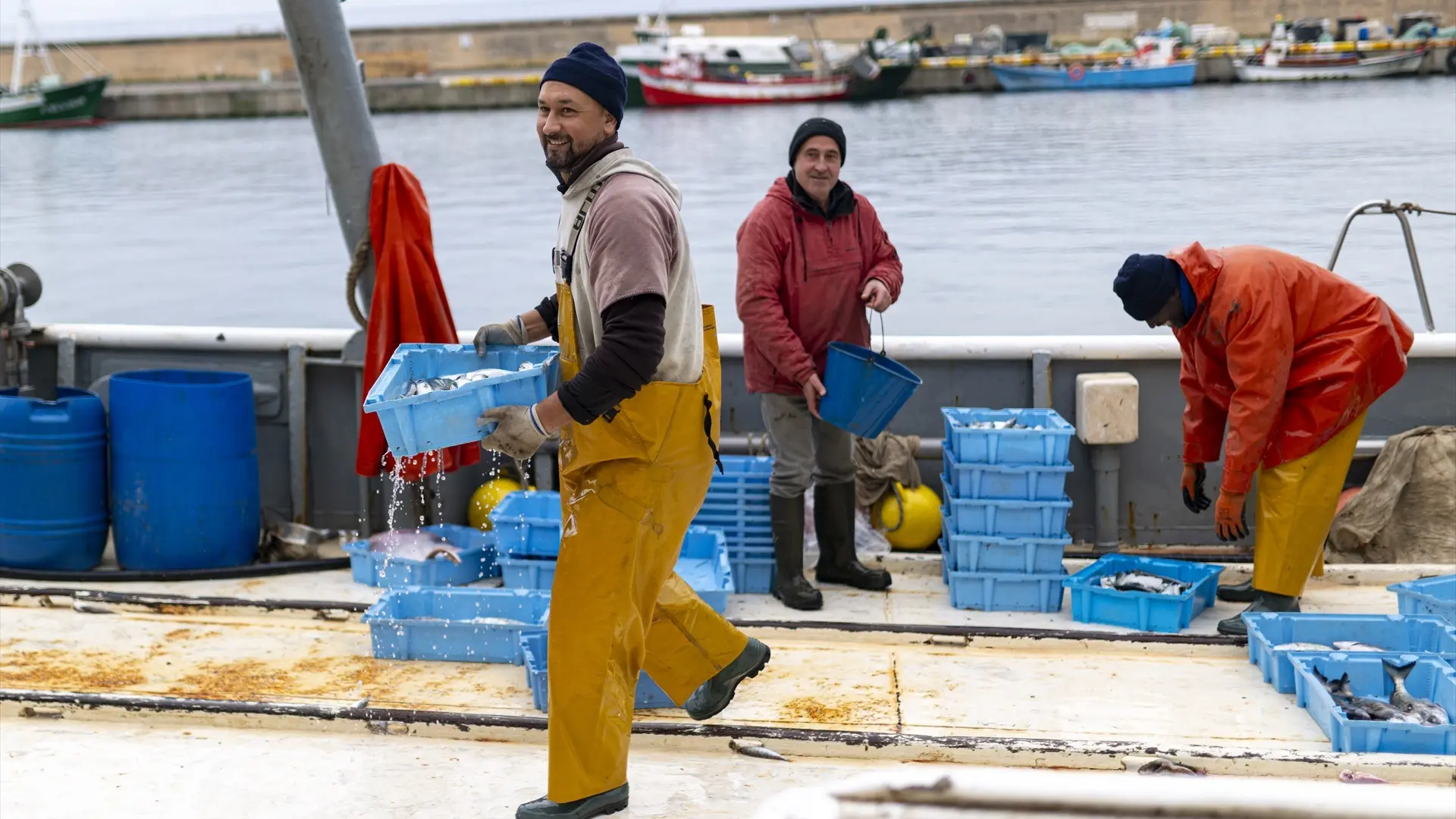
Red shrimp, squid, lobster, crayfish, monkfish, hake and mullet are some of the delicacies of the sea, which end up on our tables during the Christmasand with those who regularly work in the Mediterranean trawl fleet. Formed by 570 vessels based in ports such as Almería or Torrevieja (Alicante) are being tied up in port while the fishing days (also known as ‘fishing effort’) assigned to them run out, due to the restrictions imposed by Brussels. After the meeting held this Thursday, between representatives of the sector and the General Directorate of Maritime Affairs and Fisheries (DG MARE) of the European Commissionthe solution is conditional on the new scientific report that will be published today. The president of the Andalusian Federation of Fishing Associations (FAAPE), José María Gallart, regrets in statements to this medium that “they have not been given a way out” and that two scientific studies that confirm the recovery of species such as the red shrimp are ignored. Gallart also praises the defense of the interests of the sector carried out by the General Secretariat of Fisheries.
“They are behind the sector’s back,” criticizes the president of the Andalusian Federation of Fishing Associations (FAAPE) José María Gallart
The sector is looking for a solution to be able to continue working until December 31, when the new fishing quotas come into force. Gallar criticizes that in Brussels, those responsible for Fisheries “continue in your same positions” of recent years and refer to a new scientific evaluation, ignoring the 2 official scientific reports that support a recovery of the fisheries in the area’s fishing grounds. “They are behind the sector,” criticizes Gallart, who appreciates the defense that is being carried out by the General Secretary of Fisheries of the Ministry of Agriculture. In this sense, the also first vice president of the Spanish Fishing Confederation (CEPESCA) He hopes that finally “on Monday there will be a positive solution: I hope that a bag of days will be opened so that we can finish 2025 fishing.”
. Because ‘fishing effort’ has decreased by more than 40% since 2020, despite the fact that this year the door has been opened to ‘recover’ part of these work days under the condition of adopting measures such as changes in the meshes to make them more selective, closed seasons, biological stops or the installation of flying doors to reduce the impact of nets on the seabedamong others. Regarding the negotiations on fishing quotas that will take place next December, Gallart is negative and fears that Spain will have to negotiate the umpteenth ‘snip’: “We fear a very bad proposal from the European Commission“The minister is going to have to put all his effort into achieving what he has not been able to do in recent years, that we have more days of fishing.”
More than 40% fewer days to fish
Since 2020, the Mediterranean trawl fleet has lived with fear the result of the fishing quota negotiations, which are agreed every December in Brussels, and which affect the management of community fishing grounds, as well as those shared with third countries, both in the Atlantic like him Mediterranean during the next 12 months. The last Council of Ministers of Agriculture and Fisheries is usually a marathon and, since 2021, it represents a drama for the boats that fish in the Mare Nostrum. The application of the multi-annual fisheries management plan that governs the Western Mediterranean in the last 4 years has meant a reduction of more than 40% in fishing days. This has left the working hours of this fleet on an average of between 130 and 140 days per vessel, a figure that for the sector is far from ensuring a minimum of profitability.
Fishing days for the Mediterranean fleet range between 130 and 140 days on average per vessel this year. A proportion that, sources in the sector, consider does not ensure a minimum of profitability
The European Commission came to the negotiating table last year, with a proposal of just 27 days of fishing per vessel for this exercise. Which made the viability of this activity very complicated. After a threat of blockade of Spain together with Italy and Francefrom which our northern neighbors dropped out at the last minute, the 79% reduction of the so-called ‘fishing effort’ (fishing days) was conditional on the implementation of certain measures to improve the selectivity of fishing nets and increase the sustainability of the fleet.
Among them, a change in the meshes to 45 millimeters for those boats that fish on the coast and 50 mm for those who fish in deep waters and the installation of flying doors, to minimize damage to the seabed and save 30% on diesel consumption. This last measure led to the creation of a mechanism to recover 3% of all days allocated to Spain (2,201 days), through the facility. This measure was accepted by up to 192 ships (by 120 boats from last year). To which is added the establishment of different stops or bans lasting several weeks.