“We are surrounded by cheaper markets like Gibraltar or Andorra”
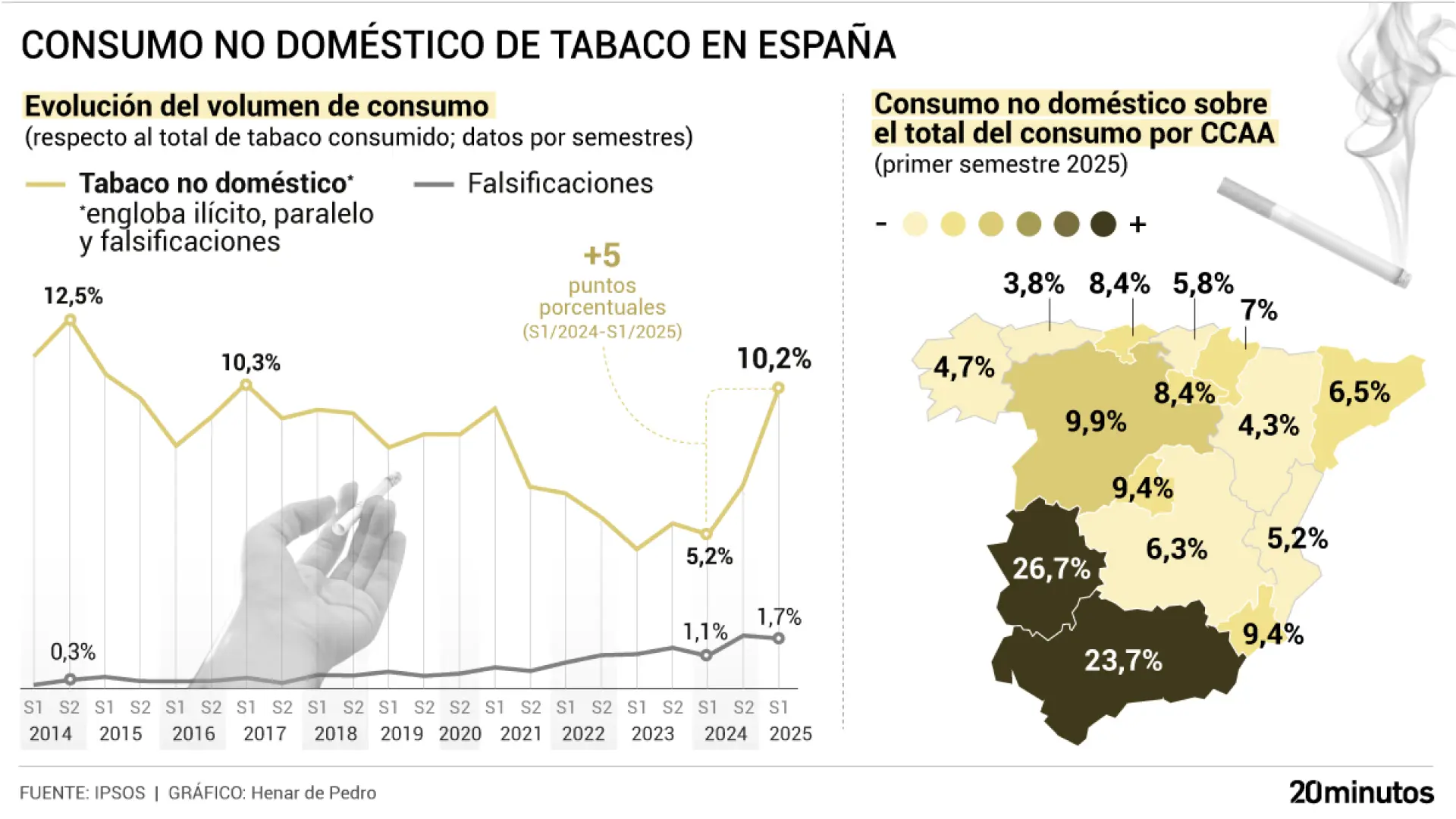
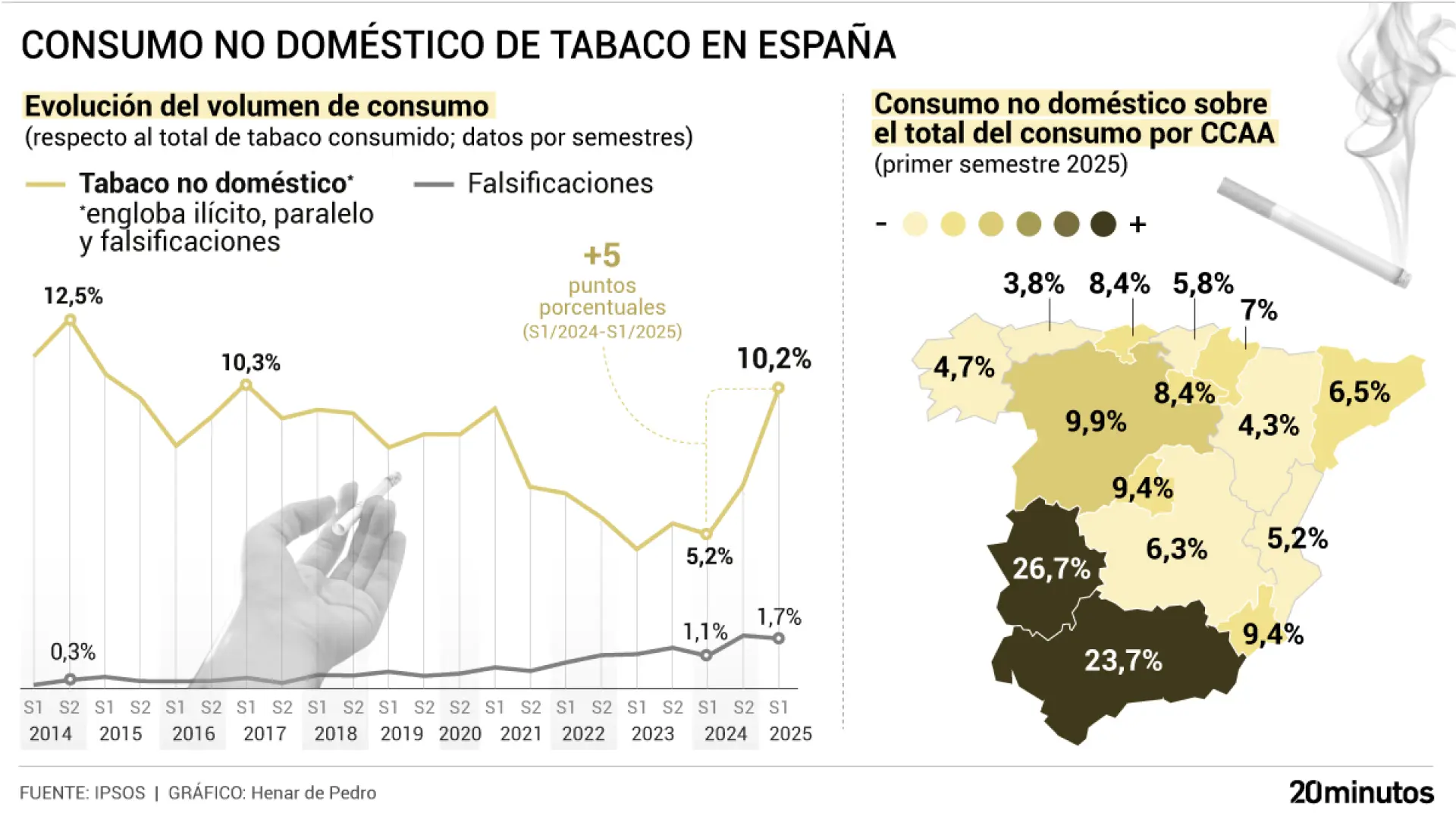
Non-domestic tobacco consumption has skyrocketed in Spain in the first half of the year and now represents 10.2% of the total, practically double that of the same period last year (5.2%), according to the latest Empty Package Survey (EPS) by the consulting firm Ipsos. That remarkable increase breaks the downward trend that had been recorded in the last decade and places the percentage of tobacco consumed unofficially at 2017 levels.
“We do not know for sure what the rebound may be due to, but one factor that may have caused it is that on January 1 there was a tax modification in Spain, which caused a price increase and that can encourage the consumer to seek to purchase tobacco in other markets,” says Rocío Ingelmo, director of Legal and Corporate Affairs at Altadis, which this Thursday inaugurates the 10th Congress Against Tobacco Smuggling, in La Línea de la Concepción (Cádiz).
This non-domestic tobacco includes contraband and counterfeits, but also that purchased legally in other countries or in the Canary Islandswhich has a lower tax rate than the Peninsula and the Balearic Islands. In this sense, Ingelma highlights that “Spain is surrounded by markets in which the price of tobacco is lower, such as Gibraltar, Andorra and Portugal” and asks the Government to be “rational” in its fiscal policy.
“Although Andorra and Gibraltar are doing their homework by gradually raising their taxes on tobacco and the price differential is narrowing, in Spain we have to be aware that we have those cheaper nearby markets, because if fiscal policies are very aggressive, they will translate into the consumer will buy his package outside and tax collection will go down instead of up,” explains Ingelmo, recalling that non-domestic tobacco consumption caused losses of 467 million euros for the public coffers in the first half of the year.
“France is the clearest example because it decided to double the price of tobacco to reduce the prevalence of smoking and the result is that its illicit levels have reached 40%without having managed to reduce consumption as that measure intended,” says Ingelmo. In fact, Spanish tobacconists located near the French border have had a field day because the price of tobacco in Spain is still lower than in France: “The same thing is happening with Holland, which has increased the price a lot and is seeing how its consumers buy it in Germany.”
Extremadura and Andalusia, the most affected autonomies
Extremadura (26.7%) and Andalusia (23.7%), due to their proximity to Portugal and Gibraltar, are the two communities most affected by illicit tobacco consumption, with a big difference compared to the rest, since the third is Castilla y León, where it represents 9.9% of the total. However, in the first half of the year there has been an increase in illicit consumption in all autonomiesaccording to the Ipsos study.
By city, it is even clearer that proximity to these cheap markets favors unofficial tobacco consumption: in Algeciras, capital of Campo de Gibraltar, 96% of the packs analyzed They do not have the corresponding tax seal from the Ministry of Finance. That is to say, seeing a legal tender package in that Cadiz city is like finding a four-leaf clover.
Of the ten Spanish cities with the highest non-domestic tobacco consumption, nine are found in Andalusia: Algeciras (96%), Almería (28.6%), Seville (26.4%), Dos Hermanas (23.8%), Cádiz (20.9%), Marbella (20.8%), Jaén (20.4%), Córdoba (19.5%) and Huelva (17.8%). The other city that completes the top 10 is Badajoz (26.7%), bordering Portugal and which occupies third place in the ranking.
“Counterfeit tobacco is out of health control”
Ingelmo also focuses on counterfeit tobacco, which has increased in the first half of the year to account for 1.7% of the total, six tenths more than in the same period last year (1.1%). The Altadis spokesperson emphasizes that “the trade in this illegal tobacco has grown a lot since the covid pandemicsince before it was practically non-existent”.
This same Wednesday, the Civil Guard dismantled a criminal organization in Seville dedicated to the manufacture, distribution and sale of packets of contraband tobacco, and arrested a total of 45 people. The organization acquired the tobacco leaf and proceeded to its chopping and manipulation, without hygienic-sanitary controlin places lacking adequate facilities and with apparent dirt. Furthermore, the tobacco lacked identification labeling of its origin. Six other clandestine facilities were dismantled in the first half of the year, most of them in Andalusia and the Valencian Community.
Although, obviously, all tobacco is harmful to health, Ingelmo emphasizes that illegally manufactured tobacco can be even more so for the consumer: “This counterfeit tobacco is completely out of health control. The tobacco companies have to inform the Ministry of Health what are each and every one of the ingredients of our different brands of tobacco, but we have no idea what these illegal factories produce.
“It serves as an example that the National Police itself reflected in one of its operations that the workers who had been detained in an illegal factory and who worked in an industrial warehouse in quite unhealthy conditions, They didn’t smoke the tobacco they themselves were making.but they smoked legal tobacco. “That gives you an idea of the ingredients they would be using,” he explains.
Likewise, it ensures that these clandestine facilities, located in industrial estates or rural areas and which have all types of machinery to manufacture and package cigarettes, They use tobacco leaves brought from abroad: “In none of the factories dismantled in recent years was there tobacco of Spanish origin. Although in Spain we have a region that produces raw tobacco, which is Extremadura, the raw material used by these mafias usually comes from other countries such as Romania or Bulgaria.”