will boost household disbursement by 3.3% this year

The Bank of Spain and other national and international organizations have placed private consumption and investment as the main axis of present and future economic growth. In the specific case of households, the pandemic transformed their previous pattern, giving more weight to services and durable goods in family spending. The latter will advance 3.3% this year, two tenths more than last year, with the automobile as the main driving force.
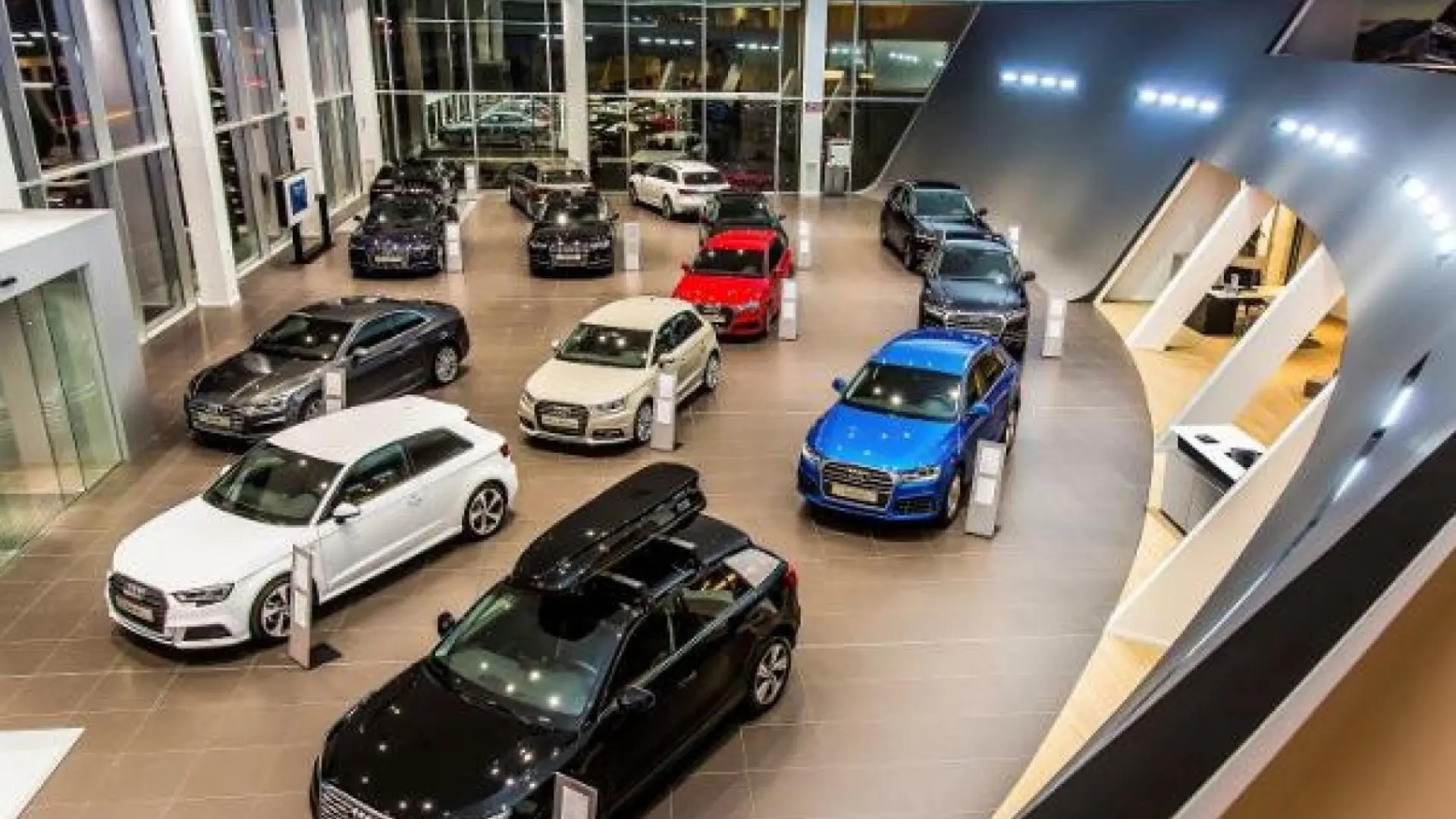
The calculation was published this Tuesday by BBVA Research in its ‘Consumption Situation’ report. The document indicates how between January and October, 951,516 passenger cars were registered in Spain, 14.9% more than in the same period of the previous year. Despite this progress, the figure is still 10.2% below 2019 levels, prior to the outbreak of the Covid pandemic.
The entity points out that Spain is positioned as one of the European countries with the highest increase in automobile sales, along with Lithuania and Latvia, in contrast to the more moderate evolution of the entire community bloc, where the year-on-year variation until September barely reached 0.9%. The outlook is favorable. The forecast evolution suggests that car sales will be around 1,150,000 this year and could exceed 1,200,000 in 2026.
Individuals explain 60% of the increase in registrations in 2025. Between January and October 440,000 passenger cars were sold, 20.2% more than in the first ten months of 2024, but 9.3% less than in 2019. This distance from pre-pandemic records takes place in a context of a significant increase in potential demand for automobiles. In this regard, data from the Family Budget Survey indicate that the number of households that purchased a new car decreased by 310,000 between 2019 and 2024, while the total number of households grew by 650,000.
The above implies that sales to individuals have not recovered the level of 2019 because the probability of purchasing a car has fallen, especially among the households most likely to purchase. All in all, the profile of the purchasing population has barely changed. “They continue to be wealthy households, with home ownership and family responsibilitieswhose main breadwinner is a young man, of foreign nationality, with secondary education, married and employed who resides in a municipality of less than 20,000 inhabitants with a medium or low population density,” the study states.
Electric, better, but not as much as in Europe
BBVA Research highlights that the Spanish market for electrified passenger cars is experiencing strong growth, although its market share is still lower than the average of the European partners. Thus, between January and October, sales of pure electric cars (BEV) increased by 89.7%, and those of plug-in hybrids (PHEV), by 109.6%. Their combined weight reaches 19%, while in the EU it rises to 25.1%. Portugal, for example, already exceeds 35%, with 21.4% in BEV and 14.5% in PHEV.
If the current pace is maintained, the market share of pure electric vehicles in Spain would reach 37% this year, three points more than expected a year ago. However, this figure is still far from the European commitments to decarbonize transport (‘Goal 55’). According to the entity’s research service, to meet the goal, Spain should triple the expected adoption speed of electric vehicles over the next ten years.