Consumers and farmers charge against the change in labeling of fruits and vegetables from Western Sahara: “An act of confusion”

The endorsement of the European Parliament (EP) that Morocco You can use names like ‘Dajla Oued Ed – Dahab’ and ‘Laayoune – Sakia El Hamra’ instead of the mention ‘Western Sahara’ for the fruits and vegetables exported to the European Union (EU), the result of the negotiation between the European Commission (EC) and the authorities of the North African country to adapt the Association Agreement to the rulings of the Court of Justice of the European Union (CJEU) on October 4, 2024, has put consumer organizations and Spanish producers on alert. Sources from the Federation of Consumers and Users (CECU) defend that “lConsumers have the right to knowin the simplest and most concrete way possible, the origin of the food they consume.” On the field, the manager of the Agro-food Cooperatives of Almería (COEXPHAL), Luis Miguel Fernández, warns that “we are losing food security and market share, depending increasingly on food from third countries”.
From CECUwhich this last summer filed a complaint next to COAG before the Ministry of Social Rights, Consumption and Agenda 2030 for an alleged non-compliance with labeling rules on cherry tomatoes from Western Sahara marketed by a well-known supermarket, they argue that the European Commission’s proposal “comes to modify the criteria established by the Court of Justice of the European Union (CJEU) which in their ruling of October 4, 2024 established that melons and tomatoes grown in Western Sahara must be labeled indicating this territory as the country of origin, and not Morocco.” This consumer organization adds that “the Court considered, correctly in our opinion, that any other indication would be misleading for consumers”. For the CJEU, they point out in CECU, “Western Sahara is a different territory and has its own customs statutes according to European Union Law.”
Sources from the Federation of Consumers and Users (CECU) defend that “consumers have the right to know, in the simplest and most concrete way possible, the origin of the food they consume”
Going back to the country of origin and labeling
For all of the above, they conclude, the Commission’s modification endorsed yesterday by the European Parliament “could contravene the provisions of consumer regulations which requires that the information provided to consumers must be provided in clear, understandable and truthful terms.” They even mention the “unfair competition legislation because it may be an act of confusion for customers.” Specifically, the European Regulation 1169/2011 on food information provided to the consumer establishes in its article 7, section a, that “food information shall not be misleading, in particular on the characteristics of the food and, in particular, on the nature, qualities, composition, quantity, duration, country of origin or place of origin and method of manufacture or obtaining”.
This same regulation includes, within the so-called ‘list of mandatory mentions’ in labeling “the country of origin or place of origin” and, in its article 26, section ‘a’, the community regulation considers that “the indication of the country of origin or the place of provenance It will be mandatory when its omission could lead to error to the consumer as to the country of origin or actual place of provenance of the food, in particular if the information accompanying the food or the label as a whole could imply that the food has a different country of origin or place of precedence.
European Regulation 116/2011, in its article 7, states that “food information shall not be misleading, in particular regarding the characteristics of the food and, in particular, regarding the nature, qualities, composition, quantity, duration, country of origin…”
“We are making bread like cakes”
The manager of the Agro-food Cooperatives of Almería (COEXPHAL) uses a common phrase to summarize his vision: “We are making bread like cakes: “European consumers will end up being the most harmed by not having food assured,” he says. Fernández, who criticizes the entire procedure followed by the European Commission in this area, believes that “they are violating the rights of European productions and that the Sahrawis are not benefiting.” The representative of the agricultural cooperatives of Almería maintains that the EU is investing significantly in agricultural infrastructure in Western Sahara, and maintains that similar actions would also be necessary for the European fruit and vegetable sector: “Morocco is treated the same as a European countrywith the only change that it does not have the same health, sustainability and social requirements as European productions,” he points out.
Decrease in tomato exports
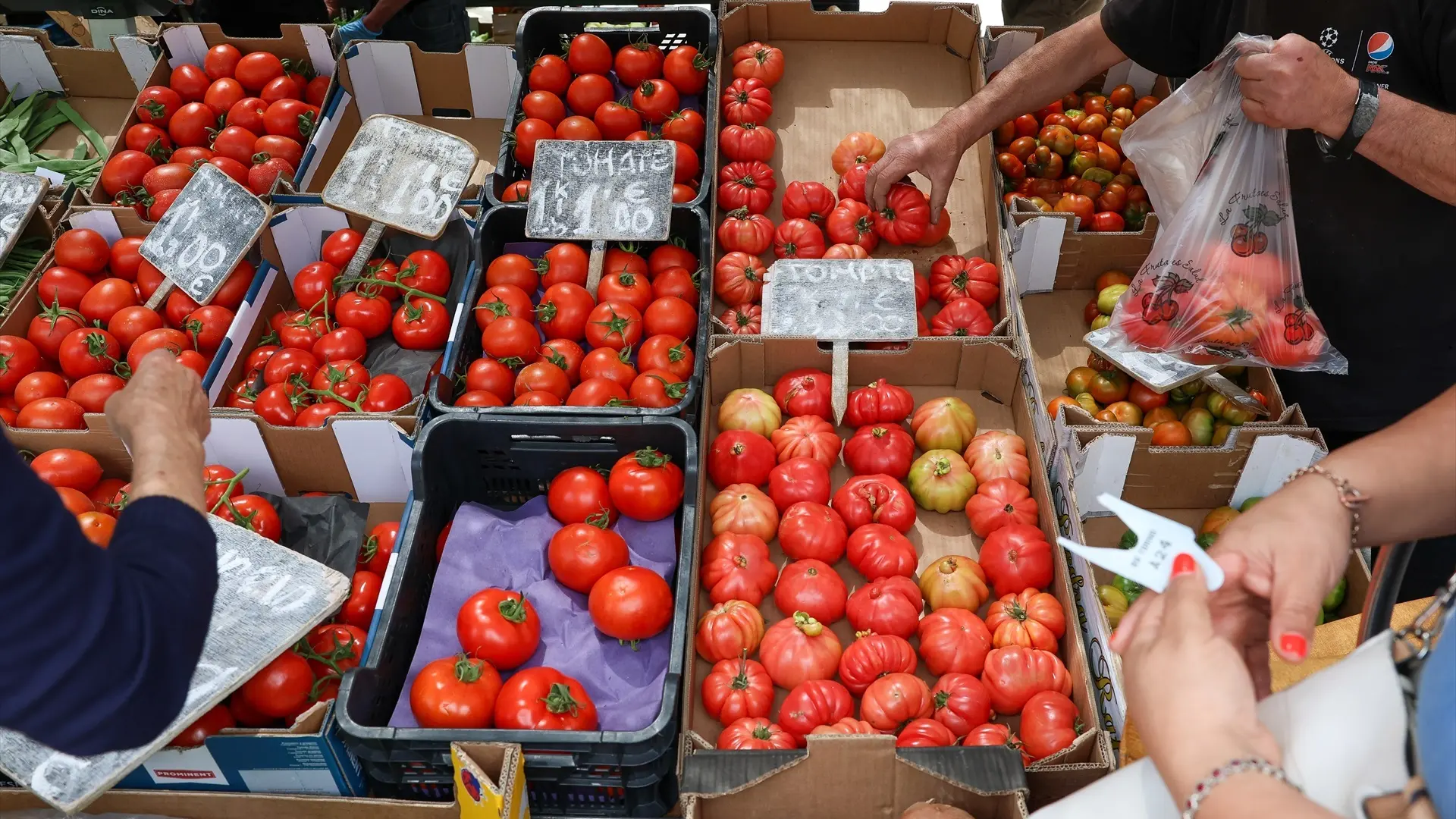
Fernández (COEXPHAL) assures that because of what he describes as ‘unfair competition’ “if there was previously production in places like the Canary Islands, Murcia, Alicante, Granada and Almería, it is only left in these last two.” In addition, he gives as an example “the green bean, of which there is now no production in autumn and winter. Food security is being lost. In autumn-winter tomato We already depend on third countries. Does the final consumer want that?” COEXPHAL highlights that between the 2013-2014 campaign and the current 2024-2025 campaign, tomato exports have fallen by 35% from 925,897 to 604,044 tons in this period compared to an 80% increase in those of our southern neighbor. Morocco has gone from a production of 377,388 tons in 2013-2014 to 679,479 tons in the current campaign.
COEXPHAL highlights that, between the 2013-2014 campaign and the current 2024-2025 campaign, tomato exports have decreased by 35% from 925,897 to 604,044 tons. Morocco has gone from a production of 377,388 to 679,479 tons
The calculations of the Spanish Federation of Associations of Fruit and Vegetable Exporters Producers (FEPEX) are very similar: They estimate that tomato exports have been reduced by 31% in the last 10 years as well as 25% in those directed to the European Union (EU) going from 786,599 tons in 2014 to 591,098 tons in 2024 (excluding the United Kingdom). On the contrary, they calculate, that theMoroccan tomato imports from the European Union they have grown by 42% in the same period.