From BBVA’s failed takeover bid to the pension reform in France
Madrid and Paris have been the center of information attention in recent days. One in the financial field; another for the failed motions of censure against Sébastian Lecornu in the French National Assembly. Both have failure as a common denominator.
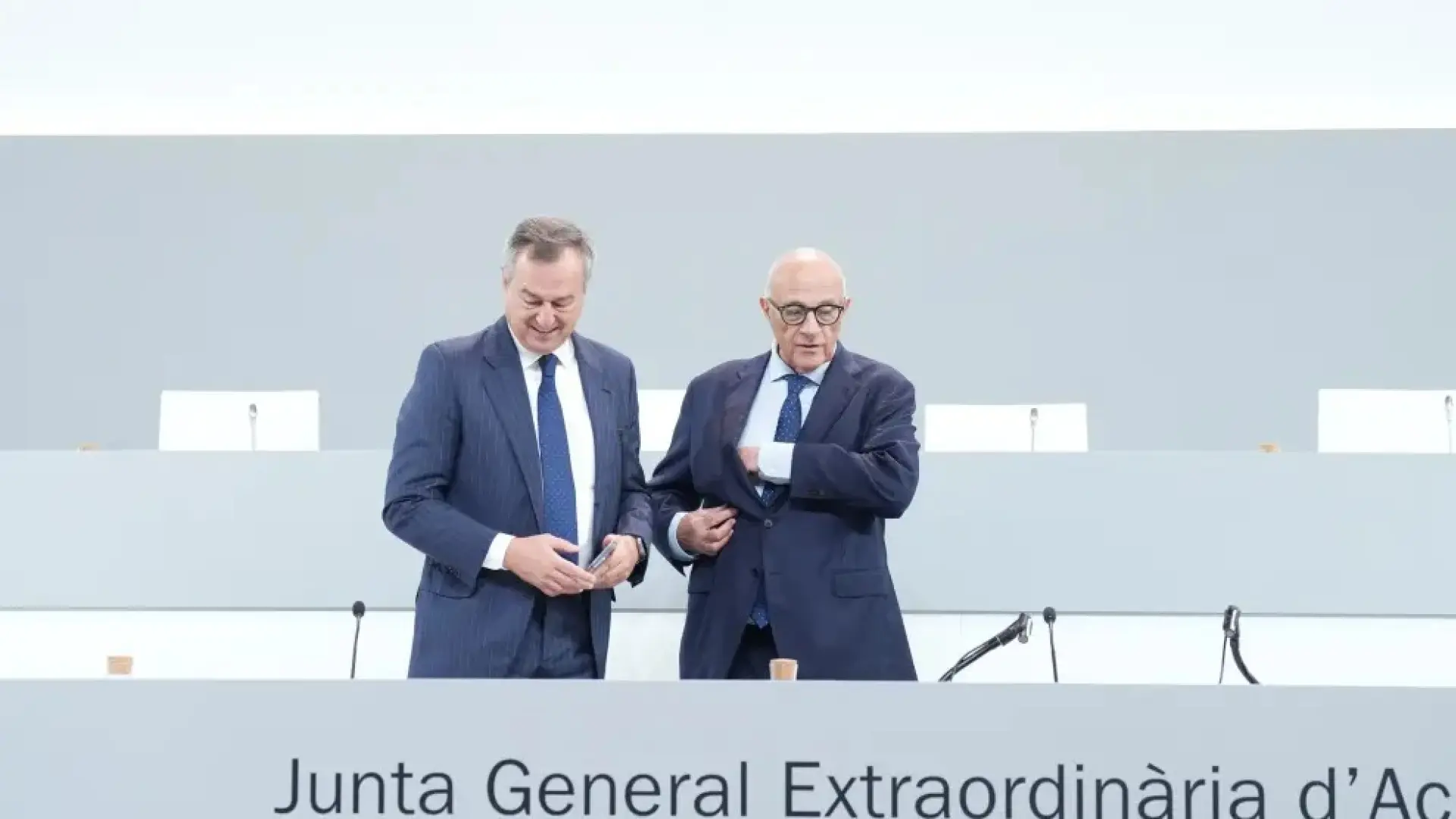
In our country, the BBVA takeover bid has failed, as expected. For now, the tandem Oliu-Gónzalez-Bueno has emerged victorious against the antagonists Carlos Torres-Onur Genç. The latter have put on the bandage before the wound, pointing out that the failed takeover does not pose any risk of conjugating the verb resign.
It is true, but once again BBVA has proven inefficient in hostile takeovers, at least on our soil, as happened with Banesto and now with Sabadell.
We will have to wait for the evolution in the medium term, although Sabadell will have to demonstrate with facts that it is better alone than accompanied. And BBVA management will surely try, beyond taking care of shareholders with a better dividend, to optimally manage excess capital, more efficiently than the Sabadell operation.
It remains as a summary of the OPA, that its management and solution has lasted too long (17 months), with the interference of the Government and the Generalitat, as well as the latest action of the Ministry of Economy with a consultation extraordinary,- competition law included-, which should lead to a clearer and safer reform of the legislation on takeover bids.
However, it is difficult to play impartially with a Government that wants to intervene in the field of business (Telefónica, Indra, etc.) and high finance. It is not exclusive to our country, but bad for many.….
The parallel action in Paris, but in the field of politics, has had a bittersweet result for the Macron-Lecornu tandem. On the one hand, they have saved the day by managing to negotiate a truce with some PSF deputies and rejecting the motions of censure raised by the Le Pen and Mèlenchon groups without a break after Lecornu’s second nomination; but from another, Macron had to give in in its star project: the pension reform presented by its previous prime minister Èlisabeth Borne in 2023which sought to extend the retirement age from 62 to 64 years, as well as increase contributions, in order to save the retirement system by replacement.
A delaying patch has been agreed, throwing the ball into a corner, by postponing the reform until 2028, when Macron is no longer President of the Republic, at the end of his second term in 2027 and not being able to stand for a third re-election, which if it could happen, would be difficult to resolve. .
France has a problem, among others, with the deficit and debt and must save or reduce 30,000 or 40,000 million from the budget, according to the previous prime minister, FranÇYou hear Bayrou. For this reason and others, France is politically fractured.
This is not the case with society, according to Alain Minc, given the data on unemployment and economic activity, but that is the image that is projected on France, something like depressed France, “depressed Franceand””
According to data from 2023, active population in France is around 31 million contributors who must finance pensions 17.2 million pensioners who are also with the added problems of budgetary difficulties, given the growing deficits, and the aging of the population.
Despite this critical panorama, economists close to Macron, such as the recent French Nobel Prize winner Philippe Aghion -awarded together with the Americans Joel Mokyr (American Jew) and Peter Howit-, have pointed out that the cost financial of postponing the delay of retirement, is less than the political cost of handing power to Le Penwhich may happen sooner rather than later, if Lecorrnu does not manage to resist, and with the prospect of the dissolution of the Chambers, Macron will have to cohabitate with Bardella (Le Pen), as prime minister.
Economy and politics influence each other, and here, as can be seen, politics has taken precedence. Something similar happens in our Spain where without budgets to nominally control the ceiling of spending, we live in budgetary times similar to the joi de vivredue in part to the great liquidity of the European Funds, which when they run out will place us in a complicated situation.
Germany, with the determined action of the new Chancellor Merz to be more rigorous with the management of social benefits (unemployment insurance), should be our focus if we want to save the welfare state.
In terms of pensions, the burden of non-contributory and of basic incomemust at some point be the object of our attention and especially of those who manage the budget.
On verraWhat the French say!