The price of eggs skyrockets and infects chicken meat on the eve of Christmas
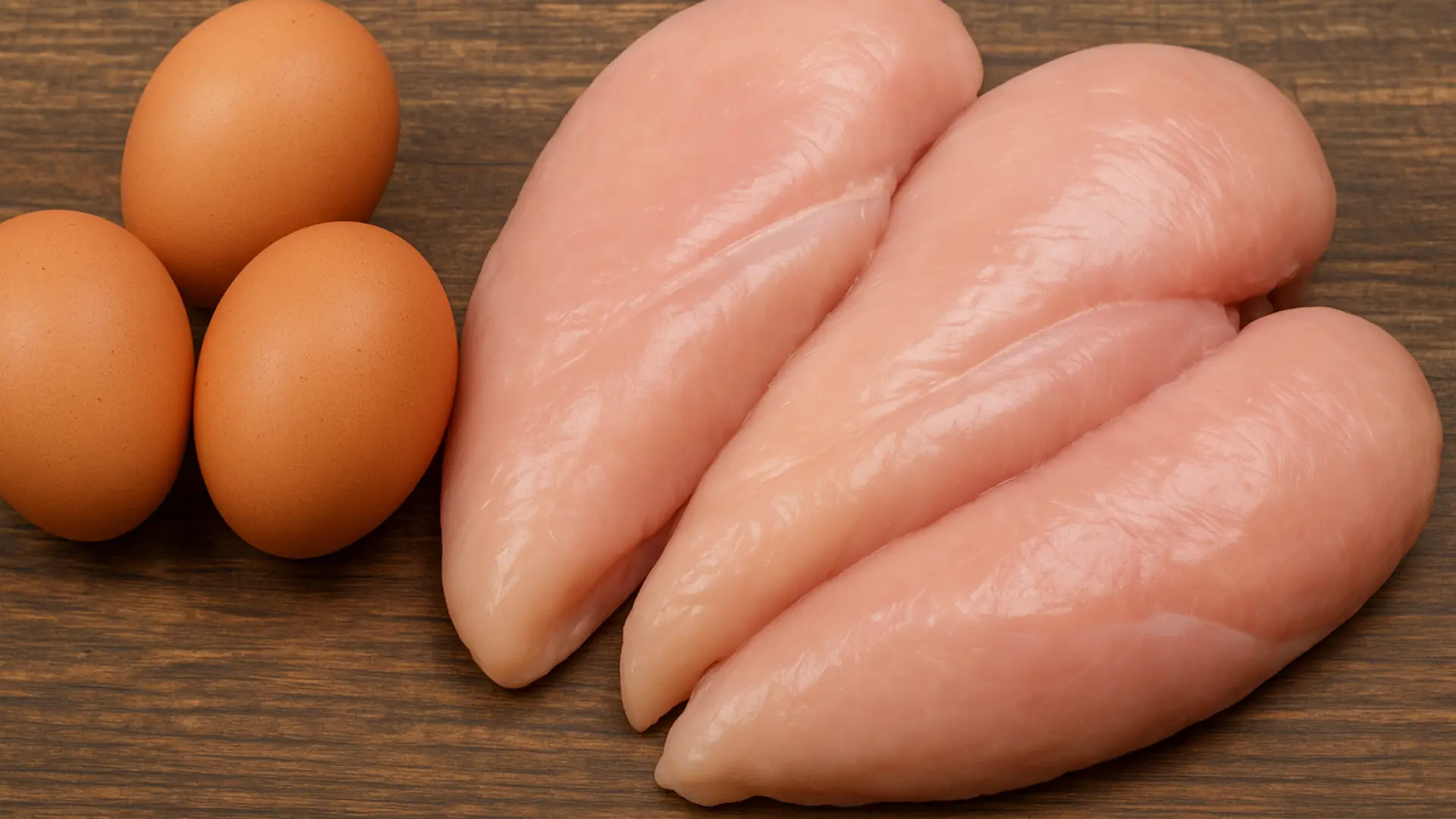
Avian flu, caused by a virus of the Orthomyxorividae family and, specifically, H5N1 serotype Considered highly pathogenic (although it is very difficult to infect humans), it has become a real headache for the poultry sector. According to the latest update from the Ministry of Agriculture, there are 14 outbreaks in poultry and others 68 in wild birds. From Asaja they estimate 2.5 million birds, those sacrificed only in Castilla y León. This has led the Ministry of Agriculture to activate, starting this Monday, the restrictions contemplated in Order APA/2442/2006. Among them, the prohibition of raising poultry outdoors. In this context of uncertainty, the consumer’s pocket suffers: The National Institute of Statistics (INE) estimates that the price of eggs registered an increase of 17.9% in September compared to the previous 12 months and, since January, it has accumulated an increase of 15.9%. For its part, at the OCU, they also detect an increase of 7.5% since May in chicken meat, which has gone from 3.25 to 3.5 euros/kg on average in the supermarket.
The INE estimates that the price of eggs registered an increase of 17.9% in September compared to the previous 12 months and, since January, it has accumulated an increase of 15.9%. For its part, in the OCU, they detect an increase of 7.5% since May in chicken meat
The ‘strange case’ of chicken meat
For Enrique García, spokesperson for this consumer organization, “the rise of a product like chicken, with strong demand and stable supply, is very strange. In this sense, he adds that the OCU has also warned that the price of eggs has risen 50% in 6 months and believes that the “moments of uncertainty” that the sector is experiencing can spread like an oil stain”to products related to eggs and chicken meat, which have them as ingredients, as happens with pastries.
Sources from the Spanish Interprofessional Association of Poultry Meat, (Avianza) highlights that the production of poultry meat is carried out in “closed farms with biosecurity measures already activated” by more than 90%. Specifically, from this interprofessional association, it is estimated that each year 750 million chickens are produced in Spain for the generation of fresh and processed poultry meat products. This is 1.7 million tons. The general secretary of Avianza, Jordi Montfort, defends in a statement that “The sector is prepared to respond to this threat“and adds that although zero risk does not exist, “the farms and birds affected by slaughter in the field of poultry meat (mainly broiler chicken) are being reduced.” Monfort launches a message of peace and defends that, in meat poultry farming, biosafety requirements have intensified constantly in recent years”.
“There are no elements that explain the increase, points out José Ramón González (UPA). From Asaja Huesca, Ramón Solanilla, asks ranchers to “extremely take biosecurity measures”
Back to price formation
García (OCU) leaves two messages for the Ministry of Agriculture: one to continue adopting the necessary measures to prevent the spread of avian flu, and the second, that “the Food Information and Control Agency (AICA)) monitor price formation of eggs, chicken meat and derived products.” A petition that is supported by agricultural organizations such as UPA, whose secretary of livestock, José Ramón González, maintains that “There are no elements that explain the rise”. Furthermore, he adds, that this increase in prices does not affect the producer and that there is a risk that consumption will decline.
For his part, the general secretary of ASAJA Huesca Ramón Solanilla, figures the increase in prices at origin at 15% (what the producers receive) in the last 6 weeks, while on the shelves (what the consumer pays) a 32 has been shot%. Solanilla recalls that poultry from other European countries, some of which are great partners for the Spanish economy, are also being affected by this virus. Such are the cases of Germany and Poland, that see their poultry herds reduced and the demand for eggs from the southern European countries increases. For the person in charge of Asaja Huesca, the greatest risk is found in loose laying hens and he does not hesitate to call on farmers to “extreme biosafety measures” although he sees it as “difficult” for the flu to enter intensive farms. “The moment the virus enters, mortality is rapid and a sanitary evacuation must be carried out, that is, the animals on the farm must be sacrificed,” he asserts.
“In February there was a sharp rise in prices at origin, which was quickly transferred to the supermarket and then, in October, a feather effect when it came to lowering them,” criticizes Enrique García (OCU)
The “rocket-feather effect” and eggs
The OCU spokesperson speaks of “a boom rocket effect” in the price of eggs and explains that, “in February there was a sharp rise in prices at origin that were quickly transferred to the supermarket and thenor, in October, there was a feather effect when it came to lowering them. For this reason, this consumer association proposes the elimination of VAT on eggs, chicken meat and fish. “These are products that have a greater impact on family economies, because the increase in prices will reduce consumption of an essential protein for any balanced diet,” he concludes with concern. In his opinion, “eggs are difficult to replace” and he denounces that food has become more expensive by up to 31% in recent years while salaries have not increased in the same proportion.
Does egg climbing have a ‘ceiling’?
Enrique García (OCU) believes that the rise in egg prices will not stop. “Not in the short term, as long as there is uncertainty and the conditions exist that make it possible for there to be avian flu,” he points out. In this regard, he speaks of a certain seasonality in the laying with meteorological periods where they are more abundant. García believes that if there were “a reasonable competition mechanism, the expectation would be that an increase in production costs would cause prices to rise, now even if they fall prices should fall and that has not happened. With great caution, Solanilla points out that “the data transmitted to us by the Environment departments says that the peak of the impact has already passed: 15 days ago several wild birds were affected and now about twenty.” In itself, it relates the appearance of this outbreak to the arrival of migratory birds and increasingly lower temperatures, which would ensure the survival of the virus.