The price of garbage collection soars to all-time highs after rising 30% in September
The price that citizens pay in Spain for garbage collection has skyrocketed to unprecedented levels in the country’s history. So much so that this service has become the product of the 200 that the INE monitors in its Consumer Price Index (CPI). that has risen the most in price in the last year. The progressive entry into force of municipal waste rates—especially that of the city of Madrid—explains the rebound.
The CPI for September, which the statistical institute published on Wednesday, reflects that garbage collection is now 30.3% more expensive than the same month in 2024. An increase that exceeds that of other products such as combined passenger transport (26.7%), jewelry and bijouterie (23.3%) or coffee (19.9%) which, for very varied reasons, occupy the first positions in the scale of the prices that increase the most.
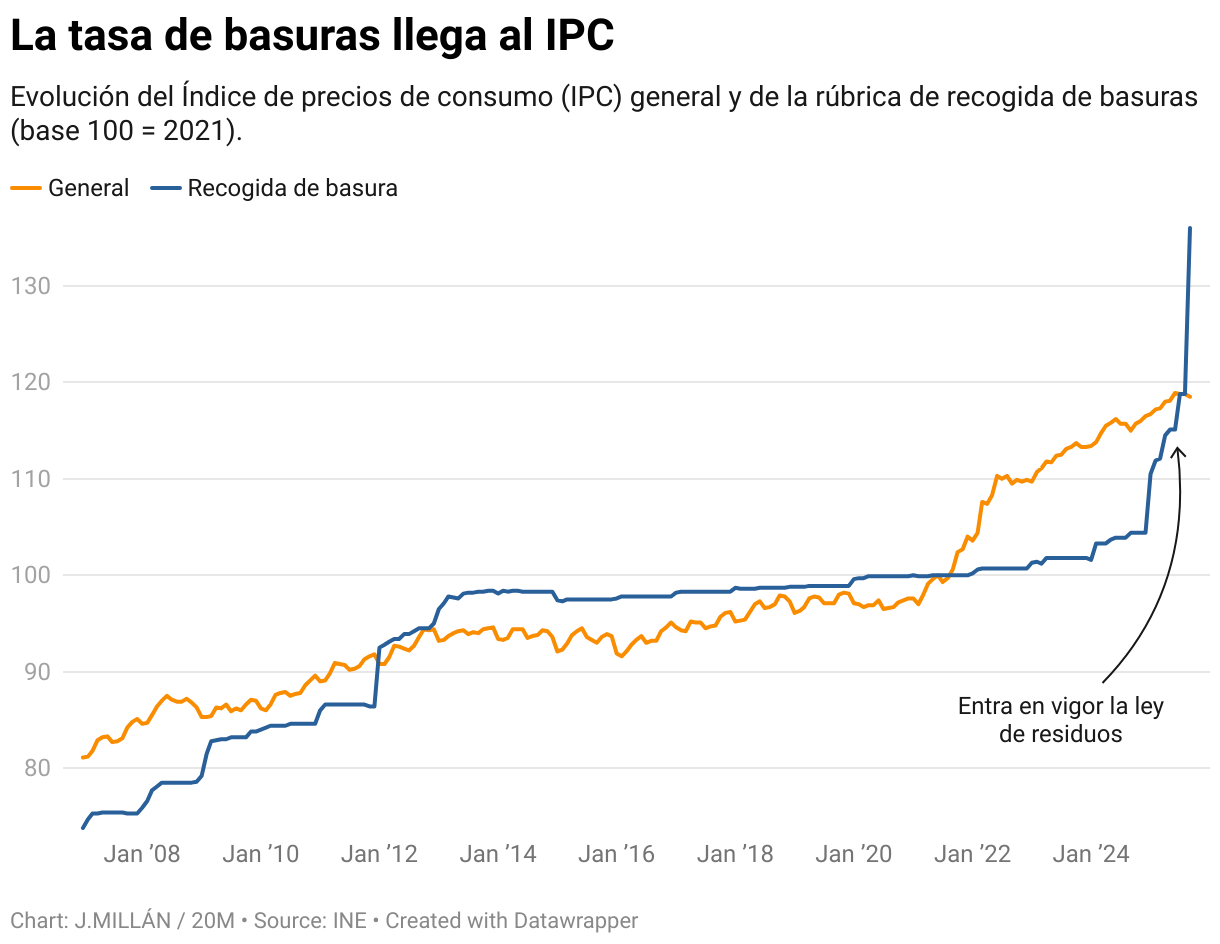
Garbage collection has traditionally been a service with fairly stable prices. In the worst of the inflationary wave that started in 2021, price increases in this service did not exceed 1% in 2021, 2022 or 2023.
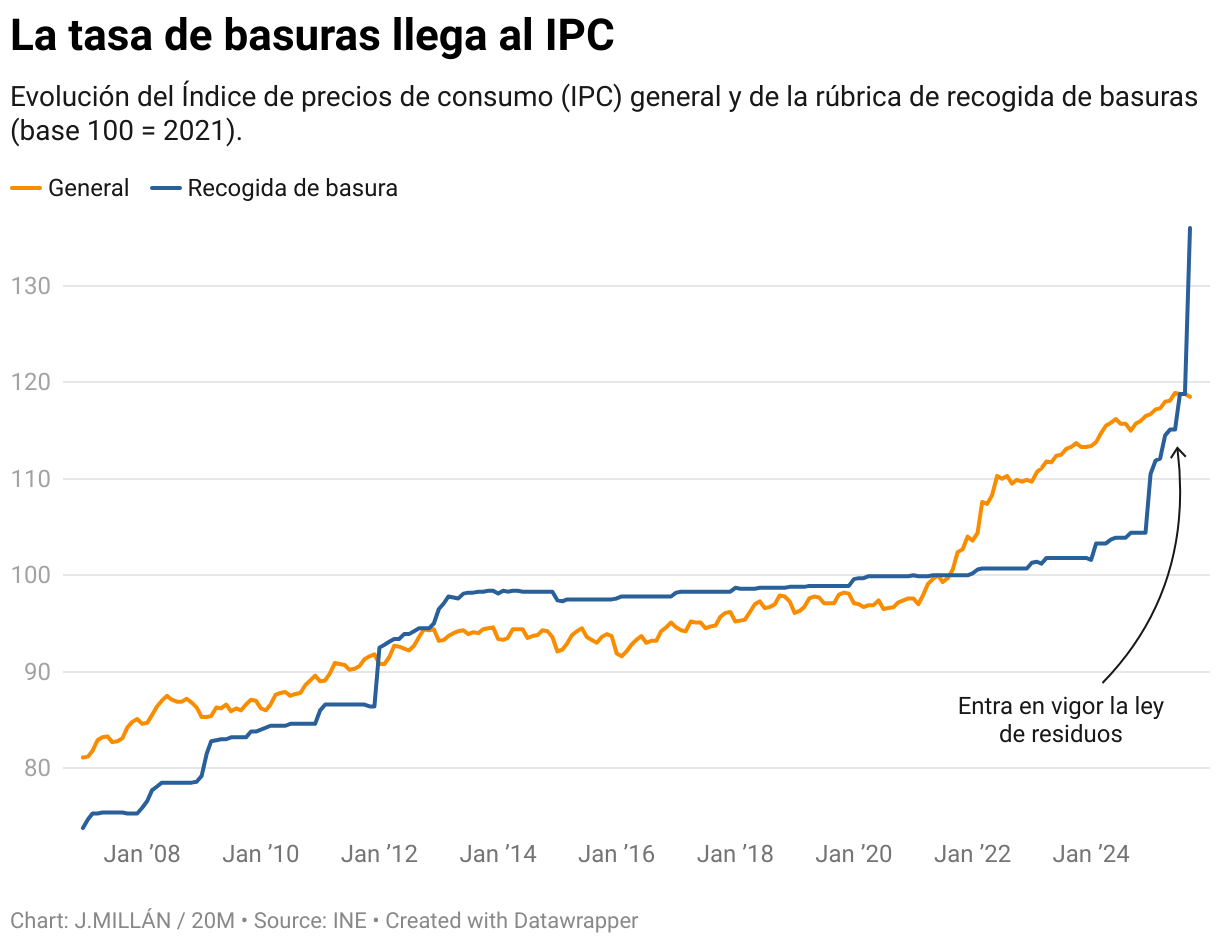
However, with the arrival of 2025, prices jumped and inflation increased to 8.8% year-on-year, more than triple what was recorded at the end of 2024. Finally, in September prices rose again to reach 30.3% in the country as a whole. An increase that coincides with the implementation of this rate in the Madrid City Council, which began passing receipts last month.
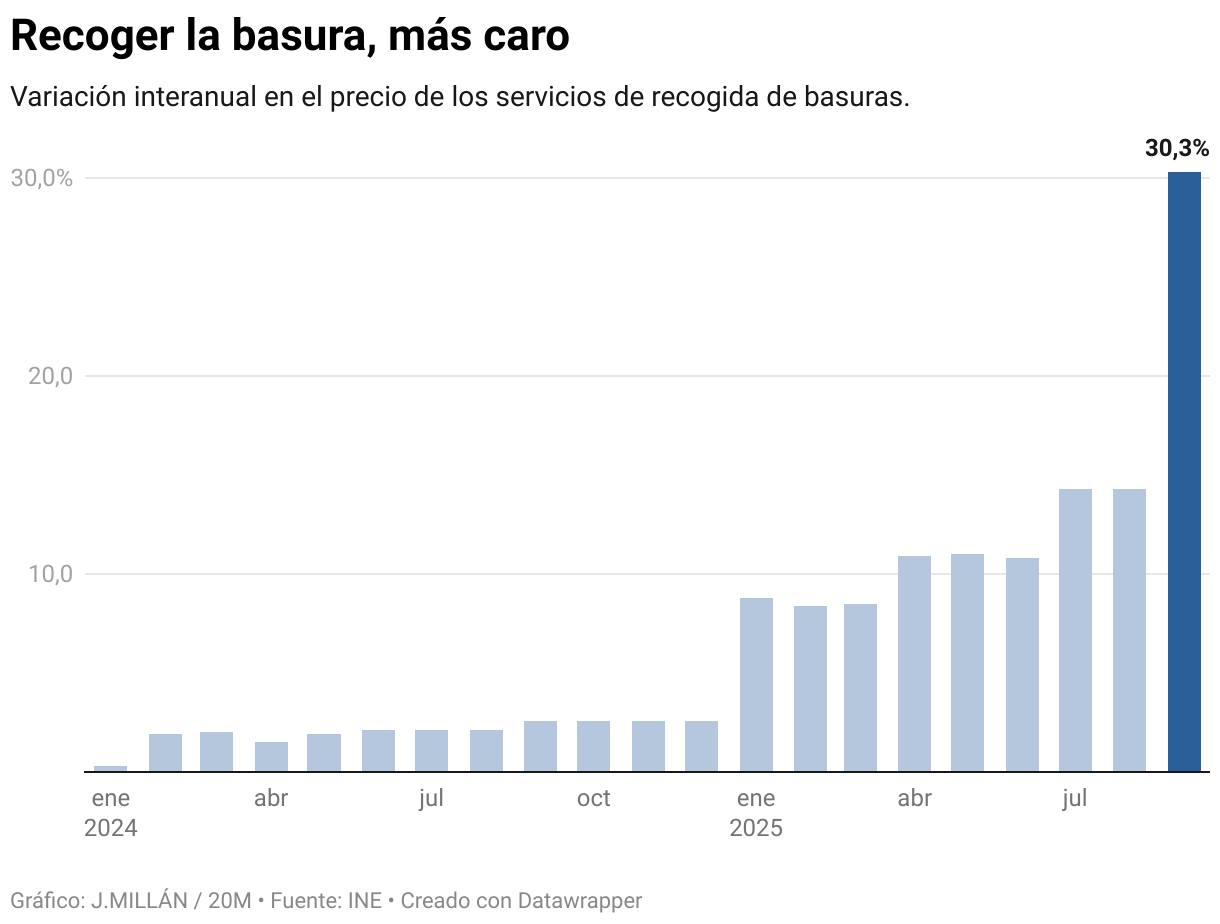
The engine that is driving this price increase is lgradual implementation of municipal waste rates. Since April of this year, town councils in towns with more than 5,000 inhabitants are obliged to charge a specific fee to finance waste collection.
This is established by the waste law approved in 2022, which echoed a previous European directive that was mandatory for Spain. The new regulations establish that the rates must be a differentiated fiscal figure, take into account the waste generated by each homereflect the costs of the service and not be deficient
Until now, some municipalities in the country did not have a specific rate to tax this service, which explains why, as it is being implemented throughout the national territory, the CPI is registering price increases in this section. Others did have a specific rate, but it does not meet the criteria required by the regulations, so they have had to raise it or will have to do so in the future.
Furthermore, illustrious city councils such as those of Seville, Zaragoza, Malaga or Palma de Mallorca are still working on the design of this rate, although they should have already implemented it in the month of April. Likewise, according to the Organization of Consumers and Users (OCU) in a note published in July, there are at least 17 provincial capitals whose regulations would be failing to comply with the requirements of the law. Consequently, the still notable presence of town councils that either have to introduce the tax or must raise its price, suggests that the CPI in waste management will continue to rise in the coming months.