The trawl fleet is at risk in Brussels: Will Europe stop fishing for prawns, shrimp or crayfish?

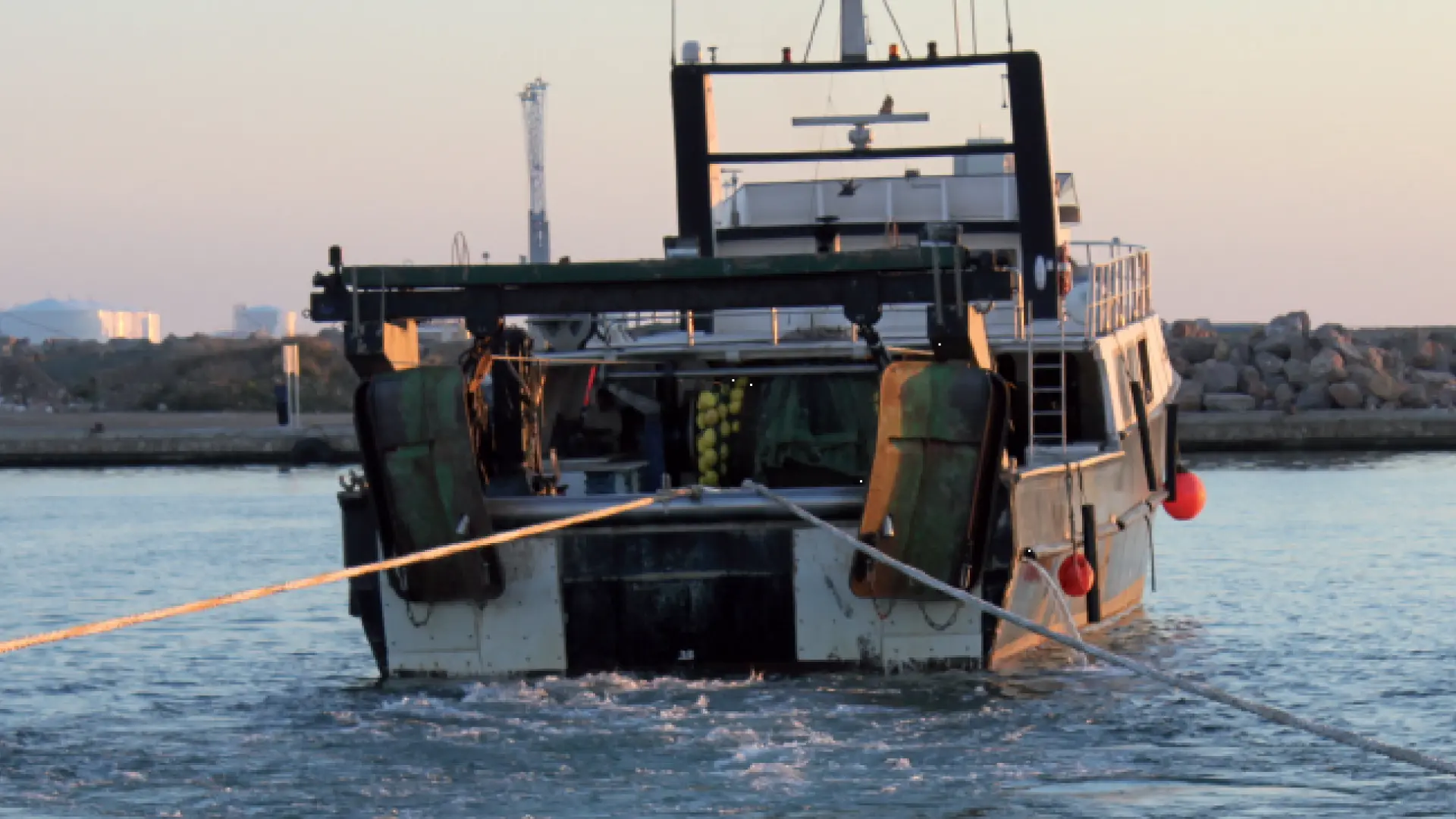
Week of Passion for European and Spanish fishing, which will culminate this Thursday and Friday with the last Agriculture and Fisheries Council of the year. A marathon meeting in which the ministers of the Twenty-seven branch will have to set the fishing quotas for the Atlantic and the Mediterranean. In addition to endorsing the European Commission’s proposal, which reduces the fishing days for this fleet of 557 vessels made up mostly of trawlers. The community proposal is hardly only 9.6 days per year per vessel during 2026. Which seriously compromises the survival of this activity. This year, its working hours were already limited to 27 days per year per ship, partially compensated in exchange for introducing sustainability measures such as changing the meshes and installing flying doors (which do not touch the seabed and minimize the environmental impact). At the center of all this debate is an activity that brings products such as shrimp, shrimp, crayfish, hake or monkfish to the ports of half of Spain: trawling.
Trawling is a fishing art that is based on tow one or more cone-shaped nets to catch fish. There are two types, the ‘bottom’ trawl that is practiced on the seabed and the so-called ‘pelagic’ trawl that is oriented towards the surface. The first is the most used by European fleets, which have very limited fishing grounds where this activity can be carried out, and always in bottoms with mud, silt or sludge without any vegetation. These types of boats have closed 87 areas of the Northeast Atlantic since October 2021, in the waters of countries such as France, Portugal, Spain or Ireland. In total, some 16,500 square kilometers. In Spanish waters alone there are 887 vessels dedicated to this art, 10% of all vessels that are registered.
Less skewer hake?
This decision was endorsed on June 11 by the General Court of the European Union (TGEU) in a ruling that dismissed both appeals of the Government of Spain and the Organization of Fisheries Producers (OPP) Puerto de Burela (Galicia). A resolution that has already been appealed by the Ministry of Agriculture, Fisheries and Food. Among the arguments put on the table to question the point of view of the European Justice, the socioeconomic impact of this measure has not been taken into account, especially in fleets such as that of the aforementioned Galician port. For example, depending on the sector, Burela has seen the catches of its famous skewer hake fall an average of 32%. The impact spread to other neighboring ports such as Celeiro, Coruña, Vigo, Cedeira, Ribeira and Ondárroa. A study by the University of Santiago de Compostela (USC) put a figure on the direct impact of this veto: ebetween 18 and 27 million euros in production lossesbetween 85,241 and 148,126 euros per boat. Along with a loss of employment of between 127 and 190 people.
A complex relationship with Brussels
The European Bottom Fishing Alliance (EBFA), chaired by the Spanish Iván López van der Veen and which represents more than 20,000 fishermen on 7,000 boats dedicated to this activity, held a meeting last week with the European Commissioner Costas Kadis. In conversation with this medium, López explains that in this meeting they already expressed their concern that nor the sustainability measures adopted are sufficiently valued by this fleet in recent years, as well as for the Commission to adopt the highest resolution in its scientific reports to ensure that the decisions taken are supported by the best possible science. In this area, he believes there is room for improvement. Furthermore, the Alliance delegation warned that third countries such as United Kingdom and Norway They can once again allocate their own fishing quotas to the detriment of those already held by the community fleets.
Asked about the relationship between the fishing sector and the European Commission (EC)López, who is also president of the International Coalition of Fisheries Associations (ICFA, in English) and the National Codfish Association (Agarba), acknowledges his perplexity about Brussels’ proposal in the Mediterranean. The also president of the International Coalition of Fisheries Associations (ICFA, in English) and the National Cod Farmers Association (Agarba) detects “some dissonance” between the community political discourse on fishing and management at a technical level. The president of EBFA hopes that, finally, the commissioner recognizes the efforts of bottom fishing, and makes the proposal for the Mediterranean more flexible, as well as other regulations that question the viability of this fishing gear.
“Keep your word”
These reflections are widely shared in the fishing sector and have already given rise to strong criticism, especially from the Andalusian fleet. In a letter sent to Commissioner Costas Kadis last December 5 to which you have had access Economic Informationby the president of the Andalusian Federation of Fisheries Associations (FAAPE) José María Gallart, his counterpart in the Andalusian Federation of Fishermen’s Associations (FACOPE) is Manuel Fernández Belmonte and the head of the Andalusian Association of Women in the Fishing Sector (AndMuPes) María Ángeles Cayuela, the proposal for the Mediterranean is crossed out as “insulting”, “barbaric”, “unaffordable” and lacking a scientific basis. For Gallart, Fernández and Cayuela it would be easier “to say that the trawl fleet community of the Western Mediterranean has to disappear, period”.
The letter considers that the document presented by the Commission violates the principles of the Common Fisheries Policy (CFP) and that “Scientific studies support the requests of the fishing sector”. They demand that Kadis withdraw the cut in fishing days for the almost 600 Spanish vessels that fish in the Mare Nostrum and that he defend European fishing “including the Mediterranean trawling fishing sector, a very legal fleet and very compliant with national and European regulations”. The representatives of the main Mediterranean fishing associations reproach the commissioner for having expressed himself during different meetings and, in a recent visit to Spain, in favor of recognizing the efforts of European and Spanish weighers. “Keep your word and put a new proposal on the table that is fair and adequate to guarantee the viability of community fishermen”, they forcefully close their letter to the head of fisheries policy in Brussels.